Page 56 of 65

Basho Colloquium

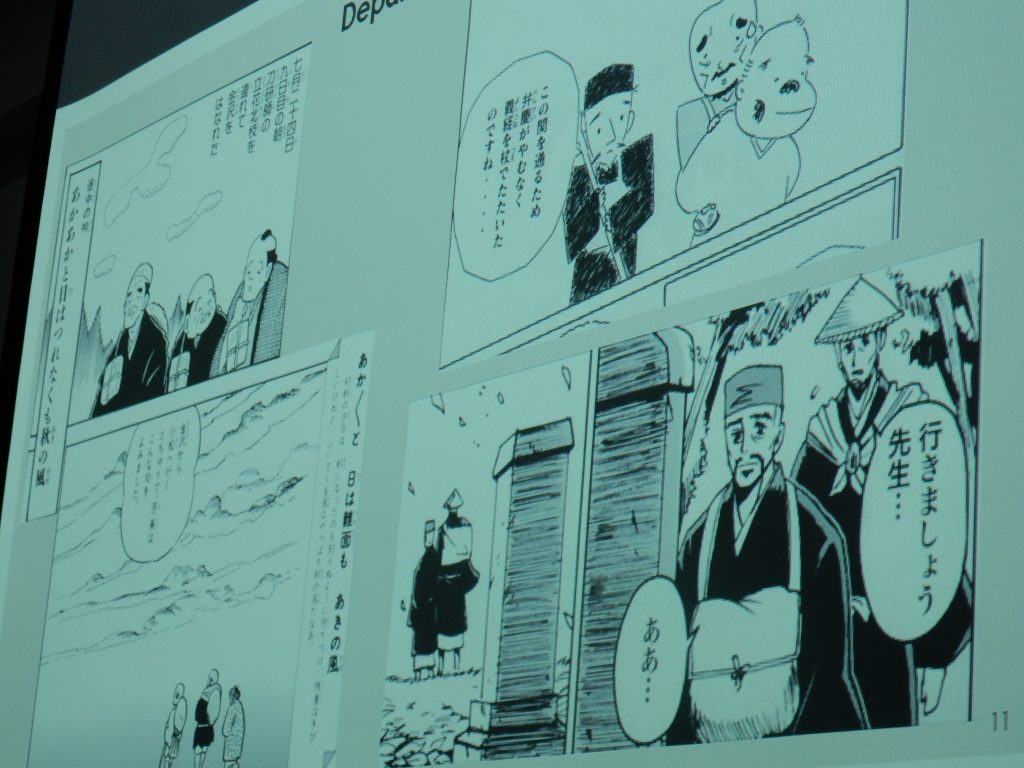
Illustration from a manga of Basho's Journey to the Far North shown during Robert Wittkamp's presentation

Illustration from a manga of Basho’s Journey to the Far North shown during Robert Wittkamp’s presentation

WiK’s Basho Colloquium, held on Oct 28 at Ryukoku University, proved a highly entertaining affair, both in terms of the presentations and of the socialising afterwards.  There were three high-quality talks, each from a very different perspective – one of them rooted in traditional author analysis, one a very modern reading of fictionality, and one highly personal from a man with a mission.  The discussion between them at the end sparked into life and could have gone on for some time, but sadly it had to be curtailed since the Colloquium had overrun its schedule and people were leaving to catch trains.

Stephen Gill

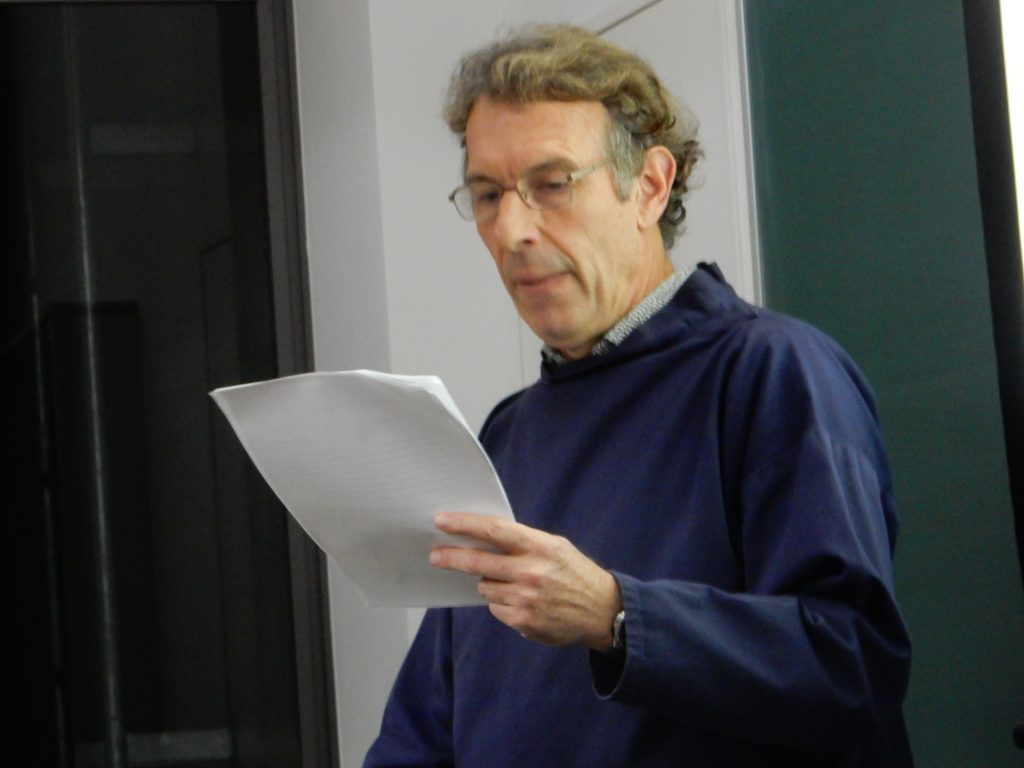
Stephen Gill, talking about Basho’s self-image as a wanderer

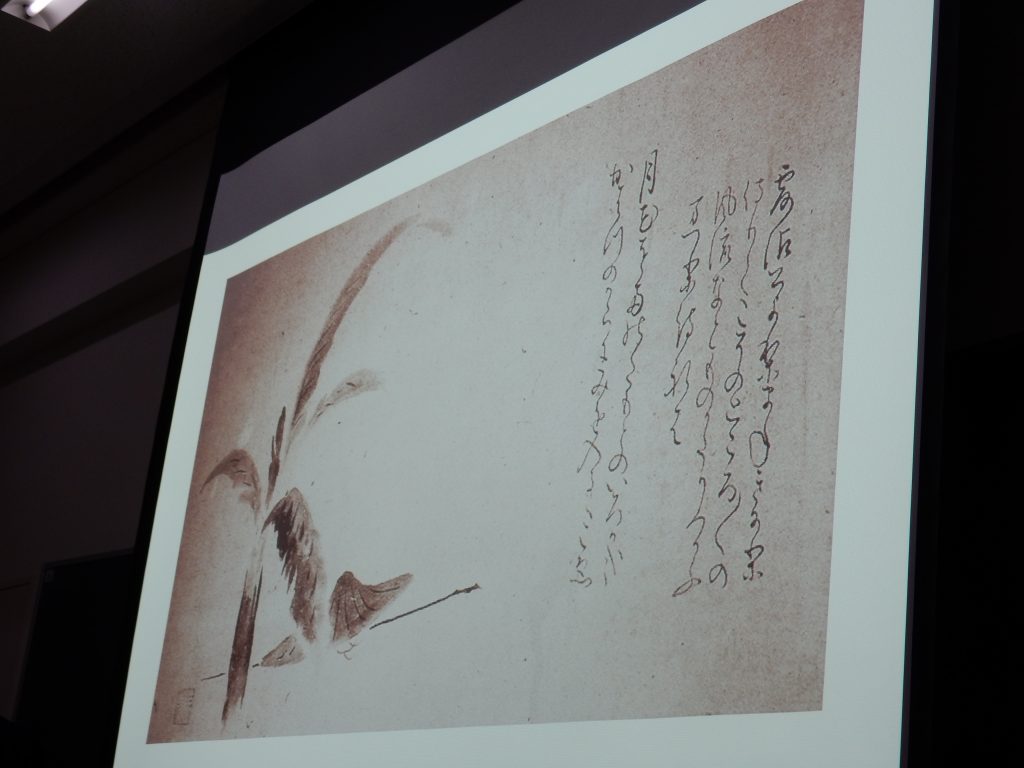
The first presenter was Stephen Gill, who leads the Hailstone Haiku Circle, addressing the matter of ‘Basho: Self-Portrait’.  He made the point that Basho saw himself very much as part of the tradition of literary travel, following in the footsteps of Saigyo and Sogi.  In his travel sketches he painted himself as a dot on the landscape, immersed in nature, and he represented himself symbolically in the form of his travel accoutrements – rainhat and robe, staff and straw sandals.  In a haiku he conjured up the image of  ‘A wandering crow’ (tabigarasu).  The talk was illustrated with some striking pictures and self-portraits of Basho, who was an artist as well as a poet. One ink painting had the poet represented solely by a banana tree (Basho was a pseudonym taken from the tree planted next to his hut in Edo). Already by 45 Basho thought of himself as an old man, wandering the country on his own – ‘Our life in this world –/ little more than taking shelter / along with Sogi’.  The talk strongly suggested that Basho had consciously fashioned a self-image of a traveller through life, drawing inspiration from nature and from Japan’s literary tradition.  The journey included hardships as well as joys, and fittingly it was on a journey that Basho died on his way to Osaka. Even on his deathbed, his dreams went wandering over withered fields….

Robert Wittkamp

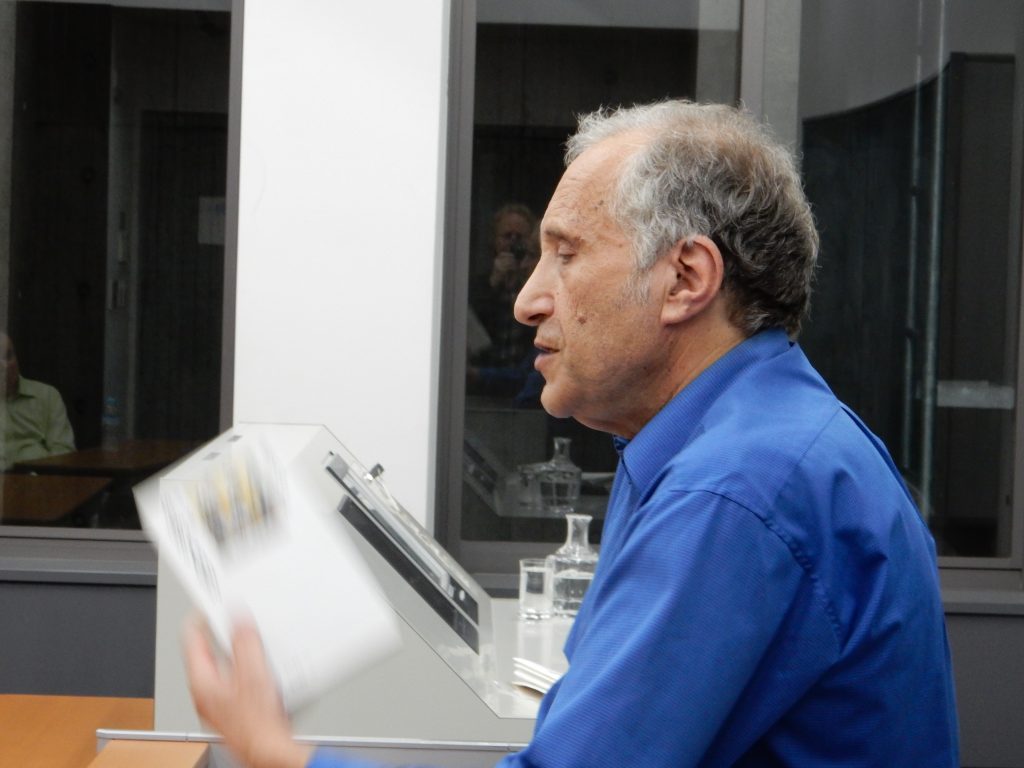
Robert Wittkamp, putting over a point about the fictionality of Basho’s famous Journey into the Deep North

The talk was followed up by a presentation by Robert Wittkamp, which argued that rather than an account of an actual journey, as is usually assumed, Oku no Hosomichi (Journey to the Far North) was a consciously constructed piece of fiction.  Robert works in the Department of Humanities at Kansai University and is the author of several books on Japanese literature, including on Basho.  He is well-versed in the intellectual frameworks behind such terms as ‘fictionality’, and while he referred to such theories, his talk was grounded in practical examples.  His talk on ‘The failed institutionalization of fictionality’ was thus absorbing in systematically revealing that space and time were far from identical in the actual journey and the literary journey (a mere 12-14 pages of A4 in length).  In fact, the haibun (poetic essay) is more like a journey into a dream world than into a real world. According to Robert, it is evident that Basho himself created it as a literary piece rather than a travel account by various ‘signposts’ which he carefully detailed, covering such features as the title, the format, the use of medieval expressions, the existence of a ‘narrator’ who is never identified, use of ‘as if’ to suggest unreality, the priority given to textual rhythm rather than facts, and the unreliable narration (Basho at one point describes the narrator as lonely when in fact there was a companion, who is only mentioned later in passing).  So, Robert wondered, if the book is so obviously fictional, why is it always regarded as factual, with people retracing the steps and trying to match the content to the actual journey?  The answer, he suggested, would seem to lie in a reluctance to question Basho’s sincerity and self-image.

Jeff Robbins

Jeff Robbins, talking of the deep sense of humanity he has found in Basho’s non-haiku writings

The final presentation (‘History in Basho: Bonding the Generations’) took a very different form from the previous talk. WiK member Jeff Robbins, author of Basho4Now, has been concerned to bring to light Basho’s non-haiku writings, namely the verses he wrote in renga (linked verse) as well as his personal letters, tanka (short poems) and spoken words left in the account of others. Jeff’s contention was that these show Basho’s compassion and humanity in much clearer terms than the detached observer in the haiku.  The statistics were striking: Basho had contributed one in six of the officially collected renku, making some 1700 verses in all, as well as 229 letters and 118 haibun.  Yet little of this has ever been translated. Even more telling was a quotation by Basho: ‘in linked verse lies the bone-marrow of this old man’.  From Jeff’s research, it seems that the linked verse, even in Japanese, has been studied mostly in terms of rules and linkage, whereas the content has been ignored.  However Jeff wanted to insist on the warm compassion and humour that the verse showed, indicating what a remarkably sympathetic person Basho actually was.  The 55 stanzas Jeff had uncovered about love, for example, were surprisingly romantic and sensual.  And those about women were unfailingly warm and sympathetic.  In short, the presenter found in these non-haiku expressions ‘profound resources for human self-understanding’, and he ended his presentation with an impassioned plea for collaboration on his ongoing project of translating and interpreting the material, which he wishes to have deposited in a library for others to work on and complete.

Presenters and audience moved afterwards to a nearby pub for fish and chips, drinks and further discussion.  Basho’s self-image as a wandering crow; the fictionality of Oku no Hosomichi; and Basho’s humanity as expressed in linked verse and letters.  Three most stimulating presentations, and Writers in Kyoto is most grateful to the presenters for such a wonderful and warm-hearted evening.  Bringing such divergent writers together is very much what we are about.  (Article by John Dougill)

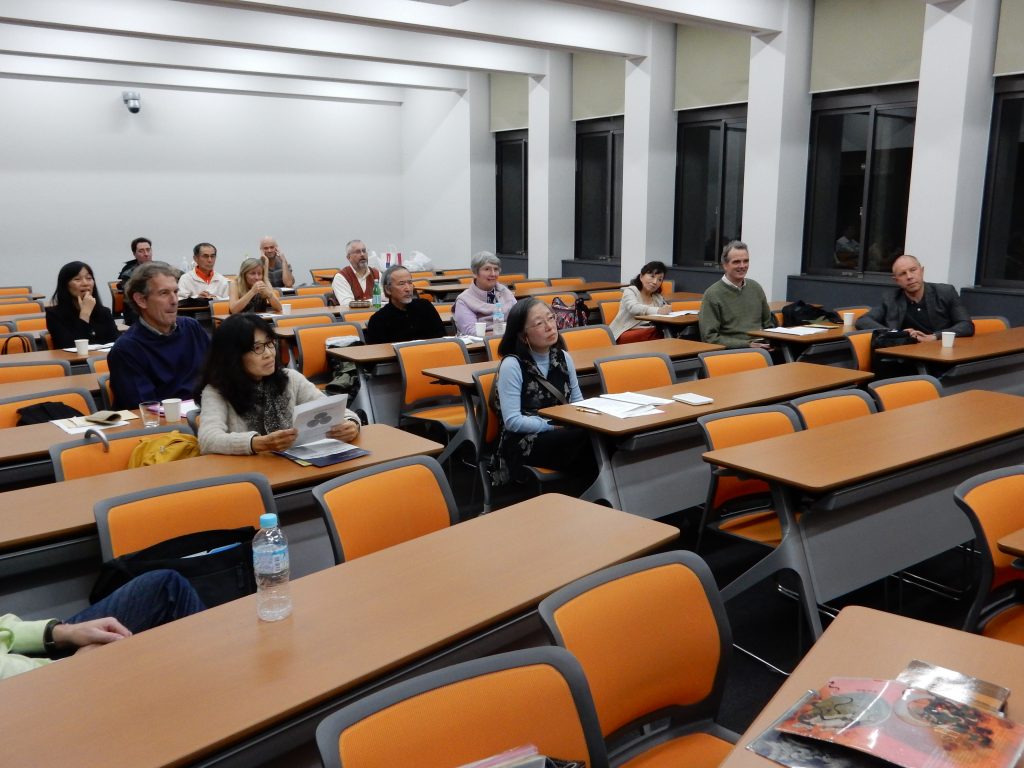
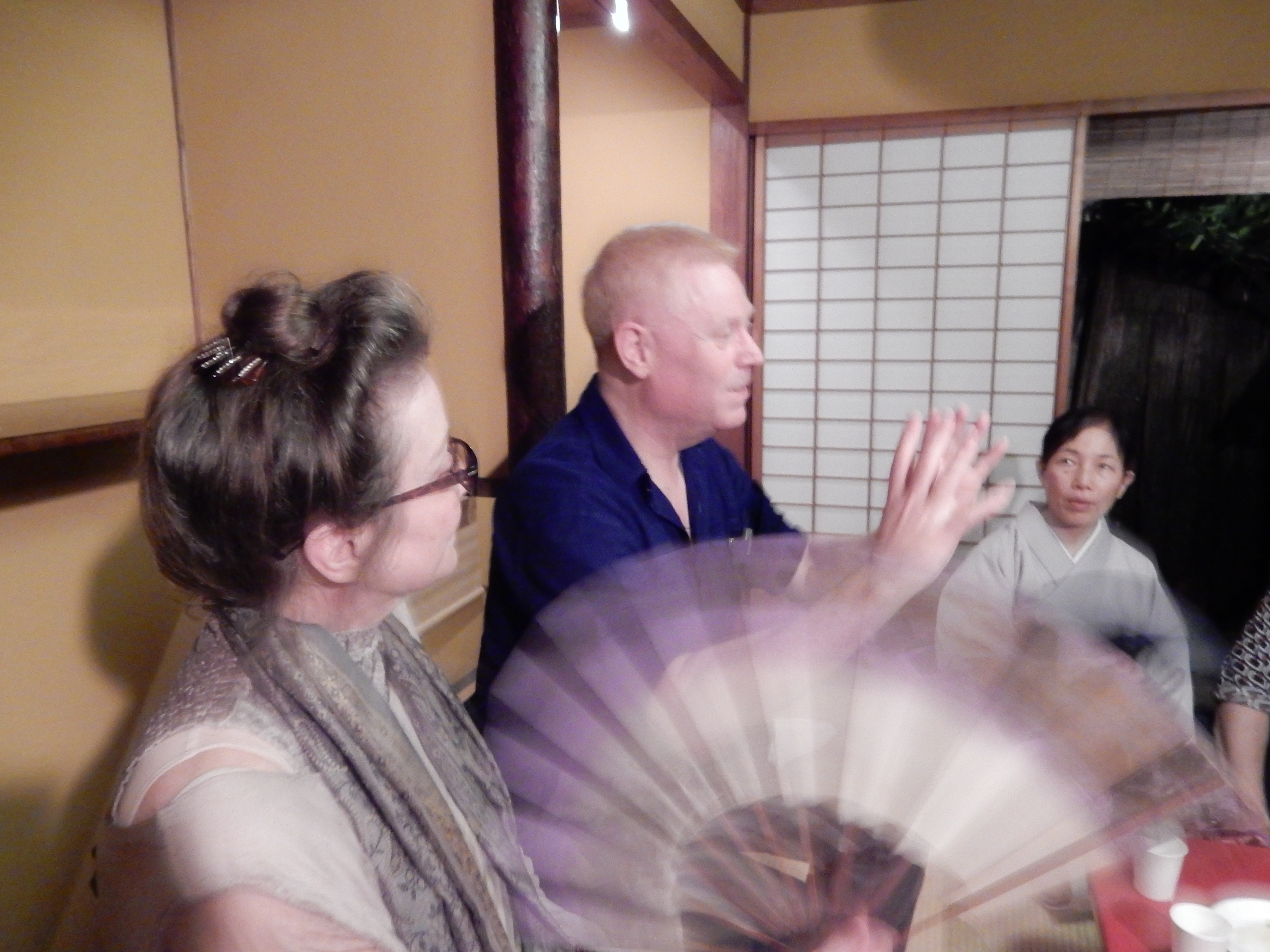
The audience, prior to moving on to a nearby hostelry afterwards for socialising and further discussion

The audience, 18 in all, lucky to listen to three excellent and well-prepared presentations. ‘The diversity kept me awake,’ commented one afterwards.

Image of Basho the traveller, portrayed as a dot in travelling robes next to a Banana Tree (shown during Stephen Gill's presentation)

Image of Basho the traveller,with his travelling hat next to a Banana Tree (shown during Stephen Gill’s presentation)

Writers in focus

Foreign Correspondents (Eric Johnston)

12650841_1323241877701491_3990322212727594251_n

Spot the foreign correspondent on assignment in Kanazawa

Why The World Still Needs Full-Time Foreign Correspondents

By Eric Johnston

Along with polar bears and black rhinos, the plight of the full-time foreign news correspondent is a subject of growing concern among arm-chair zoologists who fear the magnificent beast, which once roamed the world at will and congregated at exotic watering holes, is now on the verge of extinction. As the years progress, sightings in the field grow fewer. Spotting a genuine full-time foreign correspondent on the hunt is as difficult as spotting an Amur leopard in the Siberian wilderness.

Anarchists in media studies and high tech would have you believe this is wonderful news. The communications technology revolution of the past two-plus decades, they assert, means anyone with a computer is now a “foreign correspondent” – a comrade-in-arms to help break the back of corporate media, thus leading to a better-educated public, outbreaks of democracy, peace and love, etc., etc. Buy an iPhone or iPad and you, too, can report on developments in Sub-Saharan Africa, the Middle East, the jungles of Borneo, or the trendy streets of Copenhagen, Mumbai, Cape Town and Tokyo —all from your apartment. Your “friends’’ on a half dozen social media networks will constantly yearn for your deep analysis of world developments, the result of hard-won wisdom gained over long minutes of Googling.

As English is now the main international language of communication, there are plenty of fellow “reporters’’ in far-flung lands whom you can tap for information in a common tongue. If not, no worries. Computer translation has advanced to the point where most languages can be rendered into good, if not excellent, English. Thus, the “InstaJournalist” with the right technical skills can, the proud citizens of Utopia conclude, offer an accurate picture of what’s going on overseas via on-line translations of Arabic, Hindi, or Japanese news sites and blogs by anonymous users. Certainly a more accurate picture, they insist, than that offered by a traditional foreign correspondent with long years of experience and outdated ideas about the importance of careful editing and confirming the facts.

imagespdp8scwa

Well, not quite. Putting aside the obvious questions of trustworthiness and reliability of the many Instajournalist-generated reports due to their second or third-hand nature, it’s plain that computers can’t do all the work (yet). Thus, freelance journalists proliferate. Available in all sizes, shapes, temperaments and talents, and far cheaper than a full-time correspondent, harried, cost-conscious editors and producers are delighted to have a stable of ready, willing, and able Knights of the Pen (or Video Camera) at their beck and call. Don’t like Freelancer A’s attitude after he complained bitterly about being stiffed on expenses? Just e-mail his competitor, Freelancer B, who never complains. Even when he gets stiffed on expenses. Feel that Freelancer C is becoming difficult to work with because she’s reluctant to take late-night phone calls for story requests she criticizes as trivial? Freelancer D is willing to jump on your perfectly reasonable request at 11 p.m. to churn out 1,000 words or file a video piece by 4 a.m. her time on the lady who turned her house into a museum for used paper clips.

With the freelance system, reporters must often tailor their lives, their honor, and their fortunes to the whims of those they may never have met and probably never will. If they’re lucky, they work consistently with ethical, professional organizations that edit well and pay on time, and in the full amount. If they’re unlucky, they’re asked to do last-minute rewrites and reshoots, and then spend hours chasing down payment that was promised months ago but has yet to materialize because (1) the assignments editor sent the invoice to the wrong person; (2) the payroll clerk got the bank details wrong, just went on vacation, and won’t return until next month; or (3) the editor who commissioned the piece suddenly quit and nobody else in the office has ever heard of the freelancer.

Whatever the journalistic advantages of an expanding freelance system (and there are many), there’s no doubt that, for media firms, it’s the short-term financial advantage that matters most. Combined with the aforementioned technology advances making citizen journalists of us all, it’s no wonder the traditional full-time foreign correspondent looks like a candidate for the IUCN’s Red List.

That is the great irony. The tech utopians and anti-corporate media types, well-meaning and sincere though they may be, have been joined in their crusade to run the traditional foreign correspondent to ground by the very people both groups profess to hate: hard-hearted, cold-eyed, traditional corporate media. Not that the attempt by the latter is anything new.
fc

As was documented as long ago as 1983 in Ben Bagdikian’s The Media Monopoly, boards of directors at major media are far more interested in stockholder profits than in public- service journalism. They were cutting newsroom staff years before the advent of the Internet. Then, the end of the Cold War in Europe in the early 1990s meant high-cost foreign correspondents in particular were no longer automatically defended in smoke-filled executive rooms as indispensable

By the time the first Clinton came along and started promoting a corporate media-friendly Democratic Party at home, it was clear a posting to London, Moscow, Beirut, Rome, or Tokyo was looked upon less favorably by senior editors and bean counters than had been the case a few years previously. Instead, the job was increasingly seen as a waste of money better spent on entertainment news or executive editor salaries. The age of cuts in foreign news reporting by Western media accelerated. In Tokyo, for example, bureau after bureau closed or scaled back in the 1990s. Some moved to Beijing or Bangkok, where it was cheaper, and where the editors believed there was more news.

True, foreign correspondents were still to be found at Associated Press, Reuters, and other wire services. But that was because they provided round-the-clock bulletins and news reports to thousands of newspapers, TV stations, and corporate clients worldwide at a fixed monthly cost, the kind of “just the facts, ma’am’’ stories that could be reworked by an anonymous, low-paid subeditor at a local news organization with no objections from the reporters in the field who filed it. Wire service reporters themselves started to refer to their jobs as the “McDonald’s of Journalism’’—ever-more standardized writing styles that were the same regardless of topic. A big lead paragraph, hold the writer’s opinion, and a side order of expert quotes.

Of course, wire service reporting was often less a job of “correspondence’’ and more one of stenography. First-person reporting using subjective language, irony, deadpan humor, wit, and alliteration in an attempt to capture complex truths was often absent, replaced by reporting that was usually a mere collection of facts and a bit of context (but not too much, lest somebody out there either not understand or take offense). Old-fashioned foreign correspondence was clearly in danger. With fewer exceptions, media firms decided foreign news from a full-time correspondent was much less cost-effective than what the wire services could turn out/churn out. Nor could television and radio stations easily justify the huge costs of staffing an overseas office with full-time reporters, technicians, and the massive costs of reporting, editing, and producing stories.

The result was that wire service reporting in general but especially from abroad became ever-more ubiquitous, ending up on the Internet where it could be accessed for next to nothing. That, in turn, forced newspapers and other media to do the same thing with their original reporting. And this is the first mistake we in the media made when it became clear the Internet was not just another communications tool or fad: We failed to adequately show the public the information they read for next to nothing via the virtual world of cyberspace could be produced only via hidden, but very real, costs incurred by real people in the real world.


One tragic, unintended result was that an entire generation came of age in the 1990s believing information should be, if not free, than almost free. It was never understood, or had been ignored in the rush to log on, how much money, paid for by the media firms (which really meant traditional advertisers), was needed to not only gather information but also ensure it was as accurate as could be when it reached publication or was broadcast. In an ever-expanding Internet universe with its countless free news websites, to demand people pay more, not less, for news they did not want or feel they needed was not only impractical. It was also a violation of “free’’ speech, now taken literally by an ever-more Internet-savvy public.

This led to the second fundamental mistake we in the media made: We failed to convince the public in financially sustainable numbers that some stories need to be supported not because they make you feel good about yourself but because they are important to the world we live in.

Such as foreign news stories. As inter-connected global problems ranging from the local effects of post-Cold War liberalism and expanding American imperialism to climate change and the threat of pandemics became more obvious, it was ever-more crucial that people, sucked into their Matrix-like virtual worlds, understand that what happened far away still had relevance to what was happening at home. Especially to decisions by one’s own government or company that impacted those in far-away lands.

imagesh81km98c

Everyone agreed that foreign correspondents on the ground could provide the necessary reporting to better inform the discussion on what readers and viewers would like those decisions to be. But what kind of reporters should be filing those reports was a journalistic question that grew ever-more difficult to answer. Popular culture and history also intertwined to create public images of traditional correspondents that are iconic but also difficult to set aside when in pursuit of modern, objective, and practical solutions to save the species.

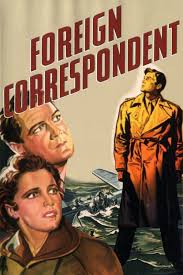
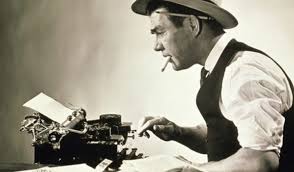
Thanks to Alfred Hitchcock’s classic Foreign Correspondent (and a much lesser known B-grade flick Tokyo File 212) as well 20th century stories of foreign correspondents making history — think Edward R. Murrow’s radio broadcasts during The Blitz of London in 1940 – the myths and legends of those dashing heroes of yore, racing around glamorous capitals in trenchcoats and fedoras, meeting dissident painters and politicians in bohemian cafes late at night, or broadcasting live from the scene of a genocide or clash with government troops remain the primary positive media images of the trade. Granted a measure of respect by the public and wide latitude by management, the foreign correspondent was viewed as, if not always noble, then at least better than the rabble on the city desks, the hard-drinking, chain-smoking cads who hung around police stations, courthouses, and seedy bars looking for sensational stories of crime and corruption.


In reality, as documented in Are Foreign Correspondents Redundant?, a 2010 report by the Reuters Institute and Oxford University, there was often a great deal of waste and laziness in foreign bureaus. A correspondent might not file a story for weeks, perhaps months, while out who-knew-where doing who-knew-what. All the while drawing a full-time salary plus expenses. Foreign correspondents ran their own little kingdoms, enjoying a degree of financial freedom that could provoke jealousy back on the city desk or in the lifestyle section. When the international mail arrived (via a Cunard liner or the PanAm Clipper,) it often contained envelopes stuffed with receipts for goods and services the green-eyeshade brigade found dubious at best and illegal at worst. Legendary British foreign correspondent James Cameron once reportedly charged his bosses 1,000 pounds for the burial of a camel he’d used on assignment.

That was the kind of thing senior editors who had done a stint abroad understood. They knew a degree of flexibility on what constituted “legitimate” expenses was needed. They ran interference between the far-off correspondent and penny-pinching accountants who could not comprehend why a reporter in a dusty frontier town, isolated jungle village, or urban war zone didn’t get an itemized receipt for services rendered from the minor warlord, emerald smuggler, or jack-of-all-trades “entrepreneur” they met in the café or the bar. However, over the last two decades, as young corporate types –and the Internet– moved into editorial rooms and cut back on foreign bureaus, and veteran editors moved out into the desolate wastelands of sales, advertising, and public relations, the levels of sympathy and tolerance within management for huge expenses incurred by globe-trotting foreign correspondents dropped.

Of course, there was the other kind of foreign correspondent, the well-heeled type from a respectable family and graduate of a famous East Coast university who always knew who the ambassadors were, how to tell a duke from a count, and which wines to order with the Beef Wellington or grilled swordfish. If they worked in television, chances are they commanded not only generous expense accounts but also salaries that put them in a different tax bracket from their fellow hacks. This led to the false belief among television viewers that foreign correspondence paid extremely well. Certainly better than whatever job most happened to be doing.

Nothing could be further from the truth. While many established foreign correspondents, either full-timers or freelancers, have incomes that place them in the upper middle-class, far more are struggling to make ends meet. Not a few moonlight as ghostwriters and editors, or teach the occasional class in order to make sure the house and car aren’t repossessed. Absent a trust fund and unable to amass a fortune playing the ponies, video poker, or the stock market, they are distracted by the need to earn cash. None can afford to say no to outside, non-journalistic income, which comes at the expense of time and often money needed to (eventually) become a financially successful foreign correspondent.

images6h25j16p


Other accusations long leveled against traditional foreign correspondents had to do with doubts over their competence as observers. Many did not really speak or read the language of the country to which they were assigned. The better ones whose native language was English might do well in French. Especially if they traveled around Europe or the Middle East. Most had enough Arabic, Russian, or Chinese to talk their way into taxis and hotels. But unless they spent more than a few years in-country and became truly fluent, they relied heavily on underpaid, anonymous local staff to do everything from set up interviews with the Prime Minister to translate local newspapers to pay off whoever needed paying off so that the foreign correspondent could get the story.


In other words, it was the foreign correspondent’s job to observe on a general level, much as an intelligent, but linguistically limited, tourist would. The resulting analysis, much like that of a tourist, might be based less on their own questioning of sources and more on how local assistants who handled the details saw things when asked. Not surprisingly, those staff members were not always averse to telling the foreign correspondent what they thought he or she wanted to hear instead of what was true.

A second, related criticism was that, as the traditional foreign correspondent was not an expert on a particular country or culture, it was impossible for him or her to convey a fair and accurate picture of what was really going on. There is much merit to this argument and I have used it myself on numerous occasions with friends and total strangers. However, caution is in order.

First, it`s not merely a question of conveying the thoughts and feelings of people by reporters who are linguistically and culturally fluent local residents. Rather, it’s a question of whether that which is being conveyed is being done in a way that is not only truthful, but also resonates with those receiving the report. Hence, one’s knowledge of the country and culture one is speaking to should ideally be as good as, if not better than, one’s knowledge of the country and culture one is speaking from. Otherwise, the “truth’’ may not matter because the message that contains it will fail to resonate with readers and viewers “back home” on an intellectual or emotional level.

In other words, this is not a problem of simply finding bilingual local correspondents who spent time in the country where the media organ is based. It’s about finding reporters with a natural sense of how to get the story from local sources in a way that demonstrates a high degree of knowledge, street smarts, and common sense, and an ability to convey that knowledge in a way that demonstrates a high degree of knowledge, street smarts, and common sense about the culture to which the information is being conveyed.

Such correspondents are not normally discovered among eager, academically bright university students who want to dabble in journalism abroad before they head off to graduate, law, or business school, join an NGO, start a business, or apply to work at the United Nations or Foreign Ministry. Nor are they likely to be found among sincere, hard-working, and often courageous veteran journalists of the country in question who are incredible sources of knowledge, information, and contacts within their own country, but know little about the outside world and can barely speak your language.

Where might they be? A good place to start looking is among experienced foreign media freelancers as well as among long-term expatriates and locals who possess the knowledge and communication skills to be excellent foreign correspondents if only given the chance to do it as a proper career. It is, therefore, past time that Western media organs in particular reinvest in full-time correspondents, and ensure their role is suited to the realities of the 21st century. A partial list of ideas for saving the endangered species, keeping all of the above ideals and realities in mind, would include:

  • Hiring a citizen or resident of a country where the foreign bureau is to be based on the condition that, while their future might include a posting to the home office, it will not include being sent to a third country in which the correspondent was not already linguistically and culturally fluent. The job of the 21st century correspondent working full-time should be, to a degree one did not see in the previous century, to become an expert on not only the country or region where they are stationed but also an expert on conveying information about that country or region in a way non-specialists also understand.
  • Emphasizing that a foreign correspondent is just that—a full-time correspondent, whose work includes not only news and feature stories (print and broadcast) but also bulletins, updates, and reports on the country in question. These might not be printed under the correspondents’ byline but would be used within the media firm as material for company-published books, specially-commissioned reports, private briefings to advertisers, or other uses as deemed appropriate by the media organization. To a degree, this is already happening at select media.
  • Making the foreign bureau a conduit for communication between that country and the media’s readers and viewers via sponsoring various town-hall type meetings over the Internet and, when possible, direct symposiums involving the public. We have the technology to do this cheaply. What is needed is the imagination and will on the part of the media firms to make it happen. In the process, new readers and, hopefully, advertisers and financial supporters will follow.
  • Explaining to readers and viewers with every issue and broadcast that foreign news is often neither cheap nor glamorous, but that, given the multitude of interconnected global issues the world confronts, it’s necessary, regardless of expenses incurred.
  • Explaining with every issue and every broadcast that sustained verbal support for foreign news from readers and viewers is desperately needed because of modern advertising pressures to not spend money on that which does not lead to the greatest possible short-term dividends to stockholders. If a media organ’s editors and producers do not see active public support for the firm’s efforts at more foreign news, the stockholders certainly won’t agree to support foreign correspondents.

The aim of bringing back the full-time foreign correspondent is not to eliminate the freelance system. That will never happen and never should. Rather, the aim is to rebuild public trust and interest in international news and to get people to take it more seriously via the hiring of more correspondents on a full-time basis. Unlike freelancers, full-timers can afford to make the investment of time needed to develop long-term contacts and become the eyes and ears for their media firm abroad, leading to better, more stable reporting and increased public trust.
imagesow1txll1

It’s a very tall, very idealistic order, I readily admit. No doubt it seems hopelessly naïve, behind the times, or impractical. It presumes the existence of an intelligent, engaged public with the time and need to take seriously the idea a now ubiquitous media where everybody is a potential journalist can, and should, temper its impulse to report on the cheap. It challenges the tendency in too many newsrooms to pursue stories only after consulting social media managers about the number of “hits’’ they might generate. It suggests there is merit, and a future, in hiring people full-time, at great but necessary expense, to work on stories that are far away geographically as well as emotionally. More importantly for the bottom line, it assumes advertisers and, above all, shareholders and stakeholders will financially support such efforts because they understand the ultimate reward is something more valuable than immediate stock dividends: long-term public trust and respectability.

But one has to start somewhere. If full-time foreign correspondents return in greater numbers and report on serious issues then perhaps, just perhaps, the results of their labors will make it slightly easier for people to understand and, hopefully, address common international problems raised by such correspondents. Absent the financial pressures, lifestyle instabilities, and sometimes complicated loyalty questions that often plague freelancers, a full-time correspondent with full-time backing of the media organization they represent still cuts a very powerful figure in many parts of the world. Especially those parts that worry about the international furor and possible loss of foreign investment generated by that media firm if its foreign correspondent is harassed.

But most of all, with the prestige full-time correspondent has (which includes a measure of fear and respect), the foreign correspondent might also better serve as a distant check on the abuse of power abroad by politicians, foreign policy experts, and corporations at home. Especially by those not interested in sharing information about foreign lands with the voting public. This the kind of arrogance that, if not vigorously checked, will lead to the extinction of far more life forms than the mere foreign correspondent.

Writers in focus

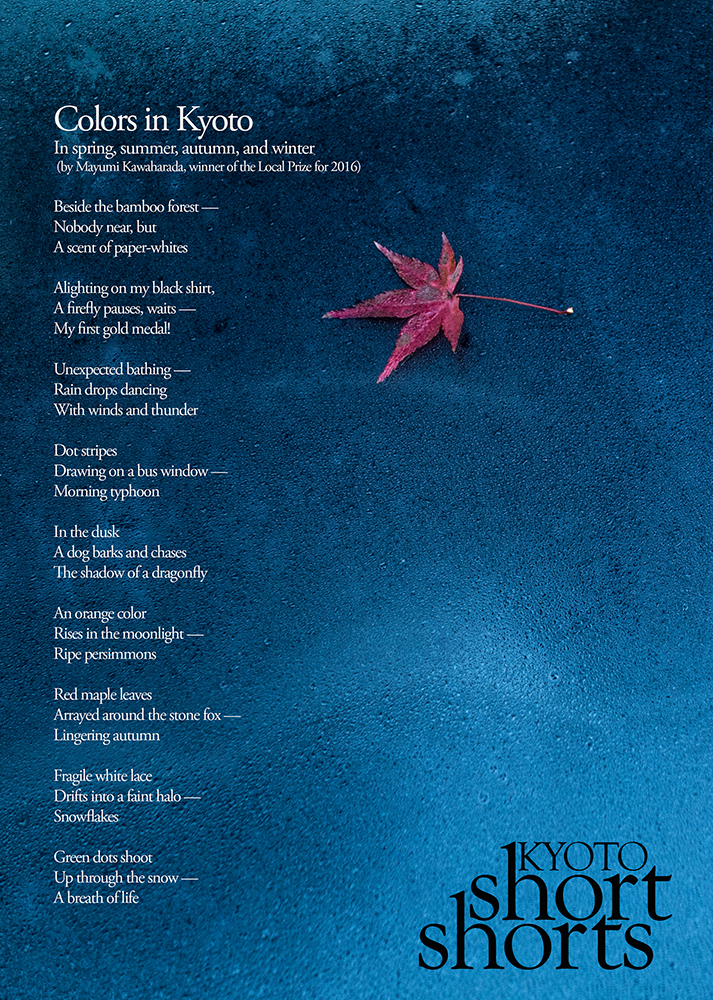
Haiku pics (Mayumi Kawaharada)

p1020691


p1010349


Phantasmagoria 

An old well left

In an empty land—

A cherry petal drops into it.


Desolate lands,

Beaten by the rain––

A dayflower blooms


Construction noise

Echoing in the rain—

A machiya screams


A Cicada’s voice

Lost in the noise–

Demolishing another machiya


The cicadas’ call and respond

To the rhythms of a backhoe––

Kyoto, bound in choir, 2016


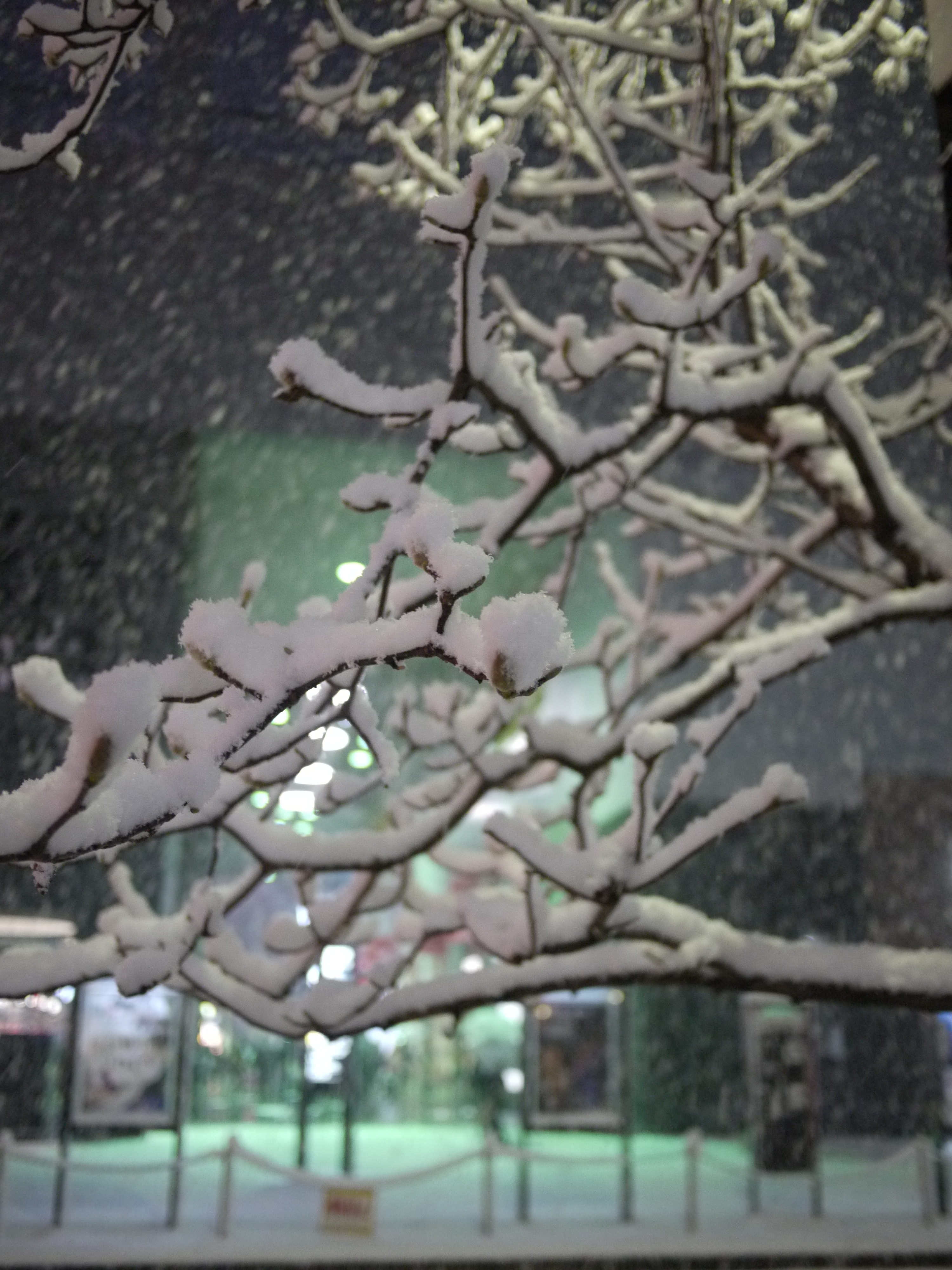
All the rattle and crash in Kyoto

Covered by sudden snow–

Christmas night

p1050738

A cherry tree in bloom

Welcomes the breeze––

An empty elementary school


Trace the Samurai’s footsteps

Across the asphalt jungle—

The heat shimmers in mirage


A parking lot

Where a Samurai’s house stood…

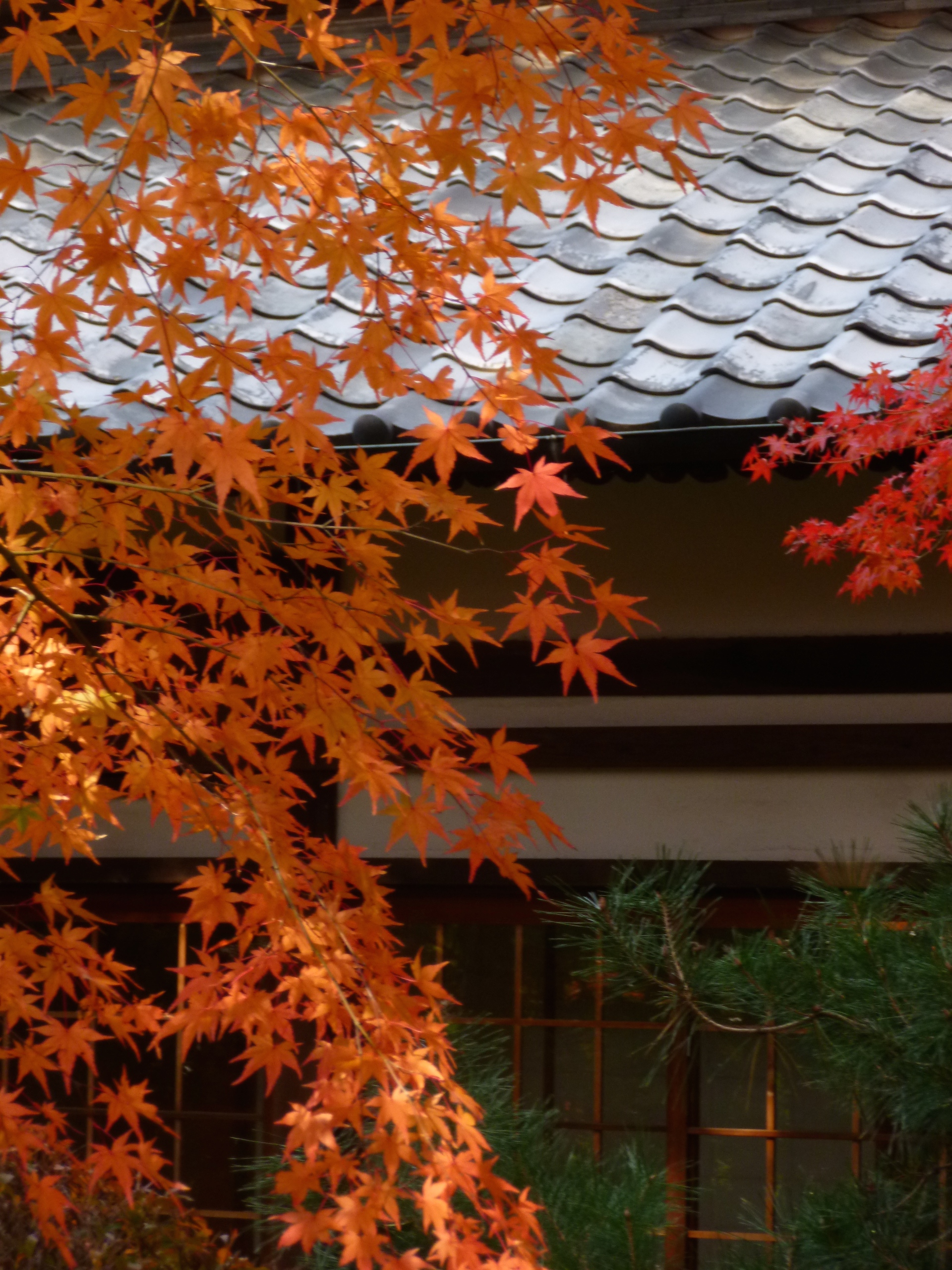
Autumn rain


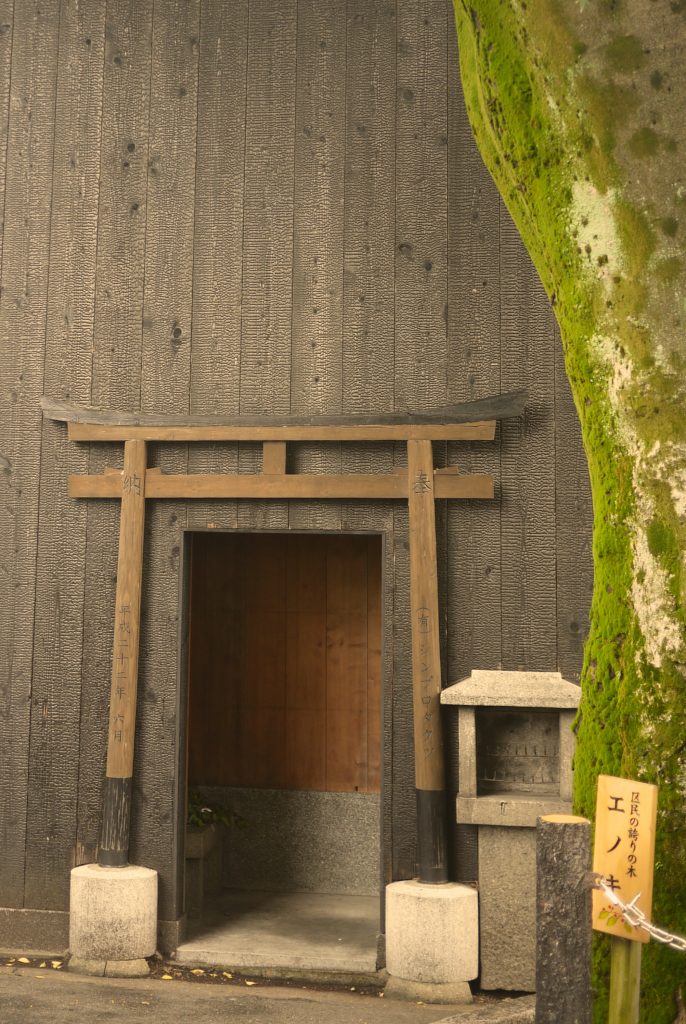
A Shinto shrine lay

Among the skyscrapers —

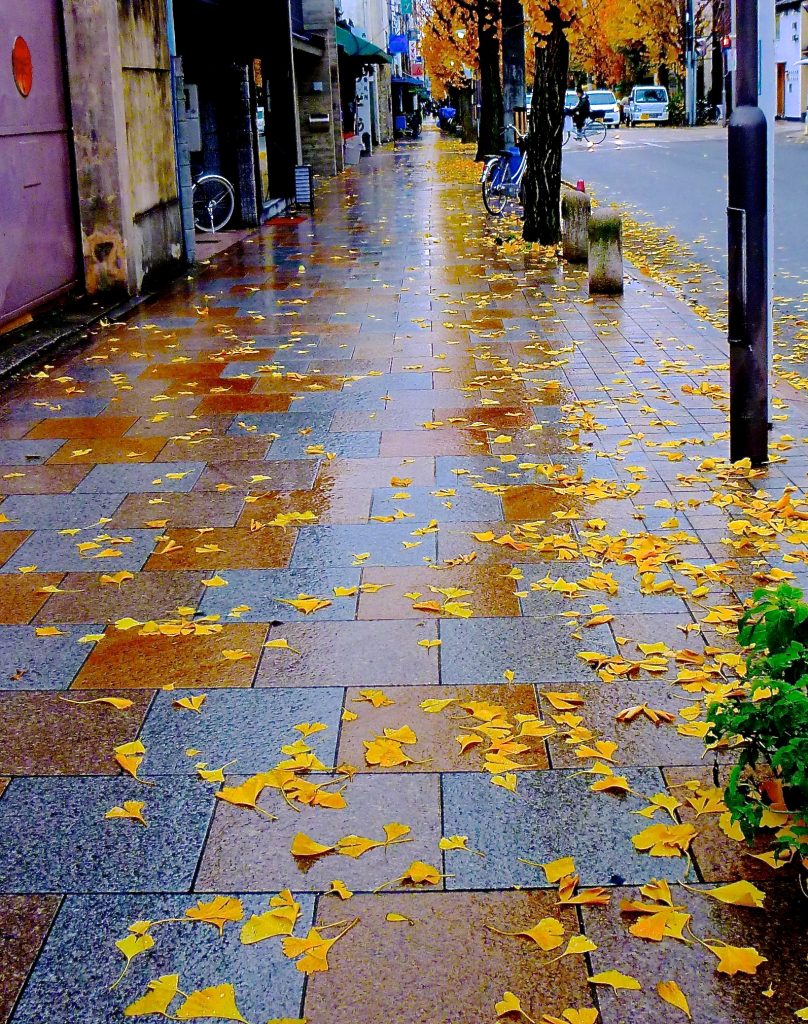
Golden Gingko valley


The Buddha keeps watch

Over the urban hustle and bustle––

Snowed rooftop temple


Twelve-storied condos

Spout up across the city—

Urban bamboo shoots

p1090180

p1060107 p1020447

Alex Kerr’s book launch (Another Kyoto)

dscn7341

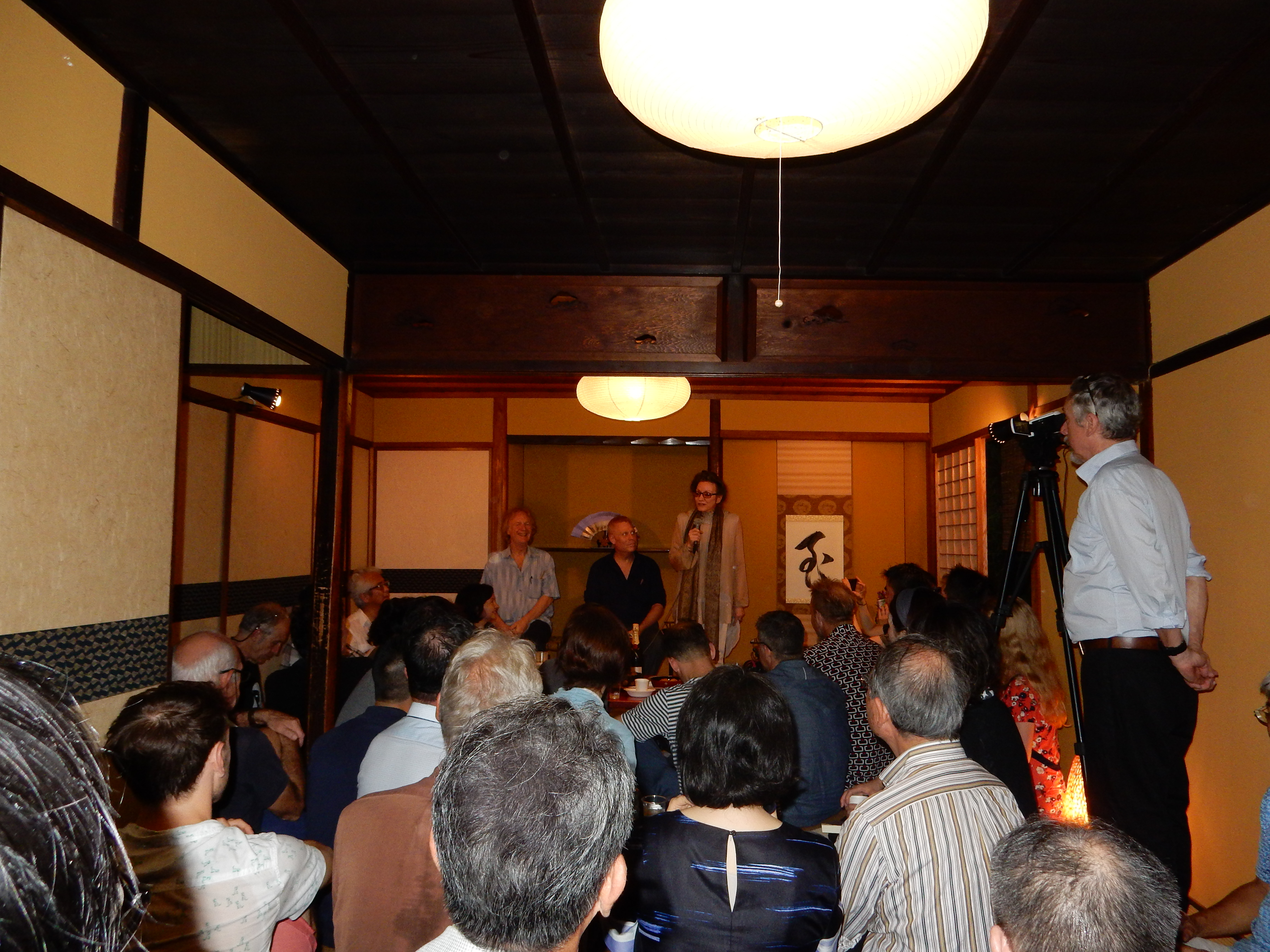
Kathy Sokol, who collaborated on Another Kyoto, talks of how the book came about through Alex’s explanations of the places they visited. The event was held in the very fine and well-preserved old machiya in which she is living temporarily.

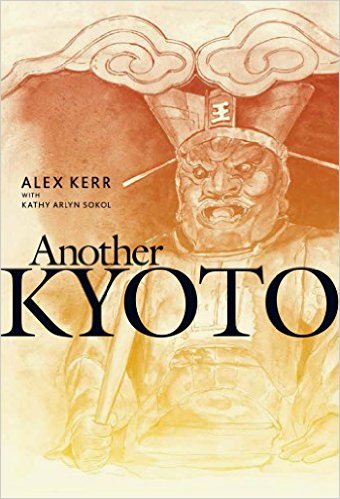
October 2 saw the book launch of Alex Kerr’s new book, Another Kyoto.  A packed audience hung on his every word as he ran through his thoughts on Kyoto and Japan, drawing on his vast experience in terms of involvement with the country’s arts and architecture.  The evening was split into two parts, with a presentation by Alex and Kathy in the first part and a Q and A session in the second. Drinks and snacks were provided in one of the machiya’s several rooms and a book signing in another.  The house, near Kitano Tenmangu, had formerly been occupied by a geisha from the Kamishichiken district who died at the age of 102, as a consequence of which it escaped modernisation (and demolition), retaining its original character with painted fusuma and tea room.  The setting could hardly have been more perfect for a speaker known for his restoration of old houses (as well as once running a business renting out restored machiya in Kyoto, Alex set up the Chiiori project in Shikoku).

Another Kyoto

There are of course already several guidebooks to Kyoto, but Another Kyoto is remarkable for taking a completely different approach.  This is evident straightaway in the Contents. Rather than the standard listing of famous sights or geographical areas, the book covers such aspects as Gates, Walls, Floors, Tatami, Plaques, Fusuma, and Screens.  The chapter on Shin-gyo-so is particularly illuminating about the different styles of formality, applied to paintings, ceramics and gardens.  Only the final chapter on (Senbon) Enma-do has a conventional subject matter, and as Alex points out the temple is hardly mainstream.

By focussing on the material aspects of the arts and artefacts, Alex draws attention to features that are not usually considered or even referred to.  In this respect the book is truly original – an extraordinary accomplishment for a city that has been so much written about.  More than this, the book does what any work of art aspires to; it makes the reader see the world around them with fresh eyes.  With Alex’s comments in mind, one no longer simply views a fusuma picture as simply a painting, but a precious piece of art on a fragile canvas that is destroyed by overexposure to daylight.  This is all couched in a conversational style which arose out of talks with Kathy Sokol while visiting different places in Kyoto.  Again, it serves to give the book a markedly fresh feel.

Another notable aspect of the book is the contextualisation of Kyoto arts within a wider East Asian setting.  This stems partly from a deep personal involvement with Japanese culture (in addition to being a collector, Alex  practises calligraphy and ran the Oomoto Summer School of traditional arts).  It gives his judgements a measure of authority, for they are born out of close personal involvement.  This is reinforced by his background knowledge of East and South-east Asia: he studied Chinese Studies at Oxford as a Rhodes scholar, and he lives half the year in Bangkok where he has taken root to the extent that he considers it as much ‘home’ as his residence in Kameoka (he is also working on a program there for traditional arts).  As a result we do not see the arts and architecture of Kyoto as isolated examples, but as part of larger continental developments.

A third, and no less striking aspect of the book is the deliberate ‘provocation’ in challenging conventional views.  Zen for example is described as noisy, loud and full of words – a far cry from its image as mysterious and silent.  Gardens too, the pride of Kyoto, are downgraded as inferior versions of the genuinely artistic paintings that inspired them.  In his talk, Alex smilingly admitted to a certain relish in provoking controversy with his remarks, and in his book he comments at one point, ‘We’ve got off onto a vein of gushing admiration, the usual tone of the stuff that people write about Kyoto. It’s really not my style.’  Yet even where one may disagree with his provocations, they always make one think and they often reveal an unexpected truth.  For all the books on Kyoto gardens, for instance, there is not a single book about Kyoto art.

In the Question and Answer session, Alex was asked about his other books, and spoke of the award-winning Lost Japan as a work of love that would appeal to newcomers to Japan, while Dogs and Demons dealt with realities that had more relevance for longer-term residents.  Another Kyoto, he said, was probably for those who had already gained an overview of the city’s cultural history and wanted to go beneath the surface.  In response to another question, he talked of his memory of David Kidd, author of All the Emperor’s Horses and a legendary figure among Kyoto expatriates.  Despite his longterm residence in the city, he apparently loathed Japanese art but treasured the country because it had so well preserved Chinese culture.

Asked about his feelings regarding present trends, Alex expressed (very) cautious optimism.  When he started his machiya restoration project, there were only 12 in the city.  Now there are 200.  Grounds for optimism perhaps, until he pointed out that even today for every machiya being saved there are nine that are being destroyed.  It is symptomatic of a sense of ‘Lost Japan’, and what came over from the event, above all, was the desire of Kathy and Alex to pass on his deep appreciation of the Japanese tradition.  The book is ‘a kind of transmission,’ as Kathy noted.  The book was twelve years in the making, and the labour of love is apparent in its attention to detail and wealth of material; astonishingly there are another nine chapters which could not be included because of size limitations.  It conjures up the prospect that those of us who have read and enjoyed the book will have ‘Another Another Kyoto’ to look forward to!!

dscn7351


A video clip of the event can be seen on youtube thanks to Gary Tegler.  Click here or search for ‘Another Kyoto book launch’.

Writers in focus

Basho’s Letters to Uko (Robbins)

Letters to  Uko

(A chapter from Take Back the Sun – Basho Tells Her Story  Translations and Commentary by Jeff Robbins Assisted by Sakata Shoko)

[Bold face is used for Basho’s own words]


Of the women in Basho’s circle the most fascinating is Uko who lived in Kyoto with her husband Boncho.  We have so much material about her to explore, and residents of Kyoto may appreciate that Uko walked on the same streets they navigate today. Basho wrote about her in his Saga Diary and he wrote the three letters to Uko full of personal details in this article. Also we have many of her haiku, seven of them given here. Here is my favorite of her haiku:

Silencing

the sparkle of stars

night shower

Uko’s ordinary name was Tome. When she became a nun in 1691 she took the Buddhist name Uko, and this is the name she is known by. In the years from 1690 to 1693 when Basho and Uko corresponded, she was in her twenties or thirties, married to Boncho, a doctor in his forties.

A glimpse of Uko and Boncho at home in Kyoto can be seen in the following anecdote: one freezing, snowy night Boncho was about to leave for a poetry gathering, taking along a 12 year old servant boy. Uko spoke out:

Were this my child

no way would you take him!

snow in the night

A 17th century feminist haiku. Uko is threatening to show her husband her strength. (I think of Nancy with her fist in Fagin’s face, saying “No! You will not take Oliver!”)   It is said that “Boncho, awed and ashamed, went on alone.”

Historian Louis Perez translates these instructions from the contemporary moralist tract, Greater Learning For Women: “The great life-long duty of the woman is obedience… a woman should look on her husband as if he were Heaven itself and never weary of thinking how she may yield to her husband and thus escape celestial castigation.”

To this nonsense, Uko says “Not me!”

Our first Letter to Uko was written in late October, 1690:

Recently Old Boncho and Kyorai came to visit.  Although it must have been a bother to them, for so long we lingered, unable to part,
so you shall realize how unlimited was our joy.

 Once a man reaches forty, ro, “old,” is added to his name. I suspect   “Old Boncho” would not be so happy to see himself called this; but since this is a private letter to Uko, he will not know. Basho says that keeping company with him is a duty Boncho and Kyorai have taken on, so a bother to them. Of course he doesn’t really think this; he just says so for appearance (tatemae). How the Japanese love to prolong farewells. It is interesting how often the word ‘joy’ (yorokobi) appears in Basho’s writing.

This winter allow me to hide myself deep in the mountains, but when Spring comes again and again I shall be in your eyes.

To ‘hide myself in the mountains’ means to stay in his hometown of Iga –   not really in the mountains but in isolation, far from the well-traveled road to Kyoto where Uko lives. “Be in your eyes” is a Japanese idiom, but works in English.

I can hardly forget your long-standing benevolence, nor can I say enough about it.  Thanks to the clothing you made for me, I shall not be cold, so you need not worry about me. Let us wait, without misfortune, for Spring.

Yasui Masahiro says, Basho’s letters to women contain mostly short words in which we see a gentleness and humanity (yasashisa to ningenmi) not found in his letters to men. We feel he does not ‘lift his head’ – i.e. be arrogant and over- bearing – to a woman. He makes an impression with simple direct expressions. Take up any Basho letter to a woman and be touched by his unique charm.

Basho spent 18 days this summer in Kyoto and stayed at Uko and Boncho’s house: The following tanka appears in Basho’s letter:

                                          Each evening

                                          kettle surely boiling,

                                           how I miss

                                           those three pillows in

                                             the room where we slept

                                                       This is to you      

                                                      Basho  

                                         [Yoi yoi wa kama tagiru-ran ne-dokoro no

                                            mitsu no makura mo koishi karikeri]

Basho recalls the tea ceremony Uko performed for her guest.   Basho scholar Kon Eizo elaborates Basho’s meaning in the first two lines: “as I think of the kettle boiling in your tea cottage,   I imagine your peaceful, settled lifestyle” — a lifestyle so serene that each evening she has the time and heart to make tea in the formal meditative Way of Tea.

In a Japanese home of refinement, the houseguest never puts out his or her own futon and pillow; the wife of the house always performs that role while the guest is in the bath. Because Japanese line things up in parallel as an expression of respect, and because Basho was her teacher and her houseguest, we can assume that Uko diligently lined the futons and pillows up in three even vertical columns — like the three strokes of the Chinese character for ‘river,’ , which suggest a baby nestled between mommy and daddy, receiving warmth and security from both sides. In the tanka the heat of “kettle boiling” flows into the warmth in Basho’s memory of “those three pillows.”

The tanka focuses on Uko, praising her hospitality, her tea ceremony, the sleeping arrangements she made for her guest. Basho wrote many haiku praising the splendor of Kyoto’s temples and shrines, as well as yearning for Kyoto long ago, however here he praises the living humanity in Kyoto, the graceful serenity of his hostess, the intimacy of their friendship.

Two years before the writing of this letter, at the end of 1688, Uko wrote this haiku:

With no child,

of what shall I think?

the year ends

She sketches the unsettled feeling of a woman whose hormones seek pregnancy; in 1689 they won. (Old Boncho scored!)   So by the time of this letter, autumn of 1690, her daughter must be near her first birthday (in the Western sense. The Japanese did not have birthdays — everybody just became one year older on New Year’s Day. Simple.)

p.s.  May you raise Tei-chan without misfortune. Yoshi from far away also says this to you.                                                                        

Basho politely addresses the infant as Tei dono — “Little Miss Tei”. However he got the kid’s name wrong. Uko’s daughter is Sai. ‘Yoshi’ is short for Oyoshi, Basho’s little sister, now about 40. When Basho was in Iga at his house, Oyoshi asked him to take her best wishes to Uko and the baby; here Basho kindly delivers them. There are three persons in this postscript, all female. Basho pays attention to the energy passing from one female to another. Basho writes ‘like a woman’, with consciousness of women, children, and personal relationships.

In the spring of 1691, Uko took the tonsure of a Buddhist nun – which in Japan means cutting the hair to shoulder-length — although she continued living with her husband and two year old child in a wealthy section of Kyoto. Bessho Makiko notes that many woman haiku poets became nuns – after the husband passed on. Uko is the only nun-wife with an infant daughter. (Say what?) Shoko, from reading Basho’s letters to Uko, gets the impression that Uko becoming a nun had little or nothing to do with Buddhism.   Being a nun gave a woman freedom to travel and interact with many people, but also Shoko suspects that Uko wanted to ensure that she would not get pulled into a relationship with another man if Boncho disappeared from her life—which does in fact happen in 1693. Boncho was quite enough.

I have a different idea. Uko became a nun because she did not want any more children. Sai-chan was quite enough. Officially sanctioned celibacy was the only way she could keep Boncho off of her.   He was in his forties and concerned about appearing “old” and she still young and vibrant. So Uko was not “really” a nun, it was just a disguise, a tatemae for appearance, as a means of contraception.

People want their cultivated chrysanthemums to be perfectly healthy for the Chrysanthemum Festival on the 9th Day of the 9th Moon (in 1691, October 29), when everyone goes around town admiring the many different colors and arrangement of this late autumn flower. It is a custom to wrap cotton around them in the days before the festival so they won’t catch cold.

Uko sent Basho a present, a cushion she designed and sewed to fit around his hips while he sits to keep them warm this coming winter. Basho’s replied on October 3, 1691.

With your letter came the cushion you made for my hips and sent to me from the intention of your heart, not from a shallow place within you, and so I am grateful. Now as we wrap chrysanthemums in cotton:

In the first frost

flowers start to feel cold,

my hip cushion

When finally I can go up to Kyoto I will thank you more.

We recall the tanka Basho wrote to Uko the preceeding year:           

Each evening
kettle surely boiling,
how I miss
those three pillows in
the room where we slept

Both the tanka and IN THE FIRST FROST contain warmth, intimacy, body consciousness, gratitude, and a feminine presence and outlook.

I would like to think Sai-chan is becoming obedient.

In the p.s. to the 1690 letter, Basho called Uko’s daughter “Tei.” In her letter with the hip cushion Uko must have used the correct name, so in this letter Basho gets it right. If Sai was one then, in the year past she has entered the ‘terrible twos,’ that period when every waking moment is devoted to proving independence from mama. Japanese women today say the same about 2 or 3 year olds (otonashiku natta deshō).

p.s.     For the letter you sent to Chigetsu you have made me grateful. Gentle your heart’s intention, returning again and again.

         Chigetsu also knows that feeling.

Chigetsu, another woman follower of Basho, must have told Basho she got a letter from Uko. He praises the gentleness of woman, and also their solidarity. He seems to be building bridges between these two women followers.

Uko sent Basho a letter with two of her haiku; here is one:

Field in spring—

from which of the grasses

came this rash?

 Uko went walking through a field in spring, and got a skin rash. Her verse carries the mind from the vast field of miscellaneous grasses and shrubs to Uko‘s own body. As life emerges in the fields so do plant substances that cause allergic reactions in this season. The leaves of shrubs have prickles on them, and if you touch them, skin rash.

Uko’s other verse appears in Monkey’s Raincoat with this headnote:

I am weak and often sick and to trim my hair was too difficult, so this spring I changed the style.

Hairpins and comb

long ago – fallen petal

of the camellia

Uko begins with the beauty of her hair enhanced by ornamental pins and combs. But much of that hair is gone; the long black hair lies like a puddle on the ground around her – the way many, many red petals of a camellia blossom lie together in a damp clump around the tree. Cherry petals are light and just float away. Camellia petals are solid and chunky — the feeling of all that black hair on the floor.

Following are sections from Basho’s final Letter to Uko, dated February 23, 1693

            As for the two haiku you sent me, they do make the feeling enter.  I am glad to see your talent has not declined.

            Of the two, the verse FIELD IN SPRING made me see an image of the awful rash on your thin hands and legs.

Uko gives no indication of where on her body she got the rash, but Basho sees it specifically “on your thin hands and legs” — the parts of the body that come into contact with shrubs and wild growth as we walk through the field. Both in the haiku and in Basho‘s comment on it, we see much body consciousness. If Basho is so austere and monk-like, how come he ‘sees’ a woman‘s legs in imagination?

From your verse in Monkey‘s Raincoat people feel attracted. They ask me, ‘What sort of beauty is she? Is she ladylike?’

The readers of Monkey‘s Raincoat unfamiliar with Uko cannot tell from the headnote or the verse that she is a nun, and they think “A woman who writes a verse like this, how beautiful and ladylike she must be!” Shoko and I considered various alternatives before she suggested ‘ladylike’ for teijo. I am not exactly sure what “ladylike” means, but somehow it fits. If they knew she was a nun they would not ask this. Nuns have given up all concern for beauty and ladylikeness.

Some Japanese women nuns chose to live an austere Buddhist life, but Uko seems to be enjoying her ordinary life while being a nun. Basho is telling Uko that the readers of her verse feel her femininity, when what they should be feeling is her Buddhism.

 I reply, “She is not beautiful and she is not ladylike.  She became a nun only by the compassion in her heart.”  So discipline your heart to more and more compassion.

Basho‘s response is not to offend her. Remember she is pretending to be a nun without actually renouncing her sensuality. If Basho said Uko is beautiful, that would imply that her nun‘s disguise is not working; we can see through it. Uko, if we are going to pretend that you are a nun, we have to stop seeing you as a beautiful lady –although that is what you are, even without your hair. We have to maintain the tatemae. Although you are pretending to be a nun, in reality, you shall become ever more compassionate.

After he and Kyorai completed editing Monkey‘s Raincoat, Boncho got into a dispute with Basho and left the school – though as we see in this letter Basho continues to support Uko. Sometime around 1693 Boncho was convicted of a crime and imprisoned – whether he is in jail at the time of this letter is unclear.

If Boncho can manage would be good, one step in your favor. Impermanence so swift. And again.

Basho either means “I hope Boncho can stay out of jail” or “I hope he gets out soon.” Meanwhile Uko is on her own with a small child. Mujo junsoku, ‘Impermanence so swift’ is one of the grand central thoughts of the Japanese mind—that everything will pass away so soon. Basho writes it and follows with a repeat mark. Three years ago Uko was a doctor’s wife with a fine house and a tea cottage in a wealthy neighborhood of Kyoto; from now with Boncho in jail Basho realizes that Uko will become very poor. Even when he gets out, no one will go to a doctor who is a convicted criminal.

Sometimes the best part of a Basho letter is the p.s.

With those jerks in Nagoya, all lines appear to be down.  Much unfinished business.

Shoko says yatsubara domo, is a swear word, maybe the equivalent of   ‘those assholes‘– I think “jerks” is strong enough. Shirane describes how the Nagoya group were in 1684, “the primary force in first establishing the Basho style” but from 1691, “they turned their backs on Basho”, so by now “almost all the Owari/Nagoya group had become estranged from Basho.” Basho says communication with them is futsu, as when telephone lines are down after as storm or earthquake.

However, the hip cushion you sent me — this winter, I wrapped it around my head and it kept out the cold.

Part 2 of the p.s. is best of all. In the second letter to Uko,   Basho thanked her for the cushion she made and sent him to keep his hips warm while sitting – well, this winter; he liked wrapping it around his head. This is the real Basho, not some austere saint or Buddhist hermit, but as Shoko calls him, ‘Dear Uncle Basho,’ a bit strange but still a pretty good guy.

Uko wrote this haiku:

Within the toll

of the evening bell –

ho toto gi su

The bright five-note call of the little cuckoo, known as “time bird,” spreads through the vast and deep reverberation of the temple bell.   Uko hears one sound vibrate inside another sound, such is her sensitivity to the physical world.

Yoel Hoffman’s Japanese Death Poems includes this verse by a woman named Uko:

Take me now

where the clouds pass

hototo gi su

 The bird is said to call from the land of the dead, and to carry the dead spirit there.

The Uko who wrote this verse, however, is not the Uko of this article. From her birth date given in Hoffman’s book, we see she was an infant when Basho wrote these letters. Also it is recorded that she lived in Kyoto. It seems like that the author of this death-poem was Uko’s daughter Sai who signed it with her mother’s name.


Note from Jeff Robbins: I request your assistance in getting out the word on this ‘other Basho’ – the warm affectionate Basho who wrote hundreds of poems about women and kids, and hundreds more about friendship and love —   hundreds of Basho works few people know, yet the most pro-female, child-centered, and life-affirming works in all literature?  Your feedback will be most appreciated.  Basho4now@gmail.com


Writers in focus

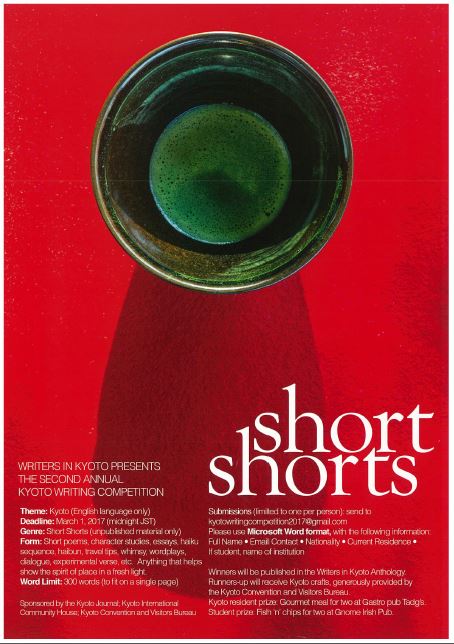
WiK Competition 2017 (March 1)

WRITERS IN KYOTO PRESENTS THE SECOND ANNUAL KYOTO WRITING COMPETITION

Theme: Kyoto (English language only)

Deadline: March 1, 2017 (midnight JST)

Genre: Short Shorts (unpublished material only)

Form: Short poems, character studies, essays, travel tips, whimsy, haiku sequence, haibun, wordplays, dialogue, experimental verse, etc. In short, anything that helps show the spirit of place in a fresh light.

Word Limit: 300 words (to fit on a single page)

Submissions (limited to one per person) Send to kyotowritingcompetition2017@gmail.com
Please use Microsoft Word format, headed by the following information: Full Name • Email Contact • Nationality • Location of Current Residence • If student, name of institution

Winners will be published in Writers in Kyoto Anthology. Prize money for the winner. Runners-up will receive Kyoto crafts, generously sponsored by the Kyoto Convention and Visitors Bureau. Special Kyoto resident prize: gourmet meal for two at Tadg’s Gastro Pub.  Student prize: fish ‘n’ chips with drinks for two: Gnome Irish Bar.

Competition flyer


shortshort2

Writers in focus

Book announcement (Allen Weiss)

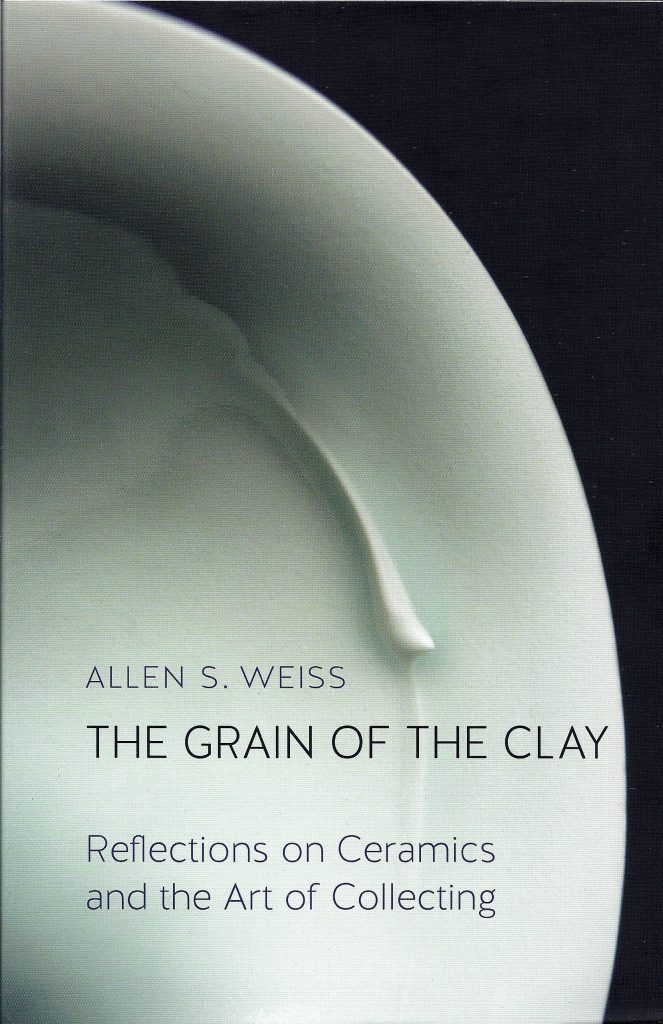
Allen Weiss book coverAllen S. Weiss is known to many in Kyoto through his books on aesthetics, and in recent years he has given well-received talks on the subject (see here).  His latest book has now appeared, and he has generously agreed for us to reprint the Preface below as well as providing samples of the always exceptional photographs that accompany his writing.  Unfortunately Allen won’t be making his annual visit to Kyoto this winter because of an operation on his eye, but he tells us that he has already made plans for the autumn of 2017 so we very much look forward to organising an event with him at that time (some will recall the wonderful talk in Robert Yellin’s gallery that he gave).
************

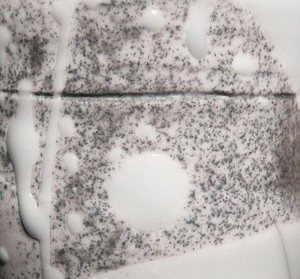
Koie Ryōji, “Night Snow” guinomi, detail

Koie Ryōji, “Night Snow” guinomi, detail

The Grain of the Clay: Reflections on Ceramics and the Art of Collecting [Reaktion Books, 2016] is simultaneously an examination of collecting as a form of autobiography, indeed occasionally as a form of art and an attempt to sharpen our perception, increase our appreciation, and augment our imagination of ceramics. I hope to accomplish this by stressing the sundry means of establishing deeper relations with ceramics in our everyday lives, notably linking the beauty of pottery to the pleasures of cuisine; by investigating the vast stylistic range of ceramics, so as to celebrate their aesthetic value and confirm their unique place in the history of our arts; and by attuning ourselves to the profound poetry of ceramics, especially in relation to the natural world. As Western aesthetic hierarchies are crumbling, works previously sequestered as “crafts” – notably ceramics and cuisine – are finding their rightful place in museums. This newfound engagement with finely wrought natural materials will hopefully foster an increased ecological sensitivity in these times of crisis. In other cultures, relations between the arts have evolved differently. For example, the tea ceremony at the core of traditional Japanese culture highly valorizes cuisine, and places ceramics alongside calligraphy and painting as the highest art forms. This suggests a valuable paradigm to guide our evolving aesthetics, and to elucidate the symbolic and poetic resonances between ceramics, cuisine, and landscape. Unlike the museum curator, the collector lives with the work of art, and thus learns to know its appearance in every lighting condition day and night, its every nuance of form and color, its varied relations to changing decor. This is why autobiographical forms are most appropriate to explore the passion for collecting. More complex, however, is whether an autobiography can be recounted through a collection. Such can be but a tale of idiosyncrasy, and sometimes even folly.

– Allen S. Weiss


Kamo by Allen Weiss

Kamo by Allen Weiss

Writers in focus

Kyoto Faces (Tawarayama)

The WiK Competition Organiser, Karen Lee Tawarayama, has set up a blog called Kyoto Faces with the ambitious aim of giving a picture of the ordinary lives of Kyoto residents.  For a city famed for its tourist sights and imperial history, it’s a valuable project for while the opinions of foreign observers are often bandied about in the English-language media, there is little feedback from the citizens who actually live and work in the city.  Over time Karen may build up a valuable resource that acts as a profile of the city at large.  As an example of these trailblazing interviews, here is an example of a young mother with an interest in architecture.  Her research on trash cans and her views on Kyoto Station may come as a surprise…

*********************

Tell me about a significant memory from your past.

When I was a university student, I really enjoyed going around to visit Kyoto’s temples. I really loved Kiyomizu Temple. And because I was studying architecture, through a connection with my professor, I had the opportunity to guide some visiting high school students there. At that time, a temple preservation and restoration expert taught us about the high level techniques of the carpenters who built the Japanese temples (which remain until this day), and I was deeply moved. I explained this to the high school students, and they were also extremely impressed by this information. So that experience of temples in Kyoto remains in my memory. To explain the architectural technique, it’s a little detailed, but they constructed the buildings without a single nail. The carpenter arranged the beams like a puzzle. And the fact that someone so long ago was able to use a technique that remains extremely complicated until this day is really amazing to me. This technique would be extremely expensive so can’t be used to build a regular house. Most homes are built using very easy and inexpensive techniques, so a temple is the only place where we are able to view this kind of architecture these days.

I studied architecture in university because I had a dream to be an interior designer. I was particularly interested in modern design, like the design of chairs. And it’s kind of a different topic, but for a report in school, we had to look into design techniques to not break the Kyoto scenery, so I did a report on trash cans around Kyoto. For example, I looked into their color, their shape and how they are made to blend in, for example trash cans at temples and other places around town. Most trash cans around Kyoto aren’t brightly colored, but are brown so they blend in with the environment. And trash cans at temples are rarely painted in bright colors, but might have a woven pattern, for example. This is a rather old story of mine though… My professor had mentioned that Kyoto is currently making an effort to do away with public trash cans. When Japanese people have trash, they usually carry it home with them.

What is your dream for the future?”

At this time, I have a one-year-old child, so it’s not possible to go on a long trip. But my husband and I both love to travel, and so do my parents, so it is my dream to go on a trip with my entire family when my child gets a little older. I especially want to go abroad. My husband and I went to the Czech Republic for our honeymoon, and it was so pretty, so we would like to visit once more with our child. As far as for my own personal future, there are so many foreign visitors in Kyoto these days. Of course there are many Japanese students who come on school trips as well, but since I was born in this beautiful city which draws so many tourists, I would love to do some tourism-related work. Like actually guiding them or having some contact with them, like working at the station or at a hotel. That type of work sounds good to me. Even if we can’t communicate perfectly because of a language gap, I think it’s important to figure  out what those travelers want from their trip. It shouldn’t be only what Japanese people want to show them. People’s interests are different depending on their nationality, and what moves each individual person is different, so I think it would be great to provide guidance based on each person’s specific needs.

What is your “Kyoto #1”?

I’ve always loved Kyoto Station. I’m from Kameoka, which is outside of the city, but when I was an elementary student, the new Kyoto Station had just been built. I loved the design. It’s was a huge, very modern building filled with people which also has Japanese sweets shops and other Japanese products. I liked it so much, I chose to attend a high school in Kyoto city just so I could always pass through the station every day. So I hope that tourists in the city will make Kyoto Station one of their stops. Most of all, I want them to take a look at the architecture. There are many unique concepts, like the stairs and other places, but it’s like a maze, so if you take time to explore, you’re sure to find your favorite spot. If you go all the way to the top, you can have a fantastic view of the city. Of course, the view from Kyoto Tower is good too, but this way you can have a view of the city with Kyoto Tower in it. So, that is my recommendation.

Featured writing

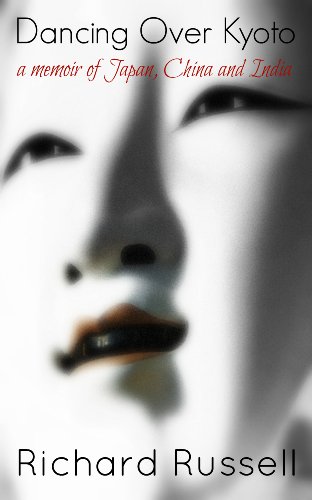
Dancing over Kyoto

41fph3cnanl

One of the senior members of Writers in Kyoto announced last year that they would no longer be buying or reading self-published books on the grounds that the lack of quality control meant that it wasn’t worth the investment in terms of time.  There were too many typos, too much self-indulgence, and too much quantity over quality. It may be an extreme view, but there’s obviously more than a grain of truth in the assertion.

It was with some concern then that I embarked on Dancing over Kyoto, a self-published Kindle book by Richard Russell.  Yes, there are typos.  Yes, there are places where the book might have done with  good editing.  But overall, the quality of writing makes this a self-publication well worth the reading.  Judging by the number of acknowledgements, I take this to be the result of care taken with rewriting in response to feedback.

Memoirs by expatriate males are a staple of Japan literature, featuring the mutual attraction of a Western narrator and Oriental female.  Dancing with Kyoto is unusual in that the romances are with American women (the sole attraction for a Japanese female is unconsummated). Yet the two big love affairs are puzzling in that the extreme ardour of the narrator is but a prelude in each case to a painful break-up.  Somehow one can’t help wanting to hear the other side of the story, testament to the extent to which the writing draws one into the personal narrative.

The male-female relationships are not the only unusual feature, for rather than viewing Japan as an English teacher or a Zen practitioner, the narrator writes from the viewpoint of a trained lawyer with an interest in importing Japanese art items.  This perspective adds an extra dimension to the observations, and the way in which as an amateur the narrator goes about entering the world of antique wheeler-dealing, even to the extent of running his own gallery, is fascinating.

The biographical story is set against the author’s love of Kyoto and description of his sojourns in the city.  Towards the end the narrative turns abroad to experiences in China, where he is part of a trade delegation to a remote part of the country, and India where he encounters the customs of the Parsis.  The cultural insights are valuable and provide a comparison with Japan, but I found myself hoping for a return to Kyoto because of the enlivening touch of familiarity.  Kurodani Temple for example is lovingly evoked, and the descriptions of The Three Sisters annex made me regret never having visited, though I passed by often enough.

In the end, what raises this self-publication above mere solipsism is the quality of the writing.  Sex and diarrhoea are no easy subjects to write about (there are several Bad Sex awards for fiction though no prize for diarrhoea that I’m aware of), yet Russell manages to write his way around both with tact and humour, impressive by any standards.  I was dreading the results of his ‘Indian belly’ but the author managed to turn it into something of a linguistic pleasure, and during a particularly sensual Chinese massage he writes of keeping ‘my sails furled and my rigging stowed’ while she works her way around his ‘point of no return’.

Here then is one of the exceptions to the rule – a self-published book that is actually worth the time of reading.  Great title, too!

****************

Dancing over Kyoto can be found on amazon, where it’s amassed an impressive 29 customer reviews, suggesting that either the author has a lot of friends or that Kyoto is indeed a ‘brand name’ when it comes to book sales.  As can be seen, the cover too is suggestive of a thoughtful approach – ‘Always judge a book by its cover,’ said Oscar Wilde, and in terms of self-publishing he had a good point.  If no care is taken with the cover, the implication is that little care is taken with the content.

Featured writing

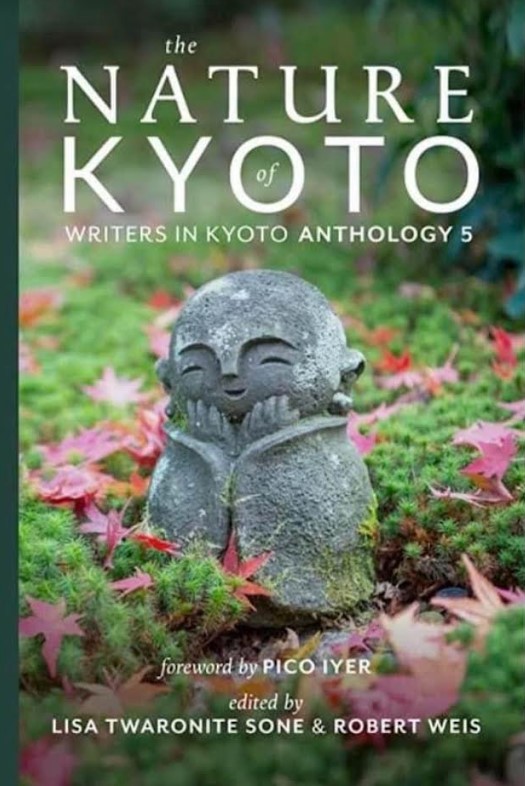
Kyoto Unhurried (Janice Tay)

All it took was three days in Kyoto.

A short holiday in the city was enough to convince writer Janice Tay to give up a settled life in Singapore and move to the heart of old Japan. A decade later, she is still here. From 2007 to 2013, she contributed a fortnightly column on Japanese culture and history to The Straits Times, Singapore’s main English-language daily and one of the oldest newspapers in Asia.  Kyoto Unhurried, a collection of essays based on that column, features lesser-known places, people and events in an atmospheric introduction to one of the world’s most romantic cities.–

– John Dougill

*******

“I’ve been waiting for years, I feel, for a book that embodies all the sensitivity and gracefulness – and playfulness – I associate with my adopted home, Kyoto. This is a work that not only opens the door to one of the world’s great cities, but shows you the very spirit that makes Kyoto so special.”
– Pico Iyer

**************
Below is an excerpt from Kyoto Unhurried:

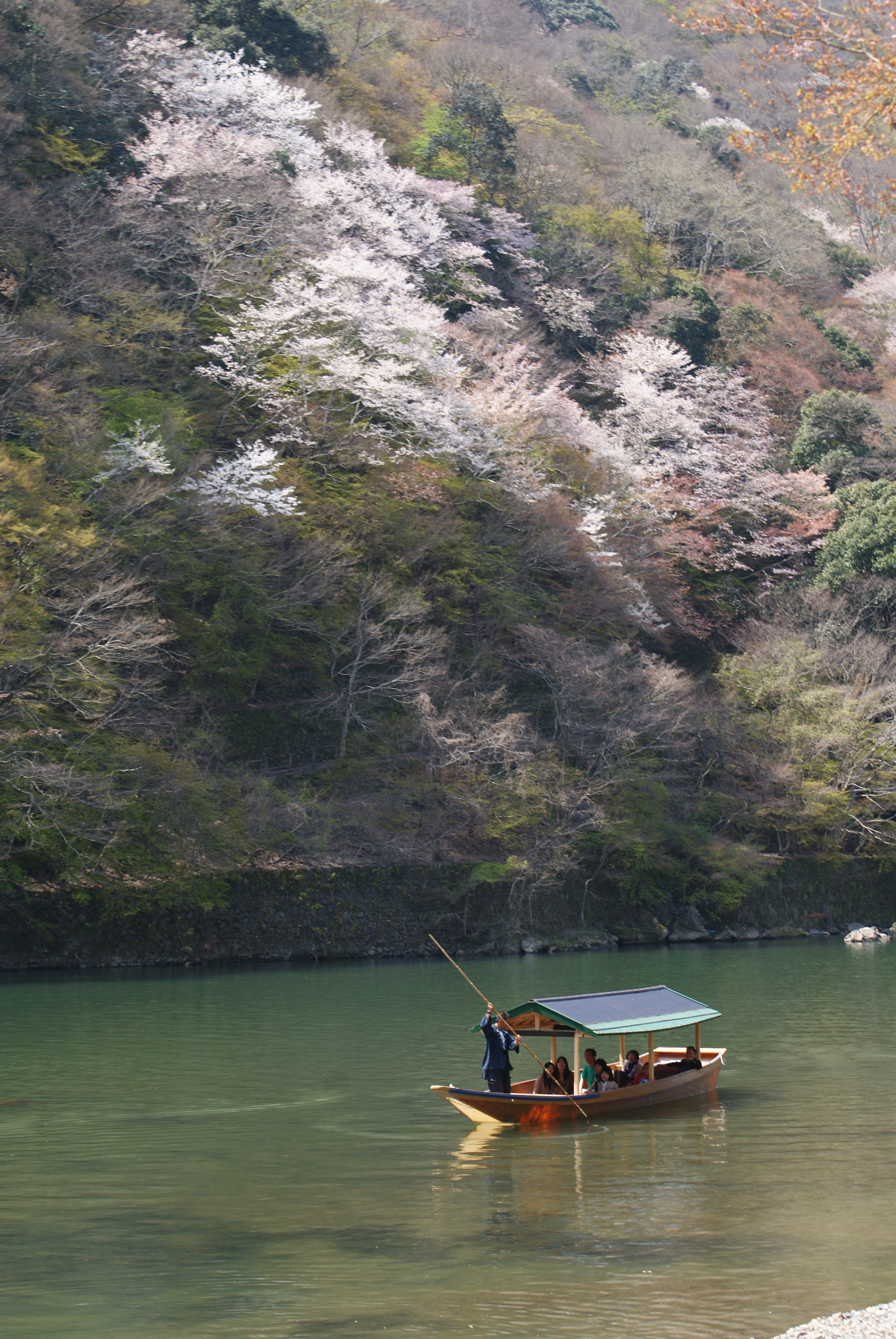
I’ve seen them from below, from cars and from a picnic blanket so, this year, I decide to find out how sakura look from water.

River boats ply the Hozugawa from Kameoka city to Arashiyama, an area of temples and bamboo on the western edges of Kyoto. In spring, cherry blossoms dot the mountains lining the route – but only for a few days because sakura moves fast.
The boat, on the other hand, does not. Propelled by pole and oar, it inches away from the pier; even walking would be faster. The boat ride takes about one and a half hours – the next 100 minutes look like they’re going to be long.

We pass a carriage horse plodding along the bank. The passengers wave down at us; we wave back. The carriage, another form of river entertainment, moves as leisurely as we do. We’ve slipped into an older age, a slower one, a time set to the metronome of a creaking oar.

Even the whitewater sections feel laidback. But the experience is considerably enlivened by the Japanese in the boat; they scream through the not very rapid rapids as if we’re going over the Niagara Falls in a barrel.

The river doesn’t have a long history of transporting excitable tourists. The sightseeing tours began only in the late 19th century but for hundreds of years, timber – lashed together into rafts – as well as grain and charcoal were floated down the Hozugawa to Kyoto. The practice came to an end only about 70 years ago when railways and roads took over.

These days, the river trade is tourism. The boatmen are busiest in spring and autumn, when sakura blooms and the maple leaves are bright. But on some days in winter, snow dusts the mountains and in summer, there are azaleas.

Not long after the ride begins, the woman beside me points to a thin rope stretched above the river. ‘What’s that?’ she asks one of the three boatmen.

‘Tin can telephone line,’ he says with a straight face.

It’s the rope for the koinobori. In early summer, carp-shaped streamers are suspended from the line. They flutter alive when the wind flows down the ravine, an invisible river above the water.

The carp are seen only in summer but the boatmen keep up their comic patter all year round. They steer not just the boat but also the conversation. Knowing when to push the boat away from a boulder seems as important as timing a joke.
The boatman rowing in front points out the difficulty of navigating a shallow river. ‘If the bottom of the boat hits a rock, water may start gushing in. At times like this – ’  He pauses.  ‘Just keep quiet and put your foot over the hole.’

He tells us not to worry if we fall into the river and swallow a couple of mouthfuls. ‘It’s okay to drink the water; it’s good for constipation.’

An elderly passenger asks if he knows any boatman songs. He makes a face. ‘Row and sing? I’d die.’

In the busy periods of spring and autumn, he says, each boatman has to do three to four trips daily. ‘Towards the end of the day, I’m so tired I can’t talk. So if you come in sakura or maple leaf season, come in the morning.’

The river was even more demanding in the past. Boats, unable to float upstream, had to be dragged back to the starting point after the cargo was unloaded. The crews hiked along narrow trails by the river, pulling the ropes tied to the boats. Over hundreds of years, the ropes cut grooves into the riverside rocks that can still be seen today.

These days, the boats are stacked onto a lorry and driven back to Kameoka. The boatmen return by train.

But we’ve not reached the end yet. We’re still in the middle of the river in our little wooden boat and the man working the oar still finds the time to point out turtles, diving cormorants and monkeys along the shore. I spot a brown dipper, a bird that walks underwater to search for food on the stream bed. I count the seconds until it bobs back up to the surface.

The boatman points out the sakura as well but he doesn’t need to. You can’t miss it, the white puffs in the green and brown – less like trees in flower than clouds that drifted too close to the mountains and snagged there.

‘The Torokko train’s coming,’ says the boatman. An old-fashioned locomotive pulls into view. Another popular tourist attraction in the area, the train runs alongside the river for part of its route. Now that it’s sakura season, the carriages are packed. The train passengers wave at us. We’re too far away to see their faces but we wave back.

And we arrive too soon at Arashiyama. Rental boats fill the river here but our boatmen navigate through the amateur rowers as if they’re just a few more rocks along the way.

One of the boatmen announces the end of the ride; a passenger groans.

The boat hasn’t just delivered us to Arashiyama. It took us to a slower age – limited to the here and therefore focused on the now – when people had the time to wave to strangers and watch mountains stretching out, wider than any widescreen television. With all that to do, time in a slow boat passes quickly, faster even than the clouds of cherry blossoms that come in spring and leave in days.

********************

Kyoto Unhurried can be ordered through amazon.com here.

Apart from taking the 100-minute Hozugawa cruise, visitors can also explore the area just upstream of Togetsu-kyo, an iconic bridge in the Arashiyama area, by hiring a boat.

Apart from taking the 100-minute Hozugawa cruise, visitors can also explore the area just upstream of Togetsu-kyo, an iconic bridge in the Arashiyama area, by hiring a boat. (photo Janice Tay)

« Older posts Newer posts »

© 2026 Writers In Kyoto

Based on a theme by Anders NorenUp ↑