Page 60 of 65

Writers in focus

David Duff on cats

cropped-Cats-Just-Cats5

It goes without saying that I am one bona fide, crazy ailurophile. Fortunate to be surrounded by them from early childhood (I grew up with 8 cats and 6 dogs) to now, I find cats to be a never ending, hairy bundle of exquisite joy, who without exception, without hesitation, always send my grateful spirit soaring. Not for a single moment have I ever tasted boredom in their exalted company.

Kyoto's premier cat-loving author, David Duff

David Duff, whose current project concerns  Japanese cats in all their glory

Cats, Cats, and more Cats!! They are everywhere in this feline fixated country we call Japan. Not only live, breathing ones like cute, irrepressible Japanese Bobtail with the pom-pom stunted tail or the rarest of all cats like the two reclusive Wild Leopard cat species found on Iriomote and Tsushima islands; Japan also has the iconic Hello Kitty. This fictional cat character with the ultra simple design minus the mouth, has been plastered over a mind boggling amount of different products that have captivated countless people from one end of the earth to the other for more than 40 years.

In addition, Japan has Doraemon, the bungling robotic cat comic book hero with no ears, featured in a famous manga series first created in 1969. Incredibly, an English language version released on Amazon in 2013 has sold more than 100 million copies. Don’t forget Maneki-Neko, the ever-present, good luck cat figurine beckoning us with a raised paw or two that blesses homes, businesses, and people from Okinawa to Hokkaido, plus a host of other countries as well.

Although Cat Cafes where you can watch, play with or caress a clowder of friendly felines over a cup of fresh coffee first originated in Taiwan, it took Japanese genius to make this new café theme concept a worldwide celebration of pure, unadulterated cat induced euphoria. Japan soon will have more than 150 of these cat coffee shop havens offering those cat lovers who don’t have the time or space for a pet the opportunity to reconnect, relax, or recharge in the presence of the regal creatures with the magical eyes that so bedazzle those who meet their hypnotic gaze.

maxresdefault

Unbelievable though it may sound, Japan apparently has not only a couple of cat islands but a remarkable 12 of these cat sanctuaries. A recent explosion of worldwide media attention focused on one of them, Aoshima island in Ehime prefectural, where the charming cats far out number the few permanent residents, put this remote island on thousands of fanatical cat lover’s bucket lists. Equally as impressive is Tashirojima island not far from Sendai. Both islands are unique oases overflowing with many a tabby, tomcat, and tortoiseshell that light up the greenery, a most welcome respite for weary pilgrims looking for peace and tranquility.

Two other extraordinary cats, Maru and the recently departed jewel of a cat, Tama,must be mentioned in any serious discussion about Japanese cats. First, the very plump, always playful, and never give up Scottish fold, the adorable Maru, who has found no box he couldn’t get into, or at
least try to, was voted the most successful Internet cat over the past ten years with a jaw dropping 289 million views on YouTube. Tama, who passed away in the summer of 2015, was the lucky stray cat who grew up to become the first cat train station master. She was one of the mostbeloved and well known cats in this country, not surprising actually, as she was as cute as cute can be. Her divine presence brought in an incredible 10 million US dollars to the local community. At her funeral she was promoted to Goddess, a fitting tribute to an exceptional cat who gave so many so much joy and happiness. She will be missed.

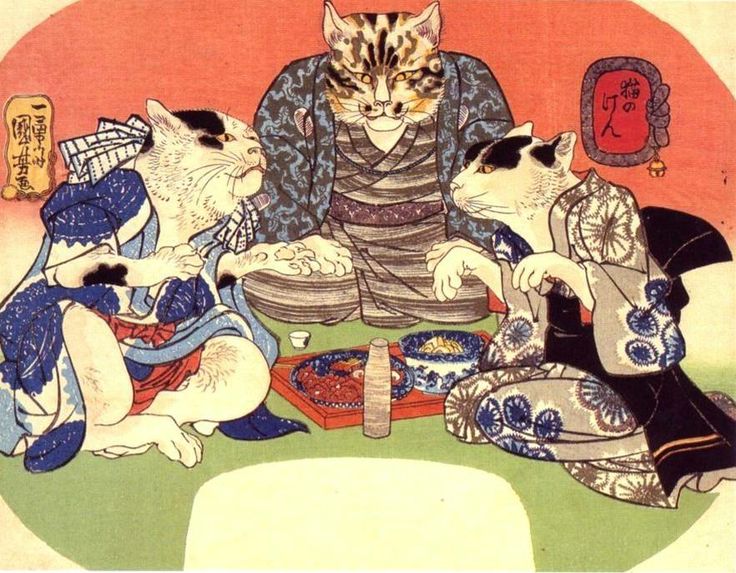
Bobtail cats were also distinguished guests or focal points on numerous Ukiyo-e woodblock prints, ‘pictures from the floating world,’ which illustrated everyday life in Japan between the 17th and 19th centuries. One particular cat loving artist stands out, Kuniyoshi Utagawa. This multi-talented genius had a profound admiration and respect for cats which is obvious when you look at his striking portrayals of them.

Kuniyoshi Utagawa – “This multi-talented genius had a profound admiration and respect for cats”

Featured writing

Experiencing Zen (Ruth Fuller Sasaki)

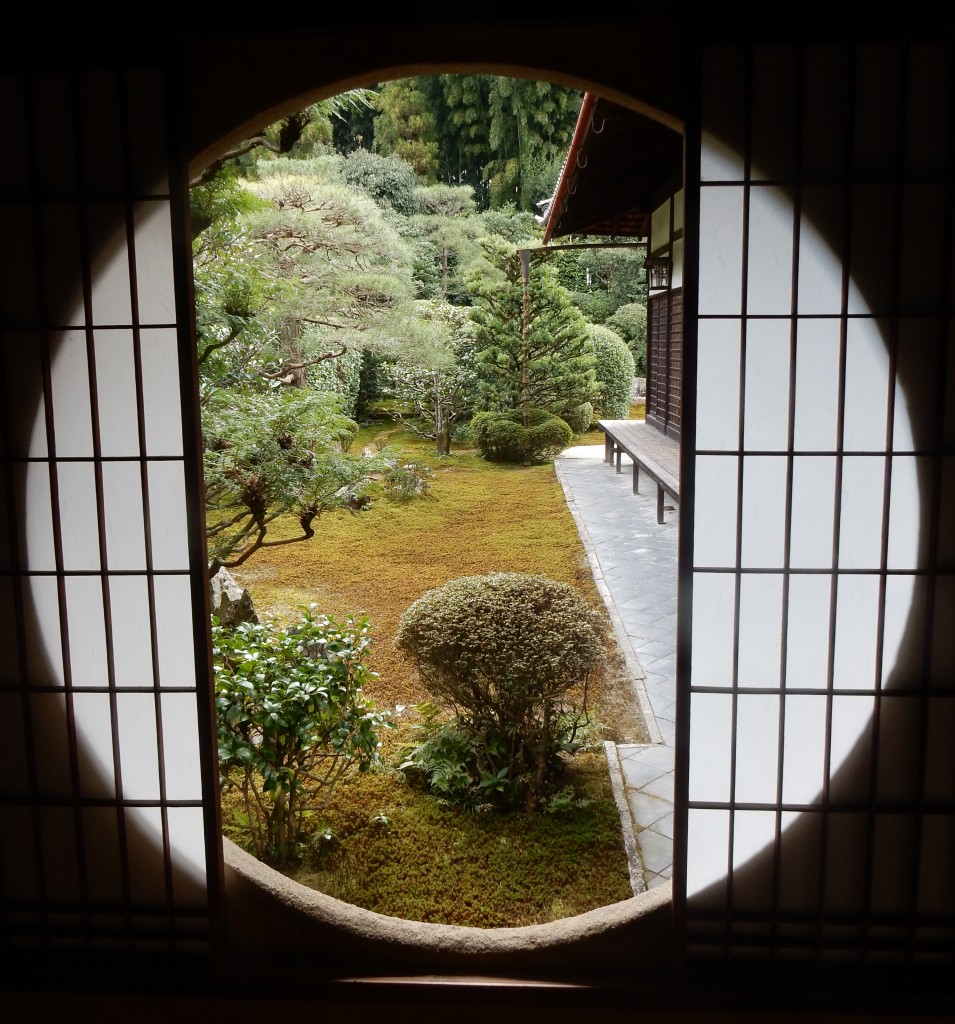
Window onto the world of Zen at Funda-in, subtemple of Tofuku-ji (photos by John D.)

Window onto the world of Zen at Funda-in, subtemple of Tofuku-ji (photos by John D.)

The passages below are a truncated version of an essay contained in a guide to Rinzai Zen Study for Foreigners in Japan, written by Ruth Fuller Sasaki and produced in 1960 for The First Zen Institute of America.  (For more about her life and connection with Kyoto, click here.)  The comments are not only interesting for what they have to say concerning Zen, but for what they reveal about Kyoto at the time and how much it has changed over the past half-century.  “Kyoto is famous for not providing good eating,” she states for instance.  How very different things are today.  (Ryosen-an was the hermitage she started as an outreach of The First Zen Institute.)

******************

Nanzenji

Nanzen-ji, one of Kyoto’s seven great Zen monasteries

I assume those who come to Japan for only a few weeks and hope to find out something about Zen in that time will come to Kyoto, for only in the old capital can at least the outer expressions of Zen still be found in abundance.  Here are seven of the great Rinzai Zen headquarter temples, each with its monastery.  Here are the finest examples of Zen gardening.  Here the old arts of Japan – Noh, tea ceremony, flower arrangement, sumi painting, calligraphy, pottery, among others – can best be enjoyed or studied.  And here is the only Rinzai Zen university.

The first actual problem is, of course, a place to live.  Ryosen-an will never be able to provide guest accommodations for either longer or shorter periods.  The house is too small and the ground with the compound walls is now completely given over to buildings and gardens.  A temple building within the Daitoku-ji area where a small number of students can live together in a manner approximating monastery life is a dream we hope some day to make a reality.  But when, we do not know.

Kyoto’s two first-class foreign-style hotels are fairly expensive; with three meals a day the cost is from $10 upwards for one person.  There is a less expensive second-class hotel, and though the location near the railroad station is not too desirable, many people seem to find this hotel adequate.  Several new western-style hotels are either under construction or planned for the next two or three years.

First-class Japanese inns are as expensive as foreign-style hotels of the same rank, often more so.  Second-class inns are also rather expensive and, furthermore, usually noisy.  Japanese people who patronize Japanese inns are almost invariably on an excursion.  They are apt to get up early and go to bed late, and to have little or no consideration for the tired fellow guest who might like a night’s sleep.  The larger second and third class inns cater almost exclusively to the big – sometimes mammoth – groups of country people and school children who come to the old capital for sightseeing.

*****************

There are many foreign-style and Japanese restaurants in Kyoto, but except for the deluxe ones, none are too good, especially the foreign-style ones, and all are rather expensive considering the quality of food offered.  Kyoto is famous for not providing good eating.  From olden days Kyotoites have been said to deprive their stomachs in order to decorate their backs.

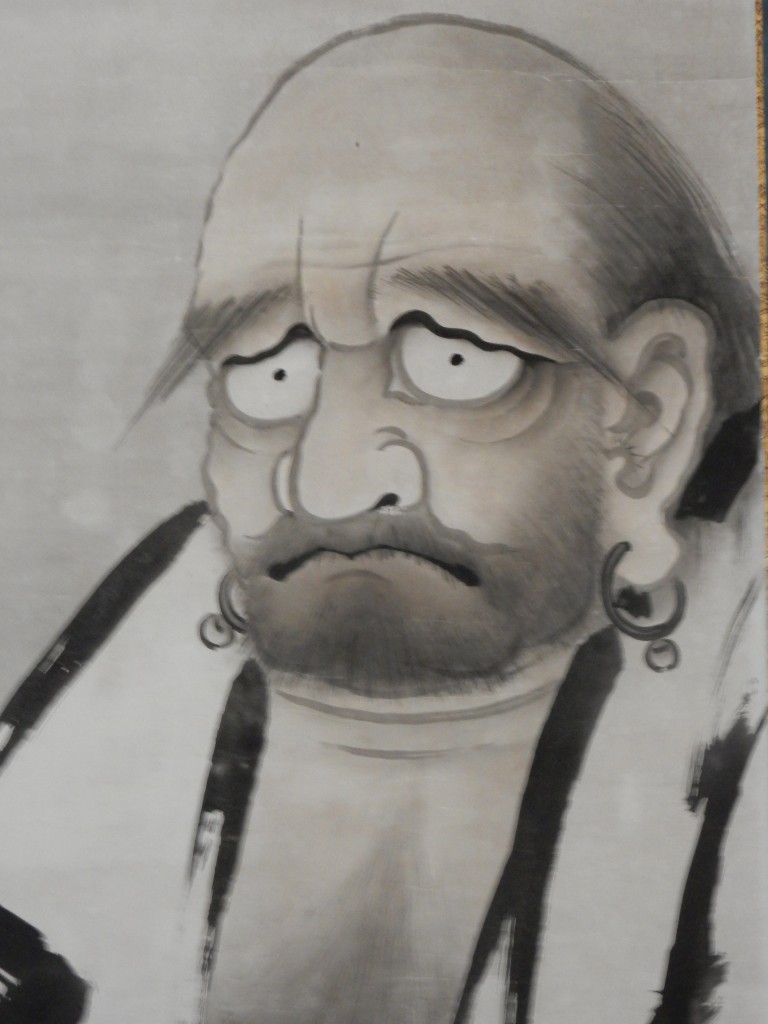
Daruma (aka Bodhidharma), legendary founder of what became Zen

Daruma (aka Bodhidharma), legendary founder of Zen

Naturally you will want first to visit the famous places for sightseeing in and near Kyoto.  Three or four days should suffice for that if you leave the Zen temples until later….   When you are ready for this, there are a few rules you should lay down for yourself.  The first is to put your camera away.  You can buy plenty of photographs that are better than any you can take yourself.  Rather let all your senses register what you are experiencing.  Then all will become part of yourself – the scene, the movement, the fragrance of the pines, the feel of the wind as it brushes your face.  You will not have to open an old album or set up a projector to recall your experiences.

Secondly do not plan to do more than one major thing in one day.  Do not try to see lots of Zen temples and lots of Zen gardens.  One headquarter temple and two or three small ones and a few gardens will be enough for your entire visit if you assimilate these thoroughly.  It is not what you see but how you see what you see that matters.  The ability to retain sense impressions is greatly diminished by trying to absorb too much and too many things too quickly.

Thirdly, take your time and go leisurely.  It is only when you have no sense of time and no special aim or intention that you can really open up all your senses.  The willful urge to experience will hinder your capacity to experience.  Give yourself lessons in mushin (no-mind).  Here is a way to begin your Zen study.  Zen study is not learning about Zen but making use of Zen principles and letting them work on you.  It is for the purpose of making you into a Zen man.  It is not to give you the ability to astound your friends with your profound knowledge, but to cause you to become him whom you truly are.

Don’t hesitate to go anywhere alone.  Going alone is preferable to going with an unsympathetic companion.  Comprehension of what true aloneness means is an important part of Zen understanding…  Never take a taxi to get anywhere if you can help it…   Then every night, if you wish, you may come to Ryosen-an and sit with us in the quiet of our zendo.  You will sit on your cushion on the tan (raised platform), awkwardly at first, no doubt, but gradually with more ease.  You will hear the sharp clack of the clappers and the ching of the bell; you will smell the incense and you will share in the deep silence that envelops this most wonderful of rooms.  Later you will join us in drinking the bitter zendo tea with Manjusri, the Boddhisattva of Intrinsic Wisdom.  And at the end of the evening, you will find your heart strangely moved as the men and women students chant the vow to devote whatever they may gain in walking the Buddha’s path to the saving of all sentient beings.

When you return home and your friends ask you what you have learned about Zen in your three or four weeks’ stay in Kyoto, probably you will have to say, ‘Not much.’  Not much you can speak about, perhaps, but much you will never forget.

*********************

For more on this subject, take a look at WiK member John Einarsen’s book, Zen and Kyoto.

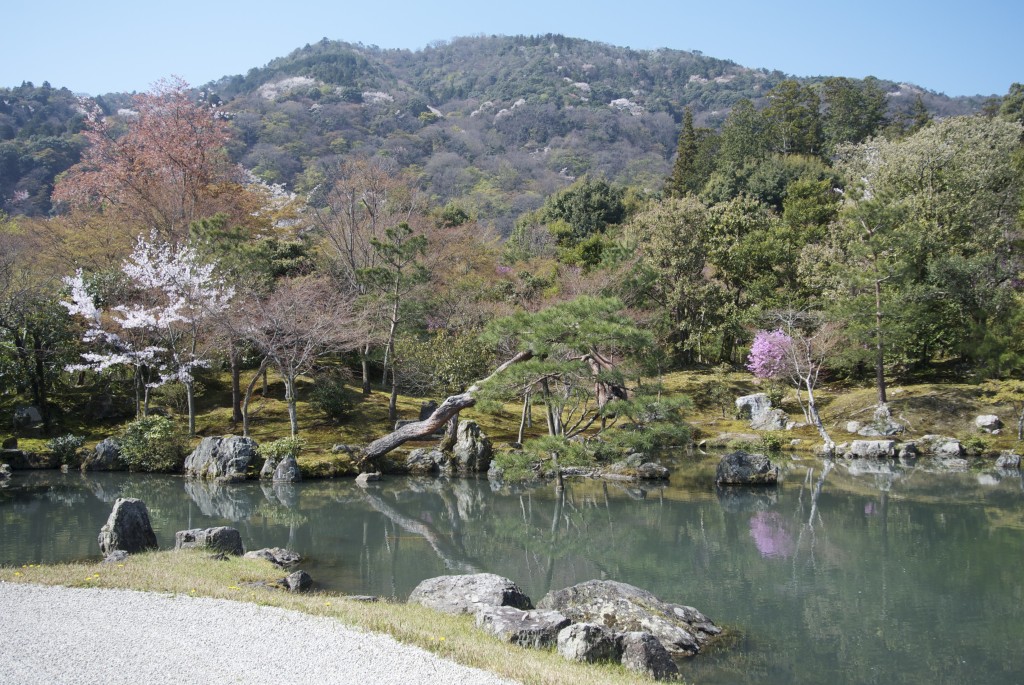
The ? Pond at Tenryuji with its 'borrowed scenery' mountainscape

The Zen garden at Tenryu-ji with its ‘borrowed scenery’ mountain backdrop

Writers in focus

Basho in Zeze (Jeff Robbins)

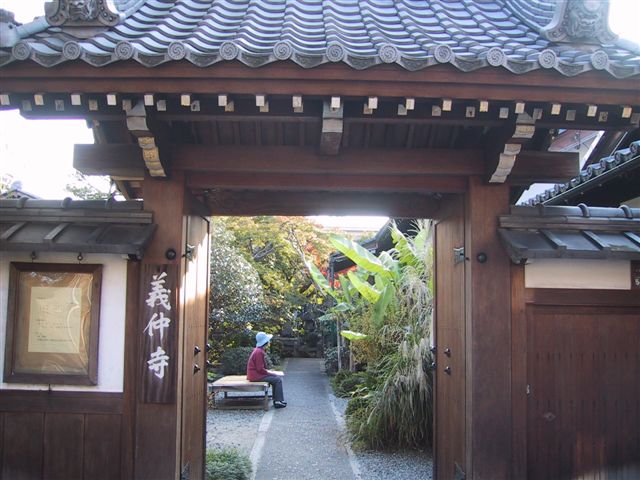
The small temple of Gichu-ji in the village of Zeze, where Basho chose to be buried

The small temple of Gichu-ji in the village of Zeze, where Basho chose to be buried (photo John Dougill)

A Resting Place for His Spirit: Basho in Zeze

from the Basho4Now Trilogy
Translations and Commentary by Jeff Robbins
Assisted by Sakata Shoko

Of all the places Basho visited in his travels, one in particular, Zeze, a section of Otsu, (now around the eastern end of the Omi Ohashi Bridge) just across the mountains to the west of Kyoto, drew in his heart. Basho spent days and months at various locations in Zeze, somehow connecting with the place – so just before he died, he requested that he be buried at Gichuji Temple, a short walk from the shore of Lake Biwa.

One attraction of Zeze to Basho’s heart was the presence of Lake Biwa and the mountains surrounding the shore of the vast lake.   Here Basho said:

The mountains in silence nurture the spirit; 
the water with movement calms the emotions.

Not only natural scenery but also the people of Zeze drew Basho into this community: Chigetsu, an elderly widow whose samurai husband was an official at the Otsu Post Station managing the delivery of parcels by horse; when he died in 1686 Chigetsu took the tonsure of a Buddhist nun although still living at home with her family; her younger brother Otokuni adopted to be their “son” and inherit the household; Kyokusui, a young samurai dad, his infant son Takesuke, and the uba or wet-nurse of this family — all these nice people appear in Basho’s words about Zeze. To discover why Basho chose here for his final resting place, we search in natural scenery but even more in the feelings Basho had for these people.

We begin just after Basho finished his journey to the Deep North in the autumn of 1689; still traveling, he went to Ise and his hometown Iga (in Mie-ken). From Iga, Zeze in Otsu is just across a range of low mountains to the north. Here, 400 years before, lived the poetess and nun Shosho. In the coldest time of the year, Basho visits Chigetsu for the first time.   Hostess and guest write two renku stanza-pairs:

Here I speak
with the nun Shosho —
village snow
She was pure sand
here the winter wind

Basho compliments Chigetsu for being an image of Shosho; she responds with standard Japanese humility: “No! No! You must not compare me to the great Shosho. She was pure; I am merely barren.” The stanza-pair contains so much nature – the freezing snow, the sand on the nearby lake beach, the cold winding blowing across the water – but also much human feeling.

Chigetsu begins the second exchange with a desolate image of poverty and desolation living alone in snow country.

A straw broom
only this, in old age
snow on the house
Surrounding the brazier
robes dyed black

Basho counters with warmth and intimacy. Both Basho and Chigetsu wear black robes in vivid contrast to the snow outside. One person cannot surround a brazier (without getting burned); there have to be two people both moving close to the fire.   Basho thus expresses gratitude to his hostess for the warmth she provided with her home and brazier.

Also this spring, someone in Zeze asked one of Basho’s followers to arrange for Basho to name their newborn daughter. He named her Kasane – “to pile up in layers” and also, in the dimension of time, “occur again and again, in succession”) and wrote this double meaning into a tanka of blessing to his god-daughter:

Spring passes by
again and again in layers
of blossom kimono
may you see wrinkles
come with old age

 The tanka seems simple, but the double and triple meanings — the layers of kimono and under-kimono fabric… the succession from bright colorful kimono in youth to dark sedate robe in old age… the succession of each kimono from mother to daughter then granddaughter… the “wrinkles” both in the kimono and her skin –create a web of blessing and hope for Kasane and all female infants.

Basho says to the newborn spirit: Now your time begins, stretching to infinity before unfocused eyes. Soon you will be laughing in the sunshine – so long as no wars come, and natural disaster, serious illness, and financial ruin also stay away. One spring in youth, you shall be given a bright and colorful ‘blossom-kimono,’ an elegant robe to wear once a year celebrating with family and friends under cherry blossoms. May your years pass in peace, so the kimono passes onto your daughter while you wear one more moderate in color, and that also pass onto her, as you wear the sedate blossom-kimono of an older woman. May our nation remain at peace, and the happiness in your family pile up layer upon layer until you see wrinkles in the fabric and in your face. Do not despair my child, for you live again and again as spring passes by and your granddaughters laugh and chatter under cherry blossoms.
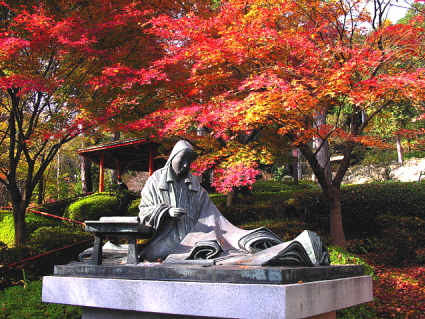
Murasaki Shikibu

Statue of Murasaki Shikibu at Ishiyama Temple (Jeff Robbins)

In the year 1004 (according to legend), a 30 year-old woman came to Ishiyama Temple, just to the south of Zeze, for a seven-day retreat, searching for inspiration. The Genji no Ma (Alcove of Genji) is the ‘traces’ of the small room in the side of the main temple building where, overlooking Lake Biwa under the harvest moon, she began work on her Tale of Genji, the world’s first novel and, with 1100 pages in translation, the longest novel written before the 20th century.

After staying the night at Seta at dawn I visit
Ishiyama Temple to see the Alcove of Genji:
Daybreak…
the sky still purple
ho toto GI su

The little cuckoo’s bright five-note call– a three note trill ho to-to, a sharp rise in intensity for GI, and the final su trailing off — announces the summer.   The bird sounds breathless, as if striving to produce the five notes with utmost beauty. The striking beauty of the call is enhanced by the coming of daylight.

Sei Shonagon opens her Pillow Book with these words:

“In spring it is the dawn that is most beautiful.
As the light creeps over the hills,
their outlines are dyed a faint red
and wisps of purplish cloud trail over them”

Basho says that Shonagon’s spring moment is still glorious on the first morning of summer, the season of the hototogisu. The haiku seems simple with so few words, yet Basho has brought these two great female authors together with the grandeur of daybreak, the color purple, and that inspiring bird call: Ho toto GI su.  Otokuni tells the following story about Basho in Zeze:

One night Old Man Basho and his followers were gathered in the hut. Discussing elegance, one person spoke out: “I have read some ancient works in bits and pieces, but never really explored Sei Shonagon’s Pillow Book. I do feel attracted to it.” Hearing this, Basho said,

Well, if exploring it becomes important to you, I hope you will find a NEW approach to her heart.”

Basho responds that although the Pillow Book is ancient, you young people can discover a fresh, novel, youthful way to pass through it.  He separates from the old-man scholars who insist that we follow their approach which they have perfected for decades before we were born. He tells us that it is okay for us now to interpret a poem in a way the author or the scholars never conceived. Okay to take the ball and run with it.

This summer and early autumn, Basho stayed for four months at a hut in the hills above Zeze owned by Kyokusui; here he wrote his longest and most well-known haibun, At the Hut of Unreal Dwelling. Below is a short passage in which we meet some Zeze folk:

…in the day my heart is moved by those who on occasion come to visit me, the old one who takes care of the shrine, the men from the village telling me of a wild boar tearing up the rice stalks, of rabbits getting into the bean patches, farmers’ talk I have not heard before.

In the summer of 1690, Kyokusui was among the entourage of the Lord of Zeze in attendance on the Shogun; they remained in Edo throughout the next year and into the spring of 1692. Meanwhile in Zeze, Basho visits Kyokosui’s mansion. Here is a passage from his letter to Kyokusui, dated August 4, 1690:

Takesuke day by day getting bigger, endowed with such intelligence and in good health and mood because your wife, the uba, and others there in your absence behave more cheerfully than he, so Takesuke shows no  signs of loneliness.  I am glad to have seen this.

Basho could see that the baby was “born with” (umare-tsuki) intelligence, endowed by his parents; thus he also praises Kyokusui and wife. Readers familiar with child welfare terminology may note that Basho gives a remarkably complete developmental profile on the infant: 1) gaining weight, 2) shows intelligence, 3) health good, 4) father absent  5) but child lives in stable, extended family of women devoted to his care.   6) They remain cheerful even when he is sad (because papa is away)  so they cheer him up and 7) Takesuke “shows no signs of loneliness.” Doctor Basho looks equally at the physical, mental, emotional and social aspects of child development – and sends his observations to the father to help him feel better in his absence from his son.

After four months at the Hut of Unreal Dwelling, Basho stayed at a cottage on the grounds of Gichuji Temple in Zeze. For the Harvest Moon that year (September 17, 1690), Basho had his Zeze followers over for a moon-viewing party. Being in Zeze seems to have given Basho some extraordinary power, for he wrote four distinct haiku on the magnificent white globe shining over the expanse of Lake Biwa.

Harvest moon
facing the lake, seven
ages of Woman
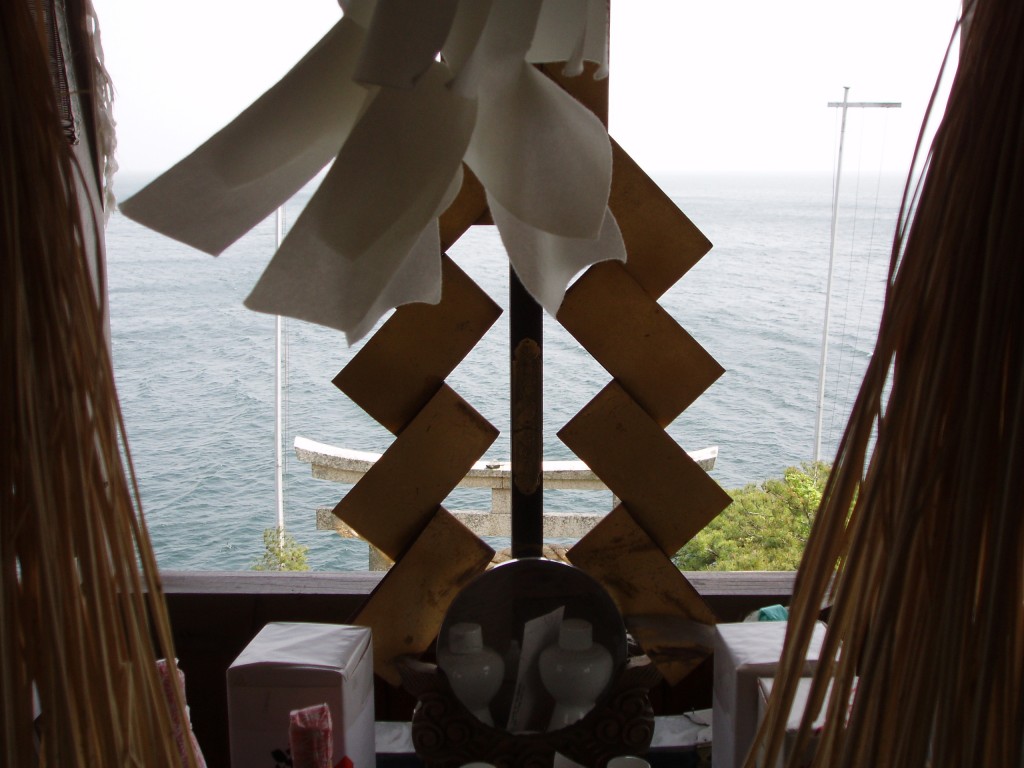
Looking over Lake Biwa from the holy island of Chikubushima

Looking over Lake Biwa from the holy island of Chikubushima

Scholar Kon Eizo says, “As the beautiful scenery of Lake Biwa under the harvest moon transforms according to the position of the moon in the sky, so we recall seven changes in her illusionary beauty.”  Each position of the Moon is one act in the play of a woman’s life. Watching the enormous round moon move throughout the long night, the seven stages unfold before our eyes: infancy, school girl, lover, wife, elder, crone, second infancy. In Zeze, Basho has the power to write so transcendental a haiku.

Harvest Moon –
children standing in line
temple verandah

From Moon in the sky to line of round heads on short bodies.  Chigetsu writes:

Stretching up
and pointing, children
view the moon

Chigetsu appreciates the children’s life force, their excitement at reaching a bit closer to the Moon. Chigetsu, like Basho, pays attention to “what children do.” The glory of the moon merges with the glory of the child. Because she captures more of the children’s activity and characters, I prefer her verse.

Here in Zeze, Master Takesuke growing up,
often laughing, a sturdy lad,
as sturdy as he can be in his second year of life.
And Osome and the uba are without misfortune.

Basho’s praise for one-year-old Takesuke pleases Kyokusui because his young heir is the next generation, the next layer, of Kyokusui. The father is a samurai, but nowadays there is no fighting, and samurai have become government administrators. Kyokusui has little opportunity to be manly, and his son is growing up without father present. Basho reaches inside Kyokusui’s heart to reassure him that his son is becoming a takumashii (strong, sturdy, vigorous) little samurai who can also laugh – just like Dad.

On February 16, 1691, Basho sends a letter to Chigetsu

My sick bowels for 53 days now have felt fine and this spring I will take care of my health and become fierce as a demon.

Basho counts the days he is free from his chronic disease. Exactly 53? In a letter to a woman and nun he tells the condition of his bowels; now that’s personal!

p.s. Your daughter-in-law always, always breaking her bones till it hurts to see her, and so we should feel gratitude.  I hope you are very, very aware of this.


Basho speaks of the yome, Chigetsu’s daughter-in-law who came to this household decades ago. Without Abigail Adams to remind him, Basho “remembers the ladies.” He praises the solidarity of two women of different generations.

  Chigetsu must have told Basho of her pleasure at receiving a letter from Uko, so in a letter to Uko, Oct. 13, Basho says:

For the letter you sent to Chigetsu you have made me thankful.  Gentle your heart’s intention, returning again and again.  Chigetsu also knows that feeling.

Basho praises the gentleness of woman, and also women’s solidarity. Again he seems to be building bridges across the generations between two women.

Finally after two years in Kansai, Basho returned to Edo in late autumn of 1691, there to stay in peoples’ houses for nine months. On April 4, 1692 Basho writes to Kyokusui at home in Zeze; Takesuke is two or three.

In your letters you have not written about Takesuke and the others. He must be getting big and everyday his mischief extreme.


Basho, without seeing the child, knows how children develop so can imagine Takesuke well into his “terrible twos” — and he wants to know more about this child of Zeze.

(Letter to Chigetsu, June 21, 1692)

For one year a dream has been like reality.  On each of us old age presses. The day may not be as far as today or tomorrow.

Seven months before, Basho parted from Chigetsu in Zeze to return to Edo. Basho is 48 and Chigetsu in her sixties. At that time old age was said to begin at 40.   (Young people still think this.)

The summer heat at the Gichuji Cottage is one sort of the memories that arises. Here where everything is rough and approximate everything is disabled, so unable to forget the extent of my obligation I feel only longing to be with you…

“Rough and approximate” (omaka naru) is his current state, staying in someone’s house in downtown Edo without a place of his own. Since he now feels that way, Basho feels on (obligation) to the Zeze people for giving him such a peaceful place to stay at Gichuji the year before.

Soon after this letter, Basho moved into a new three-room hut built for him by his Edo followers. For New Years of 1693, Kyokusi was in Edo and visited Basho who cooked some zoni, vegetable soup with mochi dumplings, a traditional New Year’s dish. For the New Years of 1694, Kyokusui is home with his family. Basho in Edo sends a letter on February 22, 1694

That was a meager vegetable-mochi soup I served you. This year at your house the uba fed you so much you got sick of it.

 Zoni is traditionally served throughout the New Year season, which lasts 20 days. Thus by the end of the First Moon, when this letter was written, one might be tired of zoni. We see that the uba—who was Kyokosui’s wet nurse—likes to overfeed her baby. Basho is kidding his friend – an illustration of how close was their friendship.

On June 3, 1694 Basho left Edo on another journey west, accompanied by his grandnephew Jirobei. They reached Iga on June 20th.  Here is a sentence from Basho’s letter to Sora from Zeze on July 13th:

The many fleas and mosquitoes make summer in Iga hard to bear, so we have come out here to Zeze.

Iga lies in a basin surrounded by low mountains which trap the warm sultry air, so fleas and mosquitoes flourish. In Zeze beside Lake Biwa there is always a cool breeze to drive them off.

 Lake ripples
and the wind’s fragrance
one rhythm

The ripples of Lake Biwa against the shore and the wind’s fragrance have one rhythm – and to share his moment we can go to Zeze today, or maybe we can feel it beside any lake in summer.

 We have yet to see Kyorai. Joso now lives in Zeze. And Shiko has extended his sphere of influence all the way to Ise-Yamada and done such things as build a cottage for me. I met him unexpectedly when he came to Zeze to manage the Kyoto sightseeing for the family of the Head Priest of the Ise Shrine. We hung out together for two nights and a day, then he went up to Kyoto. Masahide squealed in delight and gave us dinner, but tea-picking is such a frenzied time for them that we spent part of our sojourn at Kyokusui’s.

Ordinarily Basho would have been buried in Iga with his family, however on his deathbed in Osaka he requested burial at Gichuji:

There at the crossroads of East and West where ripples are clear against the shore and vows of a lifetime are deep, when beloved friends come to visit, they shall not be put to inconvenience.

Iga is far from the main road between Edo and Kyoto, while Zeze is right alongside that major road – and so at the end Basho thinks of his friends’ convenience. Basho had himself buried in Zeze, in a shroud made by Chigetsu and her daughter-in-law, so it would be easy for you to visit him; you too can be one of those “beloved friends.”

Take the Tokaido Main Line 10 minutes from Kyoto Station to Zeze station, and walk (the temple says) seven minutes to Gichuji Temple. On the grounds is a large, spectacular stone for the 12th Century warrior Kiso Yoshinaka, and a small irregular shaped one for Basho.


I request your assistance in getting out the word on this ‘other Basho’ – the warm affectionate Basho who wrote hundreds of poems about women and children, and hundreds more about friendship and love, hundreds of Basho works unavailable in English, yet the most pro-female, child-centered, life-affirming, and fun-filled works in old-time literature

Feedback will be greatly appreciated.  basho4now@gmail.com
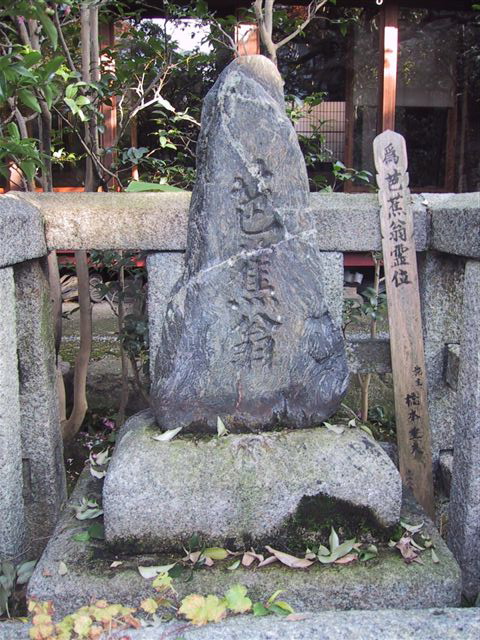
 

Basho's grave at Gichu-ji (Dougill)

Basho’s grave at Gichu-ji (Dougill)

Haiku group outing

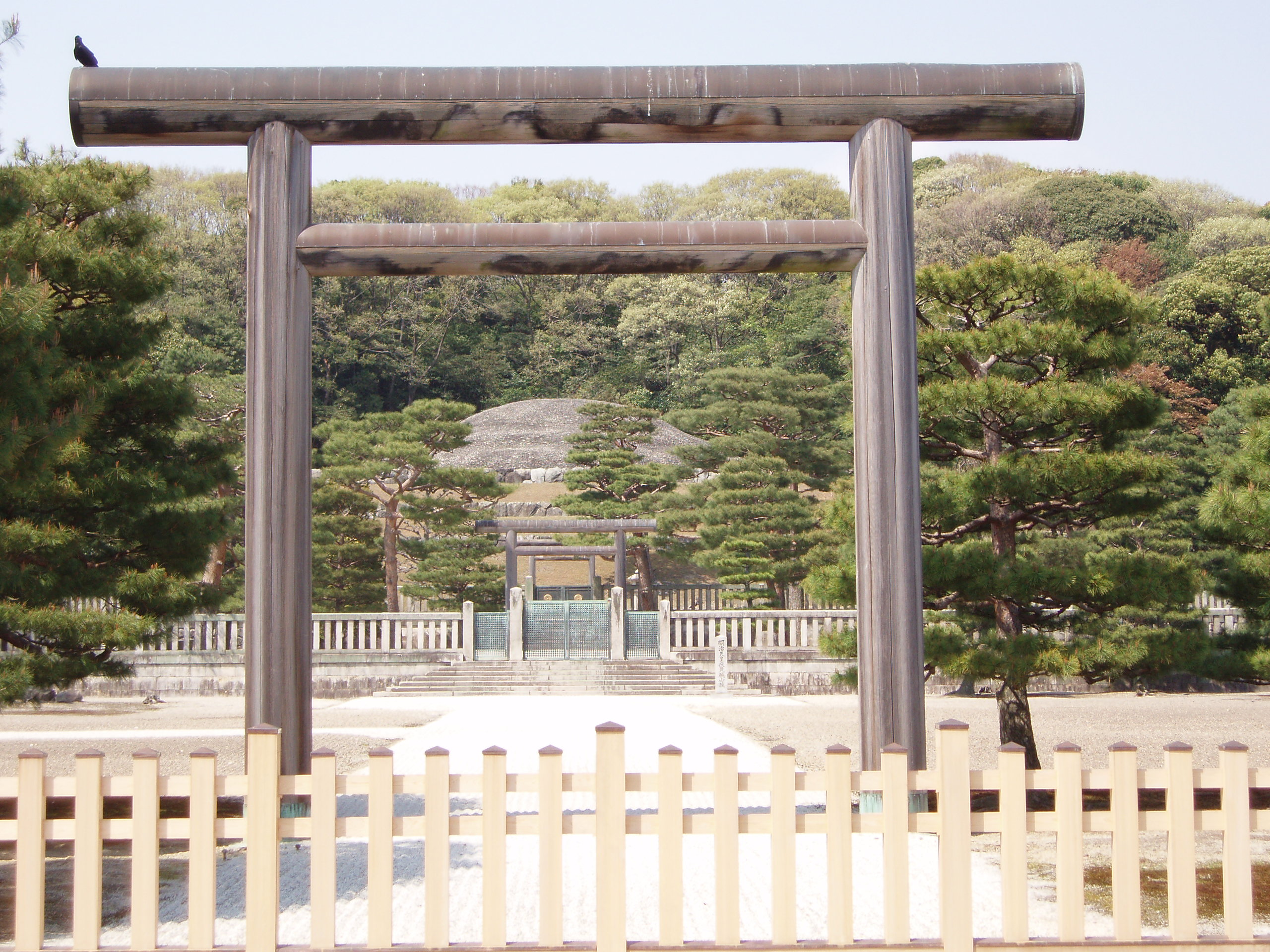
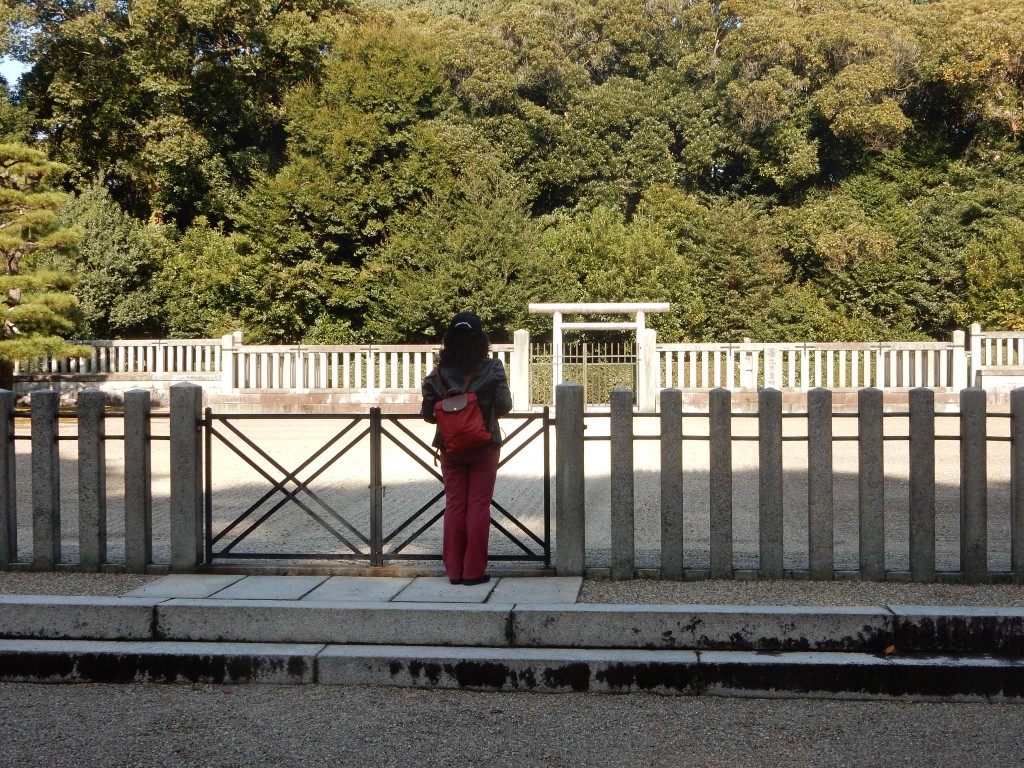
Meiji burial mound

On December 12, the Hailstone Haiku Circle in conjunction with WiK set out on a hike into Kyoto’s Imperial Past, including Emperor Meiji’s burial mound (above), with the intention of culling a few haiku poems from the historical surrounds.  There were six writers in all, and the report below was put together by haijin Mayumi Kawaharada and John Dougill. (Photos by members of the group)

************************
On December 11th, there was a torrential downpour.  The following morning there was a bright sunny start to the day, and six haiku poets set out with fresh hearts ready to pen their thoughts on a walk that traversed the course of centuries.  The route from Tambabashi to Fushimi Momoyama took in the burial mounds of the first and last emperors to be associated with Kyoto, and two shrines with imperial connections completed the itinerary.  It normally takes an hour and a half; the Hailstones managed to spin it out to five hours, with a couple of members prolonging the occasion in a saké bar.

Its last fruit weighed P1020327 quince
against December blow:
the quince tree
– Branko

There are few visitors to Kammu’s grave, yet the founder of Kyoto surely deserves recognition for the extent of his historical legacy. For lovers of the city this is an awe-inspiring spot, and a nearby persimmon tree was laden with fruit as if in honour.  Nearby the tower of the rebuilt concrete castle of Hideyoshi’s time could be seen through the trees, complementing the rich historical associations of the area.  His grave, like other imperial mounds, typifies the blending of ancestral worship and animism that form the twin pillars of Shinto.  Through placing the corpse in the earth human and nature become one in the form of lush evergreen growth.  In this way the deceased evolves into the landscape, and the imperial spirit is transformed into a true spirit of place.

DSCN6140


Emperor’s mound –
The sound of birdsong
Like gagaku
– John

From Kammu’s grave it’s a fifteen minute walk through pleasant woods to the burial mound of Emperor Meiji.

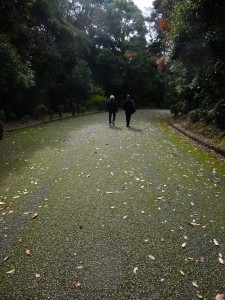
Path from Kammu to Meiji

On the green moss path/ Autumn leaves spotlighted/ by morning sunshine – Mayumi

Here was evident the pomp and glory of State Shinto, as the Restored Emperor at the centre of the Meiji regime was given a full-scale burial designed to impress.  You only have to stand at the bottom of the huge stairway leading up to the shrine to realise the grandeur by contrast with that of Kammu.

As Mutsuhito, Meiji was the last emperor to be born in the city, and the last who could be considered a Kyoto man.  His father died when he was 14, making him emperor; he was ‘restored to power’ at the age of 15; he shifted the capital to Tokyo and married at 16.  Quite a start to life!!

Meiji was something of a poet, and after paying respects at Tsukinowa, the imperial cemetery in Sennyu-ji, to his father, Emperor Komei, he penned the following:

When I visited
The tombs at Tsukinowa
On my sleeves
Old needles from pines
Kept falling

Discretely located to one side of the Meiji burial mound is that of his wife, Empress Shoken who died two years later.  She had no children of her own, whereas her husband had fifteen by his concubines, or official mistresses.  Unlike Jewishness, it’s the male line that counts in Japaneseness, and so she adopted the son of one of the other ‘wives’ and brought him up as heir apparent (later to become Emperor Taisho).

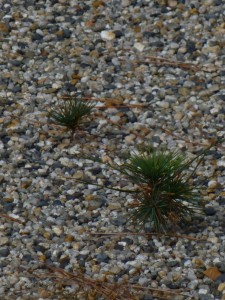
pine seedlings


Tree seedlings
sprouting here and there –
the childless empress
– Kyoko


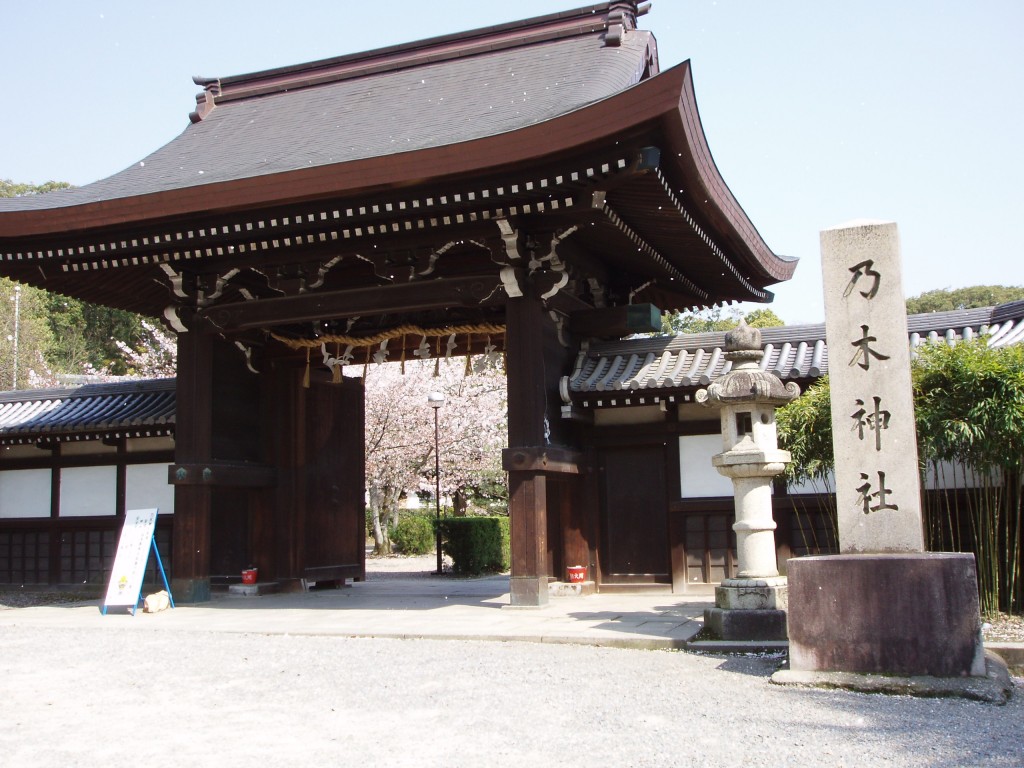
Not far away from the imperial mounds, just ten minutes walk, is the shrine of Meiji’s devoted servant, General Nogi, who served as governor of Taiwan.  He was the last person (together with his wife) to commit junshi, ritual suicide to follow one’s master into death.

Nogi Jinja

After distinguished service against the Chinese in 1894, Nogi was made commander of the forces who took Port Arthur from the Russians a decade later, thus helping cement victory against the Europeans in the 1904-5 war.  He was appalled however at the loss of life of those under him and sent a letter to the Emperor requesting permission to commit suicide.  Though the request was refused, he and his wife felt obliged to take their lives in 1912 immediately following the funeral of Emperor Meiji.  Some praised him highly for loyalty and devotion; others saw it as a retrograde act of feudalism.

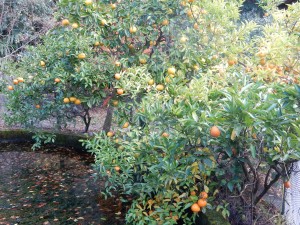
Citrus fruit at Nogi's shrine

After stories of war
At the General’s shrine,
Free tangerines.
– Tito


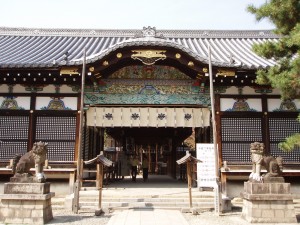
Gokonomiya Shrine is not one of the better-known shrines of Kyoto, though in any other town it would certainly be a focus of attention. It is said to have been built on the site of an imperial villa (Kyoto was founded in 794).  The imperial connection is reflected in its enshrined deities, the legendary Empress Jingu and Hachiman (also known as her son, Emperor Ojin).  Spring water with a particularly fresh aroma gushed out of the earth in 863  – hence the name (Shrine of Fragrance).  The water is treasured by parishioners who bottle it for home consumption.

Gokonomiya

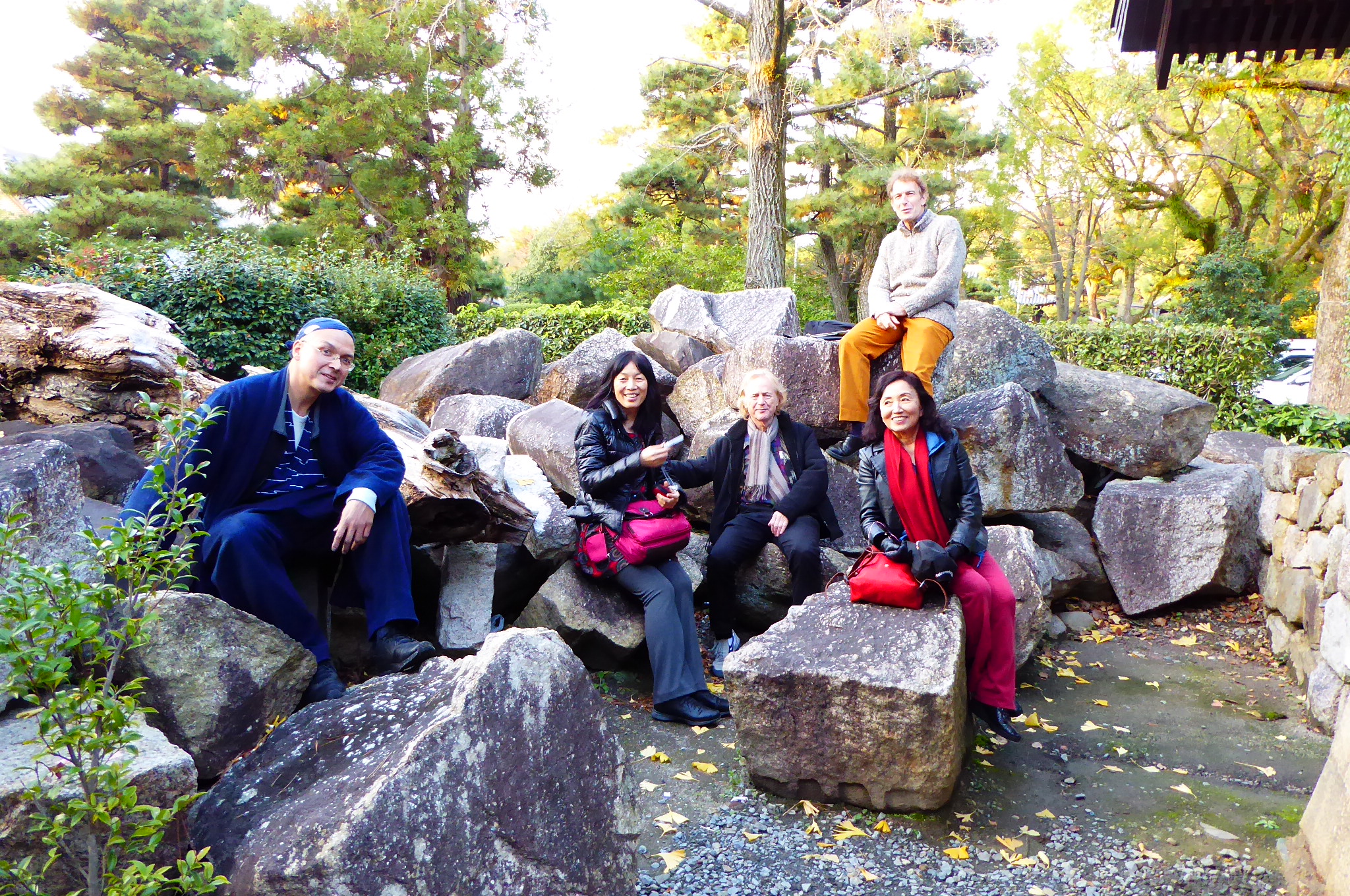
The haiku poets were able to find a conducive corner of the shrine in which to compare their writings for the day, perched on large rocks taken from the remains of Hideyoshi’s castle.  As the sun went down on what had been a fine outing, blessed with good weather, we were able to pick over what we had gathered from the day.

late autumn –
sunset sinking
into the vermillion torii
– Lawrence

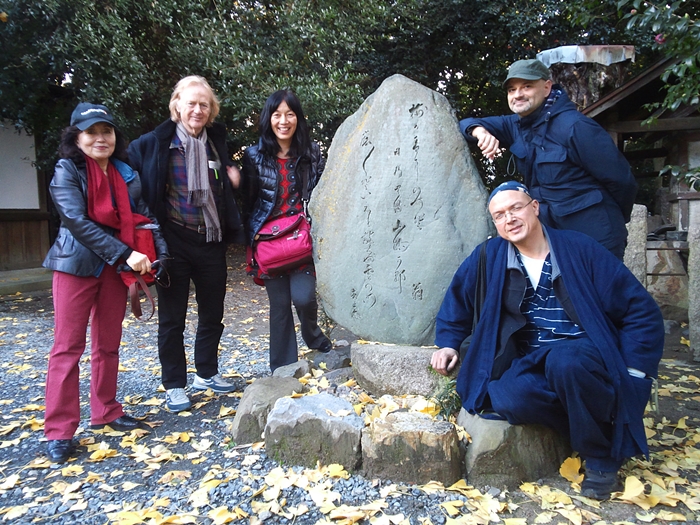
Gokonomiya haiku stone monumentAlso at Gokonomiya we happened on a haiku monument bearing poems by both Basho and Kyorai. Though none of us could decipher the cursive writing, a check on the Internet later revealed what was inscribed.

梅が香にのつと日の出る山路哉
Scent of apricot blossom –
Suddenly the sun comes up
On the mountain road.

This was written by Basho in Fushimi in 1694, the year of his death. The second haiku on the Gokonomiya stone was by Kyorai (both here trans. by SHG).

応々といえど敲くや雪の門
‘Alright, alright!’ I shout,
But the knocking goes on
At the snow-cloaked gate.

poets on rocks

From left to right: Lawrence ‘Jiko” Barrow, Mayumi Kawaharada, John Dougill, Kyoko Nozaki and Stephen Gill (Tito). Branko took the picture.

WiK winter event report

Allen

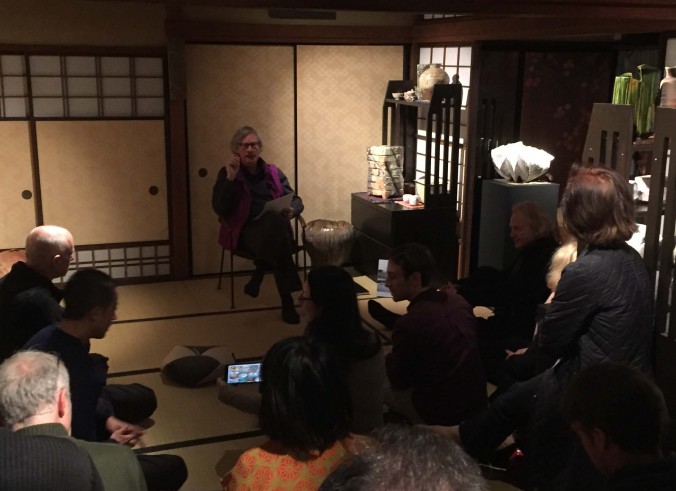
Allen Weiss extols about collecting ceramics before an array of precious pottery pieces in the Yakimono Gallery

A talk on collecting and cataloguing ceramics in a leading pottery gallery, complemented by shakuhachi and saké – WiK’s winter event was an early solstice celebration and the perfect launch into the festive season.  It highlighted three members of Writers in Kyoto, each an accomplished author and each a master of their chosen field.

A packed house at Robert Yellin’s Yakimono Gallery listened carefully as noted aesthete and art academic, Allen Weiss (of New York University) spoke of the joys and quandaries of collections.  How far do they reveal the autobiography of the collector, and how exactly does one go about cataloguing a collection that may have been assembled in an entirely unsystematic manner?  As he ranged over the permutations, it raised thoughts about the sometimes inappropriate categories we impose on objects.  Juxtapositions can prove particularly fruitful in suggesting associations, giving rise to listings based on colour, shape, texture, material, date – or a whole range of other groupings as mentioned in an imaginative Chinese catalogue that Allen cited.  Those who attended Allen’s talk two years ago will be aware of his stunning book on Zen Landscapes, and the reading he gave last night was based on a forthcoming book on collecting which should be no less compelling.  (For his amazon author page, click here.)

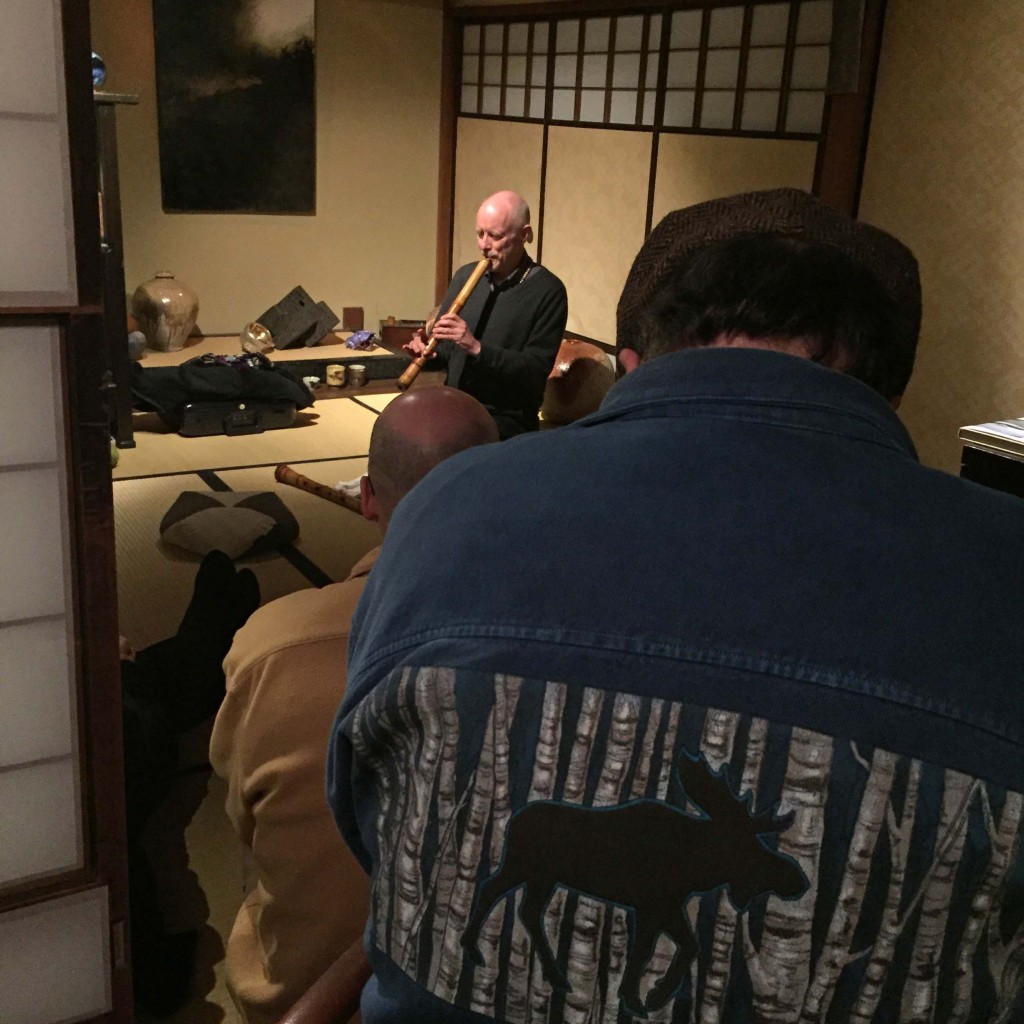
Afterwards saké was served in precious guinomi cups, while shakuhachi master Preston Houser played some haunting tunes, two of which were improvised.  One was allegedly by famed Zen eccentric, Ikkyu Sojun, though Preston assured us it was a later composition written to honour him.  (For a youtube video of Preston’s shakuhachi, please click here or here. For his Kyoto Meditations, click here.)

Preston Houser

Preston Keido Houser playing shakuhachi to an appreciative audience (all photos courtesy of Robert Yellin)


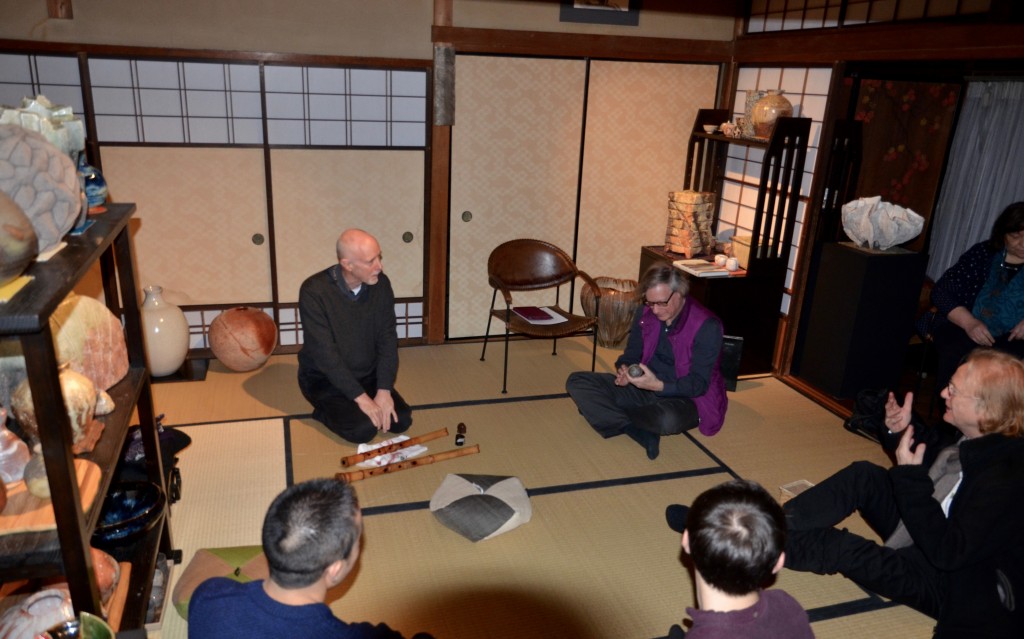
Preston and Allen in discussion

Question and answer session following the presentations (photo Decke-Cornill)

Writers in focus

Michael Lambe (Mr. Deep Kyoto)

Michael Lambe: me

Michael Lambe is best known as the writer of Deep Kyoto blog, an ongoing online guide to finding fun and sustenance in Japan’s ancient capital. More recently he has been busy working for other websites too; writing for Inside Kyoto and KyotoStation.com, and editing the ZenVita architectural blog. Other articles have appeared in a variety of publications such as CNN Travel, Le Pan Magazine, Japan Today, Kansai Scene, Kyoto Journal and Kyoto Visitor’s Guide. In 2014 he co-edited with Ted Taylor the Deep Kyoto: Walks anthology, which was released initially as an e-book with plans for a hard copy in 2016.

In this interview Ted Taylor delves a little into Michael’s interests and obsessions, and uncovers topics as diverse as myth and haiku, cafes and gardens, Japanese architecture and trainspotting.

You are a man of two worlds. As an Irishman, raised in England, how strong were Irish influences during your upbringing?

I had two very strong Irish influences on my childhood: my mom and my dad. And probably in that order too. Actually, I didn’t fully comprehend that I was Irish until I was about 7 or 8 years old. It was right after the Queen’s Silver Jubilee celebrations in the UK. There was bunting and patriotic fervor all over the place, and we were all singing God Save the Queen at school… and then one day my dad told me that I was Irish. Ultimately, this led me to the realization that nationalism and patriotism are based on accidents of birth and thereby illusory nonsense. At the time though, I was simply confused.

Actually, I still feel confused. Whenever anyone asks me where I am from, I say “England” to keep it simple. But it always feels like a half-truth.

Do you have any favorite Irish books or writers?

I do. When I was about 16 or 17 years old, I discovered in my school library, a copy of Flann O’Brien’s At Swim Two Birds. This book made a huge impression on me. I thought the playful and experimental structure of the novel brilliant, and I loved the comedic interplay of fantastical myth with mundane modernity. I was overjoyed that such things were possible. It seemed to open up endless worlds.

In recent years, I have discovered the works of the late philosopher-poet, John Moriarty. He wrote a completely mad book called Invoking Ireland which really inspires me. It’s all about ancient Irish myth and history, and a kind of spiritual vision he calls “silver branch perception” (a term he takes from Celtic legend). The phrase haunts me. In Moriarty’s vision, silver branch perception can help us see beyond the shabby materialism of short-term capitalist greed, reconnect us with lost ancestral energies and helps us find our soul’s sustenance in the natural landscape. And that’s just for starters! He was a strange man, maybe a bit mad. But we need strange men like that, to shout at us from the wild places and wake us up again. I often think Japan needs such a poet, to dive deep into its psyche and retell the old stories so that they heal us, and heal our relationship with the land before it is completely covered in concrete. — And to heal our relationship with other lands too, before all those self-styled political “realists” drag us off to war… Unfortunately, native Japanese mythology has a long history of being pressed into the service of political and nationalistic ends… It’s time someone took it back for the common weal.

Do you see any points of contact between Irish and Japanese mythology?

One point of contact is that both in Ireland and Japan there is a literary tradition of conversing with the dead. You see this in Japanese Noh drama, where a traveler encounters the ghost of an unquiet soul and that soul finds some peace in relating their story. In the case of medieval Irish literature, the old saints were forever entering into dialogues with long deceased legendary heroes. It was a way for the Christian people at that time to reevaluate their pagan past. I find it interesting that both in Ireland and Japan, there is this expressed need to communicate with your ancestors. W. B. Yeats seems to have responded to it too, as he used Noh plays as a model for his own ritualistic dramas.

Getting back to your past, when did you first think that you wanted to write?

I must have been about 8. I remember a lesson on Chaucer’s Canterbury Tales in primary school. We learned how he died before he could finish them. I thought it was such a pity, and it occurred to me then that I would like to finish them for him.

Up until that point I wanted to be a cowboy.

Other than John Wayne… what are your greatest influences as a writer?

I have an abiding love of genre fiction and popular entertainments. Though I don’t read them so much these days, writers like Ray Bradbury, Stephen King and Tolkien were my early heroes. And I’m still a big fan of Raymond Chandler. Ultimately, I would like to write spooky little ghost stories in the style of M. R. James.

So, how did you end up in Japan?

Many threads pulled me here. Studying modern poetry in university, I became intrigued by the influence of traditional Japanese poetic forms, in particular the startling juxtaposition of images in haiku. Later on I discovered the poetry of the Zen monk Ryōkan and was charmed. And then there were art exhibitions, in particular an exhibition of landscapes by Utagawa Hiroshige that made a huge impression on me. I had never seen art that touched me that way before.

What books on Japan really capture the heart of this place?

Hmm. That’s a tough one. I don’t know if I could say it “captures” the place, but Alex Kerr’s Lost Japan helped me to fall in love with Japan once long, long ago…

Did you decide to start Deep Kyoto as a means of capturing this city?

Not at all. I wanted to write a blog that would be of practical use to people. I knew there was plenty of information available on cultural sites in Kyoto, but there seemed at the time to be a dearth of material on good places to eat and drink. I’d see foreign tourists, hovering outside unfamiliar establishments and then losing their nerve and going into familiar places like MacDonald’s instead. Of course even if they ventured into a Japanese restaurant, they wouldn’t know what to order, but this seemed an awful shame. Why travel halfway across the world just to drink coffee in a Starbucks? At the same time a lot of really good, unique, independent businesses were struggling to make ends meet. I thought a blog recommending such places would do everyone a favor: the tourists, the businesses, and me too because my favorite cafes and eateries wouldn’t close down.

DK began mainly as a means of introducing Kyoto cafes and eateries, but has since drifted into announcing events and even into political demonstrations. Where do you see it moving next?

Well, though I started off with food and drink, it’s not a topic that really inspires me. I find it far more interesting to explore the local living culture, tradition and history. So you’ll be seeing more of that. And plenty of flowers too, because I love Kyoto’s gardens.

Recently your writing has begun to be seen more widely. Do you have any large projects in the works?

I have a lot on my plate actually. This year I began writing a monthly article for Chris Rowthorn’s Inside Kyoto site. These are big articles in which I thoroughly explore a given location or a Kyoto related theme. Writing these pieces has given me the chance to get deeper into that culture and history that I mentioned earlier.

Since last summer I have also been writing a lot of content for the Japan Station project, which is a network of websites providing guidance on all aspects of travel and transportation in Japan’s major cities. As a result I spend a lot of time in stations taking pictures of trains. Basically I’m a paid trainspotter.

Another side project that I’m rather excited about, is editing the ZenVita blog. ZenVita is a new Kyoto based startup that acts as a middleman between Japanese architects and potential customers overseas. Their blog covers Japanese architecture and design, whether that be about traditional Japanese aesthetics or about current trends. They have quite an impressive list of local architects on their roll, and the blog will also feature interviews about their current projects. This whole area is one I am instinctively attracted to, but have never had time to fully explore before, so I find it all quite fascinating.

Finally, as you know, there is still the hard copy version of the Deep Kyoto: Walks anthology to produce. Though it has been a year since the e-book was released, I’m still excited about the project as the hard copy will have lots of extras: more writers, more photography and more haiku! I think people will be surprised and impressed with the final results.

What aspects of Kyoto are most attractive to you? What repels you?

I like the palpable sense of history here, the way it permeates and interacts with the present. With its ancient temples and pachinko parlours, its Zen gardens and high rise apartment blocks, Kyoto is a city of queer contrasts. These contrasts can be energizing and fuel your creativity. However, when you regularly see, beautiful old buildings being knocked down for yet another monstrous concrete block – well, that’s depressing to say the least.

To repeat a question you asked me: What do you see as your greatest achievement?

Love and friendship. You would be a part of that.

I concur… So what then would you like written on your tombstone?

Actually rather than a stone, I’d like to have an organic burial with a tree planted on top. A simple plaque on the tree saying “Michael’s Tree” would suffice.

You also write haiku. Before you go, can you write one including the words ‘Kyoto’ and ‘Deep?’

Without regard to syllable count, here’s two:

Kyoto machiya townhouse –
deep in the shadow
of a high-rise block

Take a deep breath –
by Kyoto’s Kamo river
a kite has snatched your lunch

**********************************

This interview is a follow-up to Michael’s interview with Ted Taylor which you can read here: https://archived.writersinkyoto.com/2015/07/featuring-ted-taylor/


Writers in focus

Amy Chavez on reader comments

What I’ve learned from reader comments

by Amy Chavez

With most publications having at least a part of their content online these days, it’s only a matter of time when as a writer, you’ll have to deal with the dreaded “reader comments.” Whether it be a traditional newspaper site, content marketing site or even a review of your book on Amazon, you’ll likely be praised and criticized by some of the best. And worst.

What writers used to call “hate mail,” limited to a missive between the writer, author and the publication, is no longer private and is now posted for all to see, and scrutinize. Whereas previously op-eds were published in response to an article, they were also mediated and edited for language, brevity, and suitability. No longer so.

But there is a difference between comments and commentary. The author is offering commentary, an expanded idea they’ve put thought and research into. Commentary can also be merely opinions of a particular specialist, essayist, pundit or author, the category most of us fall under if we are not reporters.

Online reader comments, on the other hand, are usually reactions to the commentary. Reactions, by nature, are emotional and seldom backed up by fact-checking, rigorous research, or even writing skills. Furthermore, commenters aren’t concerned with those things because they usually have their own agenda. Fair enough, because you have yours too, which is what prompted you to write a thought-provoking essay or book.

As an author, I think it’s important to remember that you are not asking people to agree with you. If they do, great. If they don’t agree, that’s fine too. Rather, the success of an article or book should be judged by answering the following question: Does the piece provoke discussion? Many things, especially subjects that people don’t like to admit or talk about, need to be presented in a way that prompts awareness. If discrimination is wrong, for example, it’s not enough to presume that everyone knows this (even though they do). We need to discuss why it is wrong.

If your writing provokes discussion, then read the discussion and learn from it.

Unflattering and discriminatory comments

The quality and number of reader comments depend on the publication. The Japan Times, RocketNews24, Japan Today and the Huffington Post all cater to vastly different audiences and this is reflected in their reader comments.

Some comments may be merely unflattering to the author while others are outright discriminatory. While I’d like to think that most people can tell the difference, apparently many cannot; if they could, I believe more people would not make so many arbitrary comments. Asking an American author, “Why are you so bigoted?” albeit derogatory, is a fair question. To extend that opinion to all Americans, as in “Why are Americans so bigoted?” is discriminatory.

People even extend such annotations to Facebook, where surely they must realize that hundreds of people, including friends, will be judging them. The other day, someone was complaining about an editorial judgment made by The Japan Times. That person’s Facebook friend remarked, “Trying to learn something from the ‘Muricans, eh?” That’s just not acceptable. You can think that, of course, but once you say it, it becomes public and subject to scrutiny. Unfortunately, such attitudes are pervasive in comments sections whether they be public or private forums, penned anonymously or not. While most adults complain about children sharing too much online, I notice that adults also don’t realize how much about themselves they are sharing online.

Negative comments can also offer you clues as to what you might be doing wrong as an author. Perhaps your tone was a bit condescending, or you under-estimated your readerships’ background or grasp of the topic. Or maybe the title of your article (which is often determined by an editor, not you) didn’t match the content the reader expected. It’s possible that the reviewer of your book may have felt his or her book/blog/website on the same subject was, naturally, better than yours. Then again, maybe the commenter is just an asshole. Like it or not, this is all to be expected in the online world.

One thing I’ve learned however, is this: Do not change your writing style in order to please this audience. Once you start compromising your own writing, it’s no longer yours. And your prose will most likely sound flat, boring, and unchallenging. Passion sparks discussion.


Click here for an earlier WiK interview with Amy.


Writers in focus

Eric Johnston offers advice

Eric Johnston of The Japan Times Osaka office offers some basic advice to writers seeking to get published in his newspaper and Japan-based publications in general.

Eric Johnston at a WiK event earlier this year

Eric Johnston at a WiK event earlier this year

Do you get a lot of inquiries from people seeking to get their work published in either your newspaper or other English-language media? If so, what kind of advice do you give?
I get what I’d say is a steady stream of inquiries, though a tiny fraction of what real editors in Tokyo receive. As to advice given or action taken, it varies depending upon my relationship with those doing the inquiring. Do I know them personally? A fair number of people who contact me are complete strangers. They saw my name somewhere and decided to drop me a line. In those cases, I rarely reply. Life is too short and I have my own work to do.

If I haven’t met them, but they’re a friend of a friend, and that friend has contacted me in advance to provide an introduction, I’ll usually reply to them – unless, by the time they get hold of me, a significant amount of time has elapsed. Please don’t write to me a month, or even a week, after your friend (who might also be my friend) introduced you. Why? Because I’ll assume you really don’t have any interest in contacting me, or that you’ve been spending the interim days (or weeks) getting rejected by other publications you really wanted to work with and now, shikata ga nai, you’re contacting me because there’s no one left.

But if it’s someone I’ve met, or someone I’ve already told to send me something, then, of course, I’ll look the submission over. Or, I’ll forward it to an editor and ask them to look at it. But I need to emphasize I have no authority to say yes or no to a writer. All I will do is make an introduction to the editors in charge, and a recommendation if I think the proposal is excellent.

What kinds of mistakes do people make when they send their initial story pitch?
First is a failure to display any form of professional courtesy. You’d be surprised at the number of total strangers who send direct and chummy, to the point of rude, e-mails, addressing me as if I’m their drinking buddy, college roommate, or “friend’’ on social media whom they can use emoji with instead of complete sentences. When it comes to initial correspondence, I’m very much a 20th century, pre-social media type. If you can’t write a polite, professional letter the old-fashioned way, regardless of age and experience, don’t bother writing because I can guarantee your e-mail will go into the trash.

The second mistake is that people often misspell my name. It’s “Eric Johnston’’. Not “Erik Johnston’’. Not “Eric Johnson’’. If my name is misspelled, the rest of your letter goes unread, and you’ll probably get a sharp reply if you try to get hold of me again. Nobody wants to hire a journalist who doesn’t take the time to do something as basic as check to see if the name is spelled correctly.

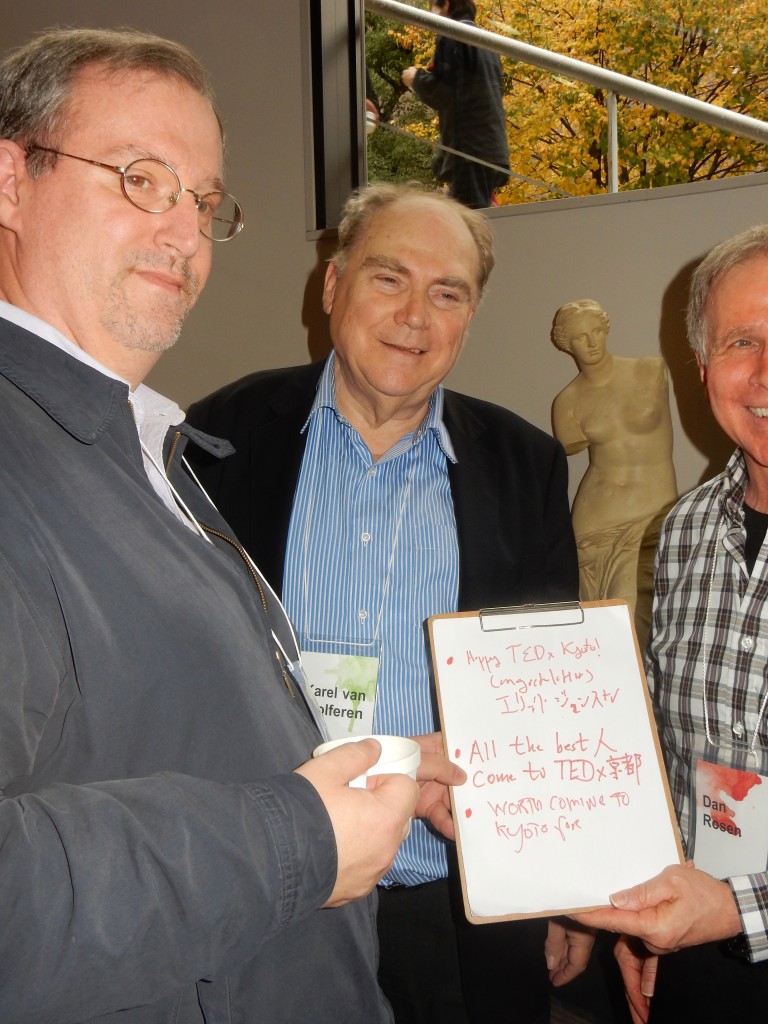
Eric with Karel van Wolferen at the Ted Talks held in November

Eric with Karel van Wolferen at the Ted Talks held in November, prior to the WiK dinner event

The third mistake is too many writers don’t research what articles the publication they’re approaching has run recently. Is your submission merely copying what appeared yesterday? I’ve upset not a few freelancers over the years because I sometimes quiz them, if they call directly, on whether my paper has run a related story at any time over the past month. If they can’t answer immediately, I hang up.

A fourth mistake is that when writers pitch a story, they can’t encapsulate the main points in two paragraphs. Some editors I’ve met demand that all writers summarize their story idea in one paragraph. So two paragraphs might be something of a luxury. Regardless, writers must always remember that they’re pitching a story to a busy editor who just doesn’t have time for long explanations.

Finally, there are those who cannot answer a basic question in their pitch: why is your story idea relevant to readers of that publication? Sure, the writer thinks it’s an important story and that readers of the publication will be interested. But the reality is that budgets are limited, and it’s hard if not impossible to justify spending money on a story that falls outside the publication’s editorial philosophy and—obviously—marketing strategy of the publication.

Common sense will, of course, prevent the above mistakes, or at least help minimize them. But as Will Rodgers once noted, common sense isn’t so common.

What about submissions in English from Japanese and non-native speakers?
Anything from a non-native speaker still has to be comprehensible, of course, and flow logically. But as long as the subject matter is interesting, relevant but unique, and well-researched, and as long as the work needed to correct the English grammar and spelling is minimal, most editors are happy to at least consider works from non-native speakers.

Personally, I don’t care if a story idea isn’t in English. Japan’s best freelance journalists cannot, or do not, write in English, only Japanese. If it’s really good journalism, I might translate a summary of the proposal and pass it along to an editor, who will hopefully engage a competent translator with media translation experience, as opposed to academic or commercial translation experience.

This isn’t always possible, but all intelligent and experienced editors and writers, regardless of their jobs and titles, recognize it’s better to engage a separate translator for a great Japanese-language journalism piece than to deal with submissions from an “eigo otaku’’ type who can go on for hours about Shakespeare or Hemingway and collects English language slang dictionaries, but has no idea how to tell a story. Or, worse, something from pedantic translator types who, to put it in musical terms, play all of the notes exactly as written, and yet sound absolutely horrible because. . .they’re playing all of the notes exactly as written. That’s why people with good musical sense often make the best journalists.


To learn more about Eric Johnston and his writing interests, please see here for his earlier piece on being a news reporter.

Featured writing

Kyoto Encounters (ed.Rimer)

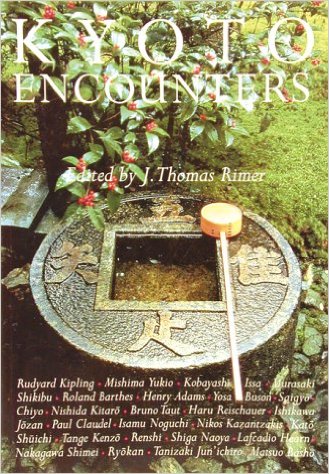
Kyoto Encounters book coverA literary stroll through the four seasons – Kyoto Encounters (1995) has to be one of the most attractive English-language collections ever produced about the city.  Edited by J. Thomas Rimer (Professor Emeritus at Pittsburgh University and author of several books), it combines visual beauty in commissioned photos with extracts culled from the corpus of Japanese literature.
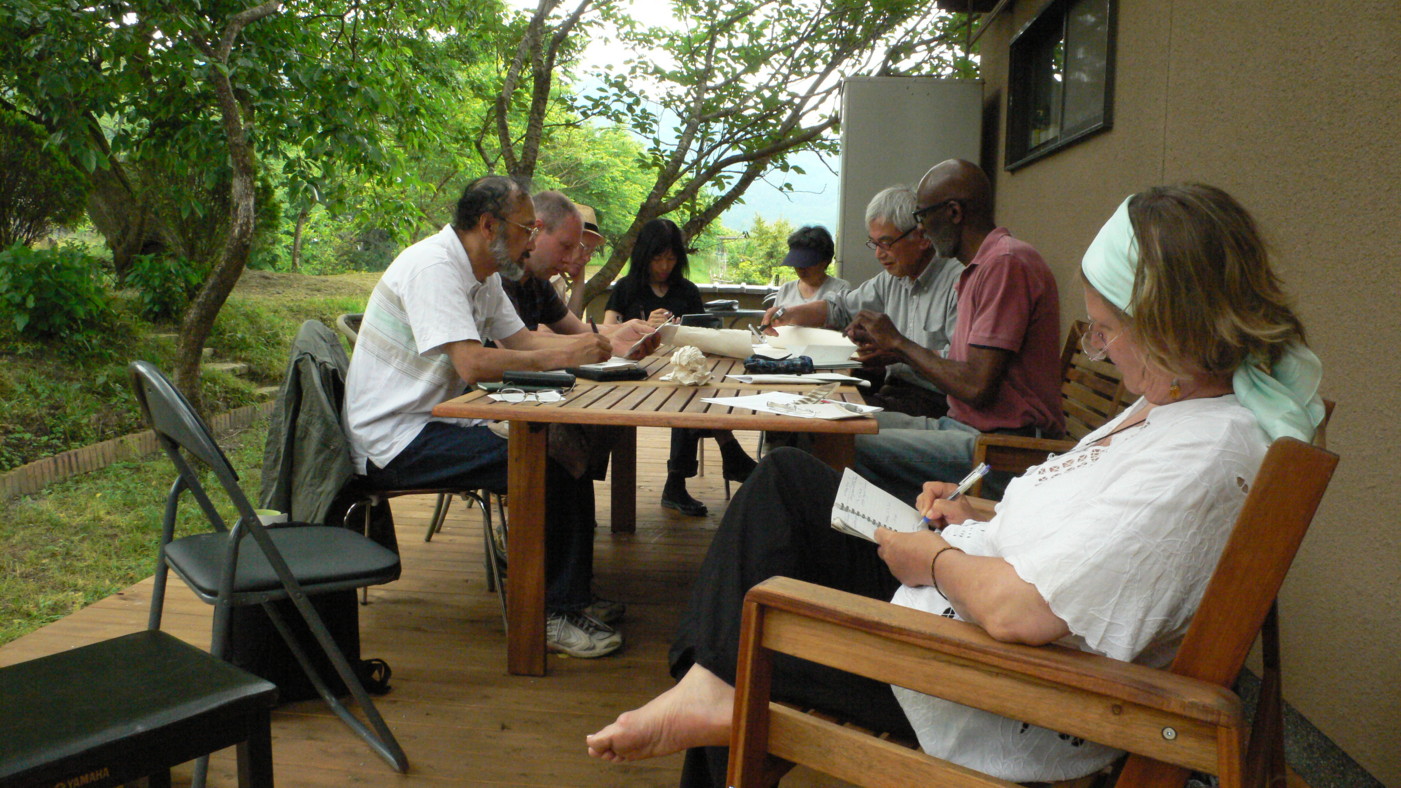
The book is also notable for the sensitivity of its layout, with pictures specially commissioned by the Bank of Kyoto for a ‘I love Kyoto’ campaign allowed space to speak for themselves.  Rather than being limited to the city proper, they cover the whole of the prefecture which means the reader is often surprised by just what constitutes ‘Kyoto’ – pictures of the coastline for instance are not what one expects.  The text which accompanies the photos are arranged so as to complement rather than intrude, with the employment of different font sizes to cope with the different types of extract. This encourages pieces to be read as intended by the author, with the larger print for haiku commanding careful consideration of each and every word.

For the most part there is one quotation per picture, and on occasion two. Surely only someone of Rimer’s erudition could have come up with such a comprehensive collection, culled not only from Japanese literature but from observations too by foreign visitors.  The juxtapositions are felicitous, and in the manner of haiku the links are often oblique rather than explicit. Sometimes the match of prose and picture is pleasingly precise – a photo of snow-covered tiles is accompanied by an extract Sei Shonagon that might have been describing the very scene.  This happy combination of past and present is one of the great rewards of Rimer’s foraging.

At other times the combinations leave one thinking; what for instance is the connection between the contemporary Jidai Matsuri and a sixteenth-century imperial procession?  Or take the visit of Go-Shirakawa to Jako-in at Ohara, which is accompanied not by a photo of the temple as one might expect but a solitary farmhouse standing amongst Ohara’s rice fields, thereby emphasising the sense of rural isolation expressed in the extract.

When I was researching my book on Kyoto: A Cultural History, I was surprised to find how little English-language material there was in terms of literary portrayals.   It means the challenge for Rimer in putting together nearly a hundred quotations was more formidable than it might appear, but the University of Maryland professor adopted an ingenious method to deal with the problem; since the photos already speak of Kyoto, he sought to address their subject-matter, meaning that some of the extracts very little to do with city or indeed prefecture.  There are haiku by Kobayashi Issa, for instance, alongside the seaside fields of Niizaki. Or take Saigyo’s death-poem about wishing to die in cherry blossom time under a full moon: the poignant verse is set aside a stunning photograph of a cherry blossom branch against a hazy backdrop of the Nanzen-ji aqueduct.  Though the original poem had nothing to do with Kyoto, Rimer has freed himself to combine the very best of Japanese literature with the visual appeal of the city. It means even afficionados of Kyoto will find exciting discoveries, for along with often quoted pieces such as those by Basho and Buson are less well-known verses such as this:

Ah, the dancing!
In Kyoto
So many women.

The haiku is by Renshi (1649-1742), and one of the great assets of Rimer’s book are the notes discretely tucked away at the back.  These constitute a cultural miscellany in themselves, and from them we learn that Renshi carried on Basho’s haiku style after being trained by one of his disciples named Sugiyama Sanpu.  Another verse that caught my attention, particularly as it accompanies a striking photo, is the following by Nakagawa Shimei, whom Rimer notes was a haiku poet of Meiji times concerned with the beauty of the seasons in Kyoto:

The first rainbow;
A girl selling flowers
Goes along the Shirakawa road.

Along with the Japanese writers are foreign commentators, such as the sixteenth-century Italian, Gaspar Vilela, and the twentieth-century German, Bruno Taut.  Unexpected names like Nikos Kazantzakis mix with the well-known, such as Lafcadio Hearn.  Together they chronicle the amazing transformation of Kyoto over the centuries.  In 1931, for instance, Noguchi Isamu was able to remark of the city’s temples that ‘nobody ever went there’, and that ‘The legendary gardens were generally neglected, as were important architectural structures, many of which were rotting away.’  We learn too from Rimer’s extracts that the the lives of ordinary people too have dramatically changed, as noted by the wife of Edwin O. Reischauer: ‘Even as late as the 1940s it was a life of grinding poverty, but the farmers quietly accepted it with dignity and self-respect, treating one another with decorum and courtesy.’

The result is a wonderful tribute to Kyoto, and Rimer’s collection of words and photos, long out of print, surely deserves a higher profile.  It remains one of the most stimulating and accessible books produced about the city (and its surrounds), with something of appeal to both visitor and resident alike.  As we approach the festive season, it’s a miscellany that could well serve as an attractive Christmas present, even in secondhand form.


Thomas Rimer has written in to say:

“I have written a number of scholarly books on various aspects of Japanese
literature, theatre, and culture, but my two favorites were not academic
books at all, and both were about Kyoto. The first, SHISENDO which I wrote
together with a several colleagues, paid homage to one of my very favorite
places in Kyoto, as well as signalling my fascination with the productive
intertwining of Chinese and Japanese artistic and literary culture during
that period.  The second was KYOTO ENCOUNTERS, which gave me a chance to
match some of my favorite Japanese authors, many of them related in some
fashion to Kyoto, with those remarkable photographs assembled for me by
the editors of Weatherhill. It was a grand opportunity to write something
about my favorite city, and for pure pleasure.

Unfortunately, Weatherhill exists no more; from what I understand, the
company was sold to Shambhala, a publisher of books on Buddhism and
related topics now located in Boston, Massachusetts. I don’t believe that
they have reissued many of the Weatherhill titles.

As I have not been able to travel to Kyoto for almost twenty years now,  I
can only wonder how the city must have changed; I fear in particular for
the likely loss of my favorite Taisho-period coffee shop near Kyoto
University. But I certainly envy those of you who live there and can watch
the the seasons and the slow push of history move gently along.  It’s a
rare privilege.

Writers in focus

Hailstone Haiku Circle

Composing a linked verse from haiku written on a 2010 ginko in Ohara, Kyoto

Composing a linked verse from haiku written on a 2010 outing in Ohara, Kyoto

Hailstone Haiku Circle (by Stephen Gill)

Under the boots
of marching soldiers
sparkle of new-green grass
– (Keiko Yurugi, from Hailstones, 2001)

 
Hailstone Haiku Circle was founded by Stephen Gill (haiku name ‘Tito’) in 2000 in the Kansai region of Japan for poets writing haiku in English. It comprises largely haiku students (all adults; one class in Osaka – 4th Thu.; another in Kyoto – 2nd Thu.) and poet friends (many are university lecturers/profs. over here). There is no annual subscription or official membership, although people begin to refer to themselves over the years (through association and publishing) as ‘Hailstones’.

In our last book we comprised just over 70 poets, two-thirds Japanese writing in Eng. Stephen Gill’s mentor is the translator and poet, Nobuyuki Yuasa, who has continued to be a close supporter of and contributor to the group. It was his translations that were in the Penguin Classic Basho ‘Narrow Road’ book.

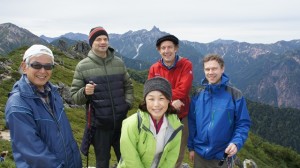
A few of the 2014 Autumn Haikers at Mt. Tsubakurodake, Nagano-ken

A few of the 2014 Autumn Haikers at Mt. Tsubakurodake, Nagano-ken

Hailstone has published to date nine collections (http://hailhaiku.wordpress.com/publications/) which showcase all the haiku arts, including linked verse renga (renku), haibun (haiku short essays) and haiga (haiku and pictures). We have had occasional exhibitions, both in Osaka and Kyoto and, for a few years now, we have organized Japan’s only international haibun contest, the Genjuan. Our 2015 winner was Bhutanese; 2014, American. As well as Stephen Gill, judges for this were Nenten Tsubouchi and Hisashi Miyazaki.

The Icebox (https://hailhaiku.wordpress.com/) is the Hailstone’s website: popular, spirited, light, but (hopefully) also affording some unique insights into the culture of Japanese haiku and its seasonal cycles, both modern and trad. The winning pieces from the past 7 years of haibun contests are there to read.

We thrive on seasonal events, which are usually well-attended. Stephen Gill was the British Haiku Society’s first Events Officer back in the UK in the early ‘90s, so he learned how to go about this, and now many others convene events, at which a good deal of the poems are born. We just completed our 14th annual Autumn Haike (haiku hike), this year on Mt. Bunagatake in Shiga Prefecture. (Branko Manojlovic has written a report on it near the top of the Icebox website.)  If there is a trait to be found in Hailstone’s haiku output, perhaps it is that most of our best ones ‘strike’ then ‘melt’.

Gone
like autumn leaves
the woman beneath the bridge
– (John Dougill, from Meltdown, 2013)


The next Hailstone event is a joint event with Writers in Kyoto, comprising a historical ‘Emperors and Generals Ginko’.  This involves a composition stroll in the Tambabashi area of S.E.Kyoto on Dec. 12, starting at 10.30.  Participants will stroll through woods past burial mounds of emperors and then into town via a couple of outstanding Shinto shrines, ending with a late lunch.  Anyone is welcome to attend.  For details, click here.


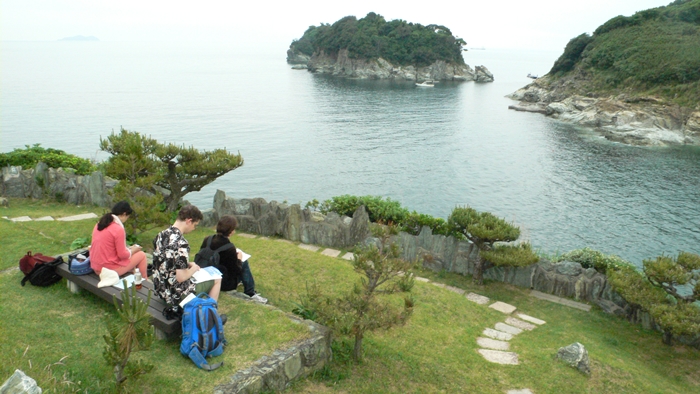
Composing haiku at Wakanoura, Wakayama-ken, 2012

Composing haiku at Wakanoura, Wakayama-ken, 2012

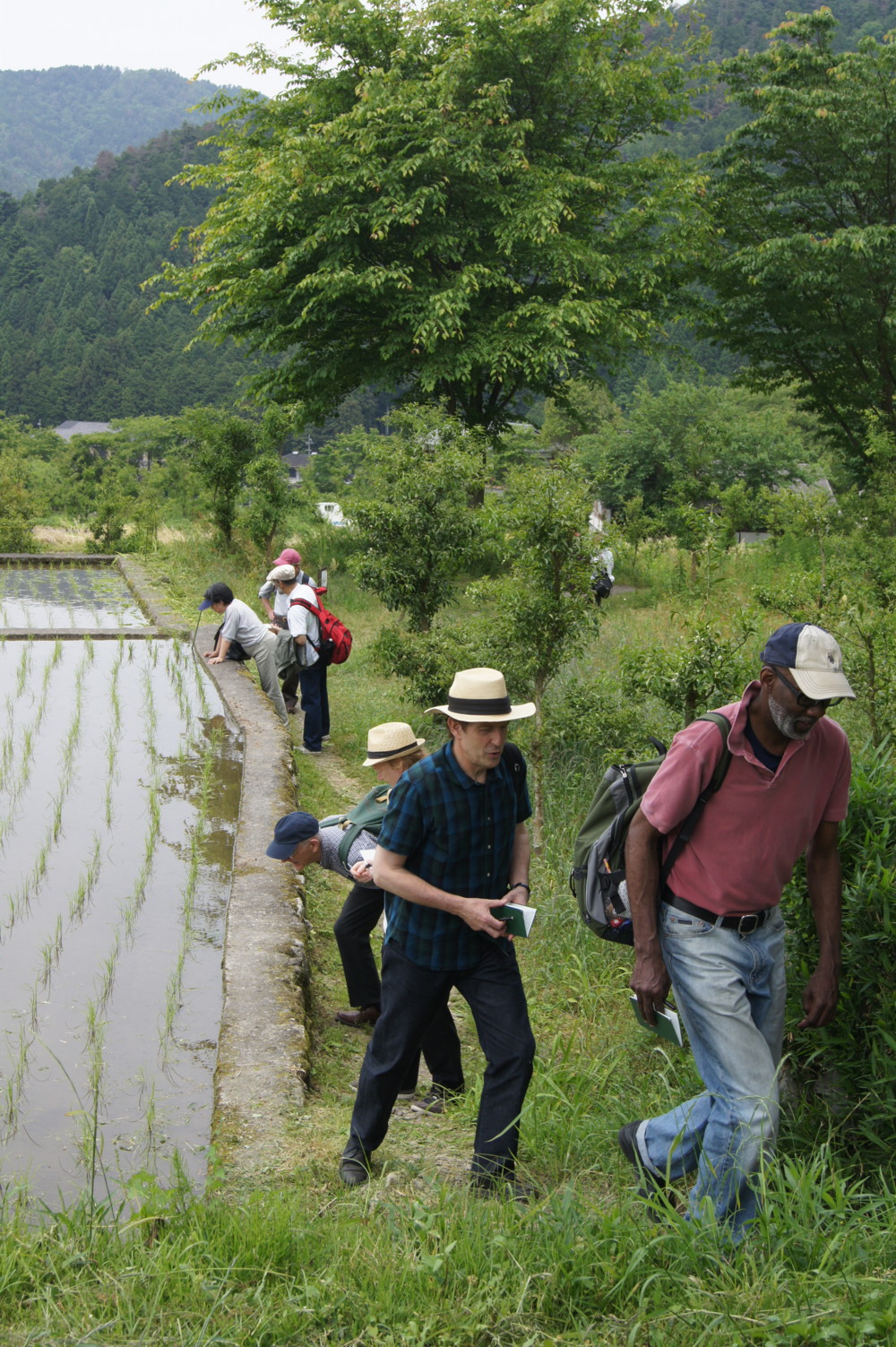
Hailstones hunting down haiku in Ohara, Kyoto, June 2010

Hailstones hunting down haiku in Ohara, Kyoto, June 2010

« Older posts Newer posts »

© 2026 Writers In Kyoto

Based on a theme by Anders NorenUp ↑