Page 61 of 65

Featured writing

Basho’s Shijo haibun

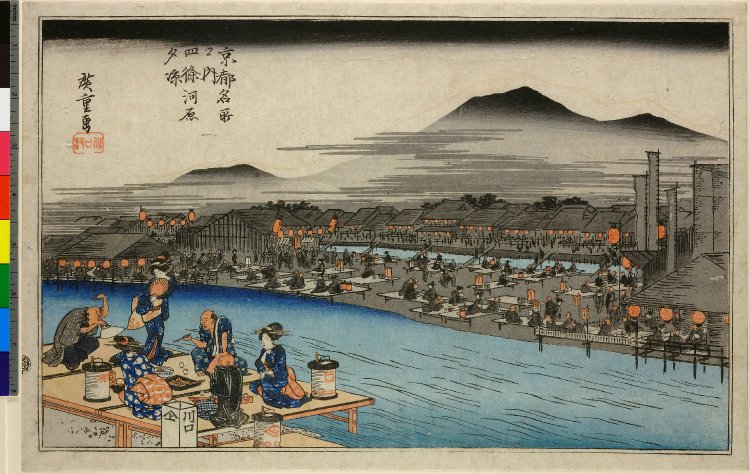
Cooling off at Shijo by Ando Hiroshige c. 1834

Cooling off at Shijo by Ando (or Utagawa) Hiroshige c. 1835 (from the ukiyo-e search website)            

  Cooling off by the River at Shijo (1690)
  By Jeff Robbins, Compiler of the Basho4Now Trilogy

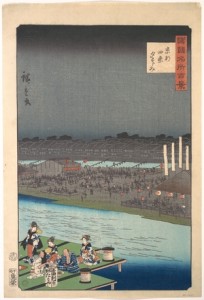
The son-in-law of Hiroshige, known as Hiroshige II, also painted the scene in 1860

The son-in-law of Hiroshige, known as Hiroshige II, painted the scene in 1860

The custom Basho describes in the following haibun and haiku began in the late 12th century as part of the Gion Festival; a temporary bridge was set up for portable shrines to cross the Kamo River near Gion Shrine (now Yasaka shrine), and eventually tearooms proliferated at the foot of this bridge   By Basho’s time in the late 17th century platforms were built over the river and people flocked there to enjoy the river coolness. There are famous paintings of “Cooling off by the River at Shijo” by both Ando Hiroshige (1835) and his son-in-law Ando Hiroshige II (1860).

The custom continued every summer until with the Sino-Japanese War and World War II it died out, being regarded as an indulgent luxury. It resumed in 1951 and continues to this day, between the Nijo Ohashi bridge and the Gojo Ohashi bridge on the west bank from May through September every year. John Dougill reports of the modern event: “When the full moon comes up behind the Eastern Hills and geisha sit out or walk past, then one can well see why it would capture the heart …”

In Basho’s time the custom was practiced from the 7th of the Moon when the moon set during the night until the 18th when it shone in the dawn sky. May I offer this haibun and haiku to the Kyoto Tourist Office for advertising summer in Kyoto?

   Cooling off by the river at Shijo

   is a custom from the time of the evening moon

   till it passes through the dawn sky.

   People line up on a platform over the river to pass

   the night drinking, eating, and having a good time.

   The women’s kimono sashes are extravagant,

   the men’s haori jackets long in the formal style,

   Buddhist priests mingle with old folks, and even

   the blacksmith’s and bucket maker’s apprentices,      

   their faces smiling with leisure, sing loud rowdy songs.

   It is a scene to be expected in Kyoto.


                         River breeze —

                         wearing pale persimmon

                         in evening cool                


Basho, as a skillful journalist, uses human sensation – food and drink, color, sound — to bring us into the scene, so we enjoy the coolness too. Humanity and diversity are everywhere in the passage. The blacksmith and bucket maker keep their teenage apprentices busy every minute, so here the youths make the most of their night of freedom. Their counterparts today do the same.

The prose flows into the haiku. Someone at a party on a platform over the river elegantly wears a robe dyed with persimmon juice; that color expresses the rejuvenation we feel from coolness after a long hot day. The website Empower-yourself-with-color psychology.com says “The color orange radiates warmth and happiness…orange is optimistic and uplifting, rejuvenating our spirit… orange also stimulates the appetite… and promotes conversation and social interaction.” Good for parties!

The haiku is thus a superb example of Basho’s poetic ideal of Lightness: ordinary people enjoying themselves — without tragedy, loneliness or desolation (i.e. no hint of wabi-sabi). Basho provides only satisfying tactile sensation, invigorating color, and an appreciation for human life in summer.

Please send your comments to basho4now@mail.com


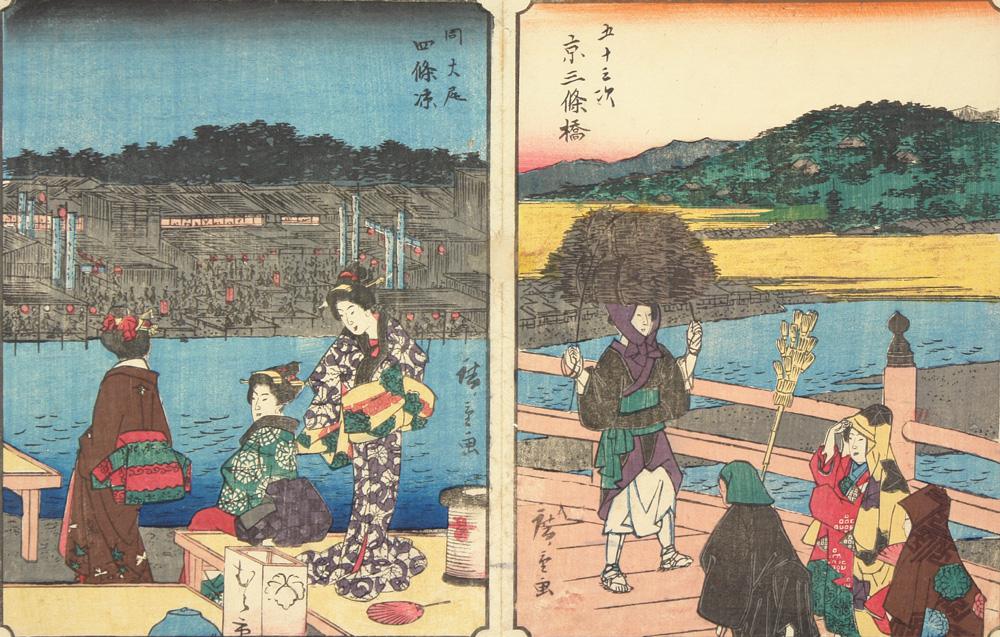
Shijo River Bank in Utagawa Hiroshige Kyoto, no. 56 from the series Fifty-three Stations (courtesy Uni. of Wisconsin-Madison

Left: Shijo River Bank by Utagawa Hiroshige, 1852 (courtesy Uni. of Wisconsin-Madison)

Featured writing

Robert Brady’s The Big Elsewhere

cover.smallFrom our friends at Kyoto Journal comes news of an exciting new publication…

Robert Brady, one of the founders of KJ, has contributed to almost every issue — his voice and the magazine’s co-evolving over the years. Since April 2002 he has maintained an almost daily net presence at Pure Land Mountain, with well over 3,000 musings…

It is the work of a lifetime
to find the treasures
we were born with—

In 1995, Bob moved from urban Kyoto to a mountainside overlooking Japan’s largest lake, seeking closer connection with the heart of the natural world. The Big Elsewhere documents insights, lessons learned, wisdom—both ancient and newly-won—with a zest for observing and reflecting on the finer details of country life, and their place in the bigger picture of evolution, local tradition and the impact of modern times. Woven into this collection of meditations, humor, rambles and even haiku, is the celebration of an elder perspective—enriched by sharing his beloved granddaughters’  fresh perceptions as they too encounter The Big Elsewhere. With illustrations by sumi-e master Komori Fumio.

DIGITAL EDITION available at kyotojournal.org
PRINT ON LULU: http://www.lulu.com/shop/robert-brady/the-big-elsewhere/paperback/product-22397961.html

**************************************

(book extracts)

FREEWHEELING GOLD

Freewheeling down the mountain this morning into sunrise I ran into a minisquall from a thick silver band over the lake that the sun had just risen above, and the placid bright blue air was all at once a quick wind filled with fat drops of gold falling molten on the ground. As I rolled over all that wealth I looked to my left and saw that the road was curving into the tourmaline wall of a rainbow arching higher than the mountains; soon all the air around me took on the glow of revelation and I was gliding through an ambience of emerald, ruby and topaz over a long and curving road of solid gold. Some folks think a lot of money makes you rich.

THAT KIND OF SOIL

Yesterday I bought materials and today made a soil screen and began screening out the stones and pebbles from the garden soil, the better to accommodate carrots and gobo (burdock) and the other roots, which aren’t happy with stones in their shoes and poking them in the ribs, who is?

How elegant then is the destoned soil, how concentrated, lovely and organically purposeful, cocoa in its musky richness like the finest growth stuff, nascent food, imminently ready to turn into daikon or onions at the mere snap of a season.

The still totally stoned soil adjacent looks distinctly unworked, unemployed, unpurposed, fodder for weeds, derelict troublemaker, mocker of one who aspires to onions. I used to hang around with that kind of soil. I used to be that kind of soil.

Writers in focus

Jeff Robbins, compiler of Basho

Interview with Jeff Robbins, compiler of the Basho4Now Trilogy

***************************
Why “Basho4Now”?
This is not Basho4Scholars, but rather Basho for EVERYONE — not knowledge of Japanese literature, but rather knowledge of humanity will help you unlock the Basho works in this trilogy. Basho4Now is the hundreds upon hundreds of fascinating and humane Basho works the scholars neglect to tell us about, so almost nobody knows they exist; the verses, prose, and letters that contradict the well-established Basho-image of a lonely, austere, impersonal, and humourless “poet-saint.”

Basho4Now consists of poems focusing on humanity, especially women and children – for instance, three verses on breast-feeding, several on babies, and twenty on teenage girls — his hilarious prose parodies, the “gentleness and humanity” of his letters to close friends, the incisive statements he spoke to his followers.    Basho4Now is Basho to amuse, entertain, inform, and inspire ordinary people interested in humanity.
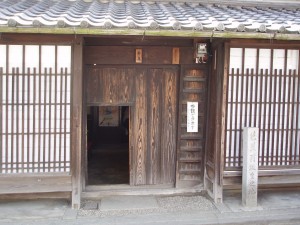
Basho's birthplace at Iga-Ueno

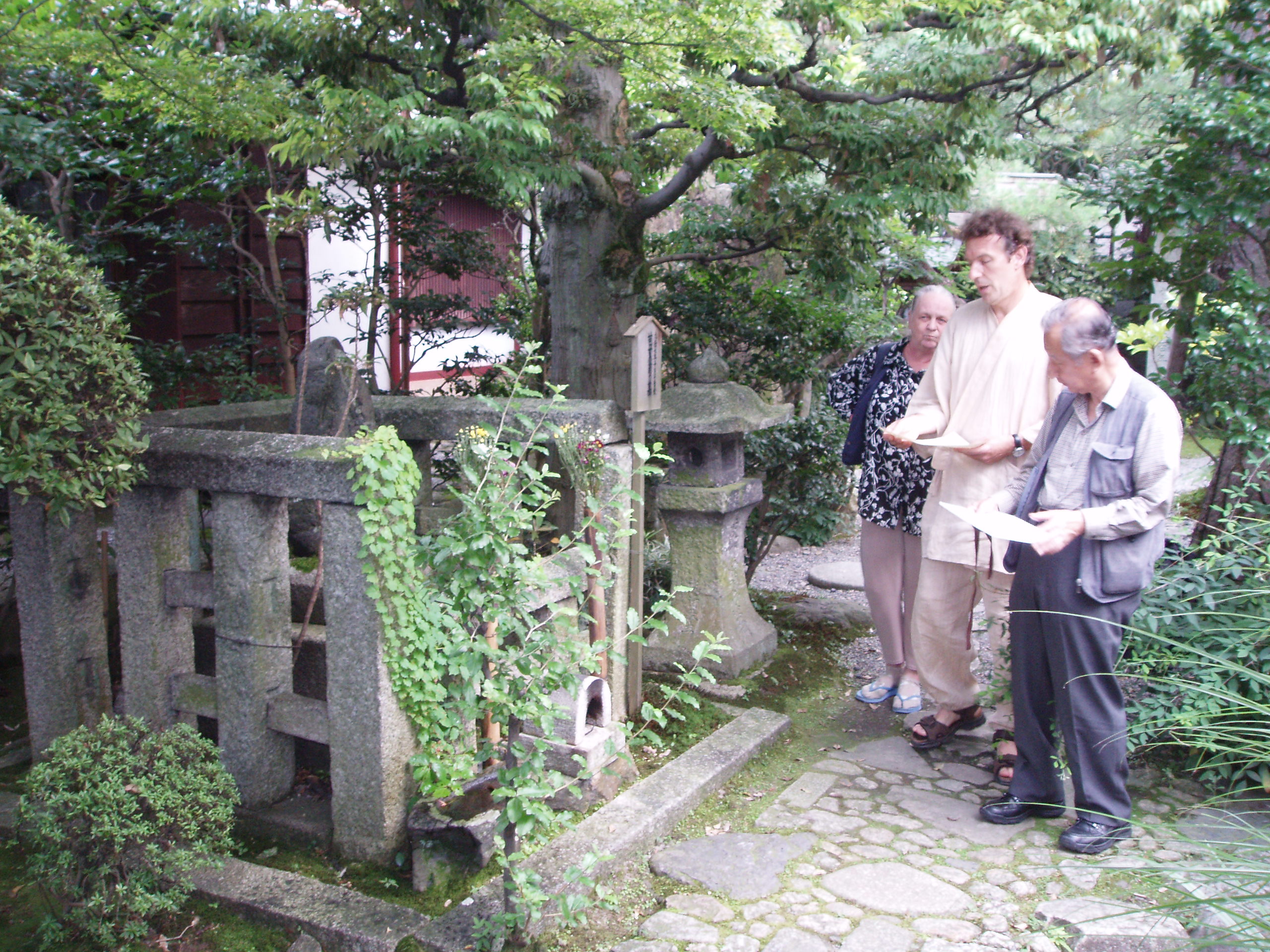
Basho’s birthplace at Iga-Ueno (photos by J. Dougill)

Isn’t Basho famous for his haiku and travel journals?
Most certainly, and that’s the problem; that is ALL he is famous for. Believe it or not, all of his haiku and travel journals are only about one third of his entire work.    If you look into enough books on Basho, you will find about half of his haibun or short essays, about one hundred of his linked-verse stanzas, a few sentences from his letters, and a few passages of spoken word. In contrast The Basho4Now Trilogy contains (in addition to 200 haiku and 60 prose passages you may have seen before) 230 stanzas of linked verse, three tanka, 30 haibun, 100 letter sections, 60 passages of spoken word; most of these will surprise even the dedicated Basho scholar.

I believe we should look closely at Basho’s statement:

“Many of my followers write haiku equal to mine, however in renku is the marrow of this old man.”

In linked verse, the “marrow” of Basho’s consciousness, we truly discover his astonishing insights into human life and consciousness – however his 1700 renku stanzas are studied only by a coterie of renku scholars, while few other people know even one Basho stanza.

Why “Basho4Now”?
This is not Basho4Scholars, but rather Basho for EVERYONE — not knowledge of Japanese literature, but rather knowledge of humanity will help you unlock the Basho works in this trilogy. Basho4Now is the hundreds upon hundreds of fascinating and humane Basho works the scholars neglect to tell us about, so almost nobody knows they exist; the verses, prose, and letters that contradict the well-established Basho-image of a lonely, austere, impersonal, and humourless “poet-saint.”

Rather than full 36-stanza sequences in which Basho wrote a fraction, I present stanza- pairs – a triplet and a couplet, one by Basho — so examples of Basho’s mastery stand out. We focus on the single link, the flow of mind from one poet to the next, searching for relation to our modern lives and consciousness.

How did you get into studying Basho? Can you tell us the path you followed?
At the end of the 70s in California I read a book with poems by the four great Japanese haiku poets: Basho, Buson, Issa, and Shiki; somehow, the only ones that stuck with me were by Basho. After I returned to Japan, I began studying Basho in Japanese, and found many haiku of deep humanity – however I noticed that the authors of books about haiku rarely mentioned these verses. All the attention went to Basho’s sad lonely works, while the cheerful and humane ones were considered “exceptions.” After several years adsorbed in Basho, I gave up the study, because it was taking too much time and energy away from what I had to do to support my family of three children. I continued thinking about Basho verses, but for two decades did not actively reach out for more knowledge of Basho. Six years ago, with my children grown, and my daughter taking over my business building and selling developmental play equipment, I returned to active study of Basho. I found a superb research assistant, Sakata Shoko, a certified instructor of Japanese language, who has been invaluable in helping me understand Basho’s letters, linked verse, and Japanese commentaries. For the past six years with Shoko’s help I have found and translated hundreds of treasures in Basho’s letters, linked verse, and spoken word, none of them found in any other English book.

How is your presentation of Basho different from other books?
Most important is my selection of poems to present. All the works in my trilogy appear in complete anthologies of Basho, buried among a thousands of words, so no single verse stands out. I instead bring your attention to the verses about humanity.
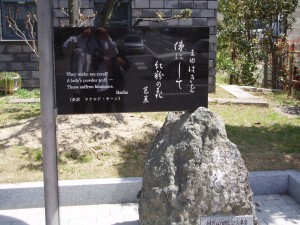
A Basho haiku at Iga-Ueno

A Basho haiku at Iga-Ueno

One way I draw your attention is by using a bright, lively font in bold for all words of Basho and the same font not bold for words of other poets. Following are brief summaries and the cover illustrations to each of the three volumes in my trilogy.
1) Take Back the Sun: Basho’s Praise for Women “Primordial power of the feminine emanating from Basho poetry”
60 haiku about women along with 140 Basho renku stanzas, three tanka, 30 prose passages, and 20 letter sections, all about women. As you read you will be overwhelmed by the dozens and dozens of Basho works on page after page, focusing on women, ordinary women in everyday life;    Many of these would be valuable contributions to woman’s study courses worldwide.
2) What Children Do: Basho Honors the Young, “Resources for kids, parents, teens, and educators”
60 haiku about children, teenagers, and their caregivers, 90 renku stanzas, plus prose passages, letters, and spoken word about young folk; many items could be part of any curriculum in child studies. The astonishing diversity of Basho images of children and teens, and especially his praise for the female (unique in this patriarchal society), may help you understand and deal with your child or any child.
3) Dear Uncle Basho: Poet of Humanity “Humor, Friendship, and Love”
One chapter of “absurd parodies”, including Basho’s hilarious cartoon Diagram of a Snore; 35 linked verses on “love and lust”, A chapter “High on Sake”,
five chapters about men and the nature of friendship, including letters to his brother and close friends in which we travel through the mind of Basho.

In translation I follow Basho’s dictum:

“Poetry benefits from the realization of ordinary words.”

I deliberately avoid the complex and abstract language other scholars use, preferring to follow the Book of Ecclesiastics and The Elements of Style with simple concrete words that “call up pictures.” I find the “realization of ordinary words” far more meaningful and empowering than academic and intellectual words.

Also, I believe Japanese poetry to be a form of music: Basho said

“The physical form, first of all, must be graceful, then the musical quality makes a superior verse.”

I translate every haiku and renku triplet with the same rhythm of beats, three beats and pause, four beats without pause, three beats and pause. This is the way Japanese musicians score haiku, and I find such a four-beat rhythm superb in English.

As for prose, all six of Basho’s journals have been translated, so here is nothing new, however I select out brief passages from long essays, giving you concentrated bits of Basho wisdom in poetic form. David Barnhill translates half of Basho’s 118 prose passages; many of the prose passages I translate are not in his book. He selects the ones that are sad, lonely, and Buddhist. I select the funny, trippy ones. Also the erotic ones:

“Beneath plum blossoms on the dark mountain unknown to people, unexpectedly we may be stained by the fragrance. On a hill of deep longing, with no one to guard the gate, somehow indiscretions occur.”

People led to believe Basho was a “poet-saint” devoid of sexual feelings may find it hard to believe he wrote such erotic prose – but there it is.

Barnhill translates the following passage in a long essay; I present just the first two clauses, focusing on the wisdom in Basho’s parallel construction:

“The mountains in silence nourish the spirit;
the water with movement calms the emotions.”

One well-known Basho prose passage is his account of meeting two “play-women” on his journey to the Deep North. I consider this passage a crucial document in the history of feminism and the struggle against male exploitation of the female body.  In a 20- page chapter of Take Back the Sun, I explore this passage, as well as seven Basho linked verses stanzas on “play-women” and other materials about prostitution in Japan, to uncover the reality of these women sold to brothels as children to suffer unspeakable misery as sex slaves until they died, often from syphilis, often before their 24th year. I pray that women who have been trafficked will find inspiration and empowerment, as well as amusement, in Basho’s sketches of “play-women.” I hope that those working to stop these crimes against humanity will find them an aide in their struggle.

Tell us about Basho’s letters.
Of 229 extant Basho letters, those to the women Uko and Chigstsu, and to his childhood and lifelong friend Ensui, have remarkable “gentleness and humanity”    These two words, yasashisa to ningenmi, from a Japanese scholar so perfectly fit the Basho in these letters. Consider one sentence Basho wrote to Ensui in response to a letter from Ensui announcing the birth of his first grandchild, a girl.

“I am happy you have a grandchild, my joy as great as yours.”

Basho links his heart with Ensui, matching Ensui’s joy with his own. We cannot read this letter without feeling the warmth in Basho’s heart. He expresses it so clearly. With no knowledge at all of such affectionate letters, scholars say Basho was “impersonal, detached, and objective.” I aim to destroy this false image of Basho, replacing with the true Basho, the warm affectionate Basho in his letters to Ensui.
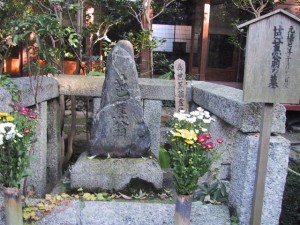
Basho's grave at Gichu-ji in Otsu

Basho’s grave at Gichu-ji in Otsu

You say most of Basho’s spoken word has never been translated, but I once saw online a list of many Basho sayings —
I have seen those lists too.    Most of the items are either haiku laid out in proverb form, or passages from his journals. By “spoken word” I mean words he spoke to his followers but never wrote down; the followers recorded them in their own journals and essays. Several hundred of them appear in his followers’ writings. For instance, here Basho speaks of ki, the energy or spirit of Japanese martial and healing arts, the Force of Star Wars; I translate as “Energy.” Basho said,

“Make poetry ride the Energy.”

So writing or reading poetry is like surfing; you go along with the Energy, ever keeping your balance. Pretty cool, huh?

How is it that you, and no one else, knows about these works –
Every one of these works can be found in authoritative Basho anthologies in a Japanese city library. I know not why of all Basho’s works, only the haiku and travel journals have been selected for translation? Why the letters are not in all Japan study courses? Why the linked verses condemning male exploitation of the female body are not explored by feminists, and those about zazen not studied by students of Zen? Why the dozens of Basho poems about children are not used in teaching children to read? The language Basho uses is so simple, clear, and vital, why are these poems not used for teaching English as a second language? Why are his brilliantly clear and direct statements about poetry not known to modern poets? All because of pre-conceived notions, judging as worthless what is unknown.

Do you have a publisher for your trilogy?
At this time, I am not really looking for a publisher. Rather I am looking for a platform, for allies who will work with me in introducing Basho’s works on humanity to humanity, allies more proficient socially than I can be, allies who can get the word out about this new Pop Hero Basho, allies who can create a homepage for Basho and use social media to spread awareness of his works on humanity.

I am not looking to make any money on this; My foremost wish is to contribute this incredible legacy to the women of today and the future so it lives on after I die. So please be my ally and help me in this mission to make Basho the poet of humanity. Really, I should not be doing this alone. The humanity in Basho belongs to all of us.

Even in 800 pages of my trilogy are less than 20% of his linked verse and letters. This is a field far too vast for me to explore alone. There should be people studying Basho’s works on humanity in every college and university, not just some old guy in Fukuoka. Come out, world, enter the universe of Basho’s works on human life and consciousness.

What are your hopes for this trilogy?
To introduce Basho’s works on humanity to people everywhere. They can be a profound resource in all fields of human life; anthropology, sociology, history, journalism, philosophy, psychology, child development, education, food, drink, music, comedy – if anyone in these fields would simply look into the proper works.

Basho, the only male writer in world literature who focused on women and children in hundreds of poems, offers women and children a unique and powerful legacy; a vast pool of resources for the recognition of female and child integrity.

This is too great a legacy for me, an old hermit with no affiliations, no funding, no social nor social media skills, living in provincial Japan, to handle. I hope to transfer rights and full royalties to the Basho4now trilogy to a person, organization, university, or foundation who will work with me to spread Basho’s life-giving and inspirational works to people worldwide, while using the royalties to assist women and children in need. I pray for someone to edit the books to appeal to young people and women, find a popular publisher, and publicize it to sell millions, bringing in millions to help women and children, as well as empowering them with Basho’s vision. Discovering our common humanity through Basho may bring us together for a more peaceful world. I am willing to go anywhere to join an organization who will be the platform for this mission.

I need allies who will read my books and give me thoughtful feedback. I make this offer to all members of Writers in Kyoto; send me your postal address and I will send you a bound galley of one volume of my trilogy at no charge; all I want from you is 300 words (or more) of feedback, positive or negative, on either individual items or the book as a whole. Or I will send you, by post or e-mail, 30 – 40 page excerpts from the trilogy; your feedback requested.

Jeff Robbins
basho4now@gmail.com

Duff on Japanese cats

Cats galore
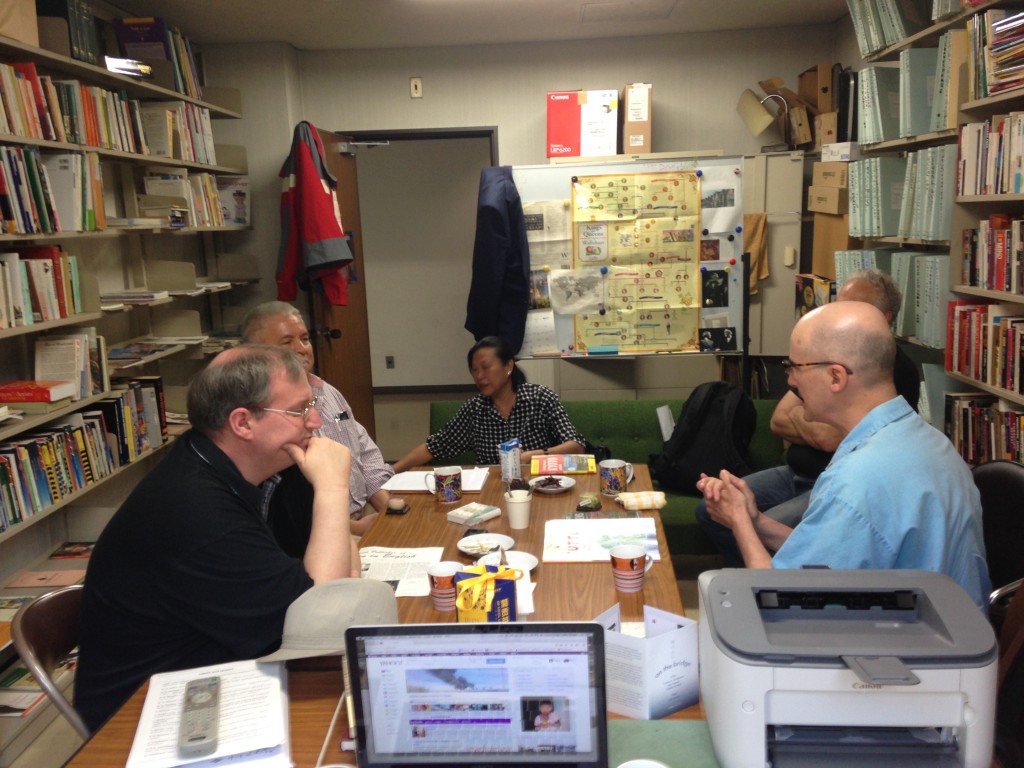
At our upcoming WiK event on October 11, we’ll be hosting two Davids – one a non-fiction writer and the other a novelist.  Information about David Joiner has already appeared; now we have a sneak preview of what might be on offer by David Duff, a founding member of WiK and our social organiser.

David Duff (right) pitches his idea about Japanese cats to Eric Oey of Tuttle at a special WiK meeting

David Duff (right) pitches his idea about Japanese cats to Eric Oey of Tuttle at a special WiK meeting


**************************

 In Praise of Japanese Cats by David Duff

My current project is a loving tribute to the Japanese cat; a detailed exploration of how, in a myriad of ways, the noble feline impacts, influences and inspires both Japanese culture and the world. There is much to praise about a country that so values, so treasures, the cat in all its splendor. And much to praise about the wide variety of cats responsible.Yes, indeed! I have tried to cover the most important cats that have empowered Japan and her rich culture. I can only hope that I have succeeded.

It goes without saying that I am one serious, bonafide crazy ailurophile. Fortunate to be surrounded by them from early childhood (I grew up with 8 cats and 6 dogs), I find cats to be a never-ending, hairy bundle of exquisite joy which, without exception, without hesitation, always sends my grateful spirit soaring. Not for a single moment have I ever tasted boredom in their exalted presence.

***********************

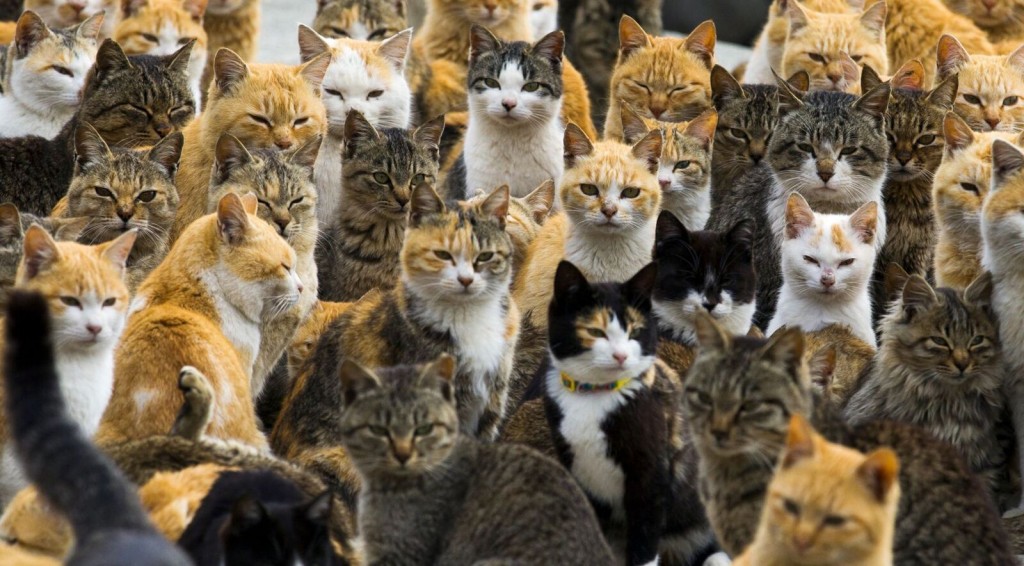
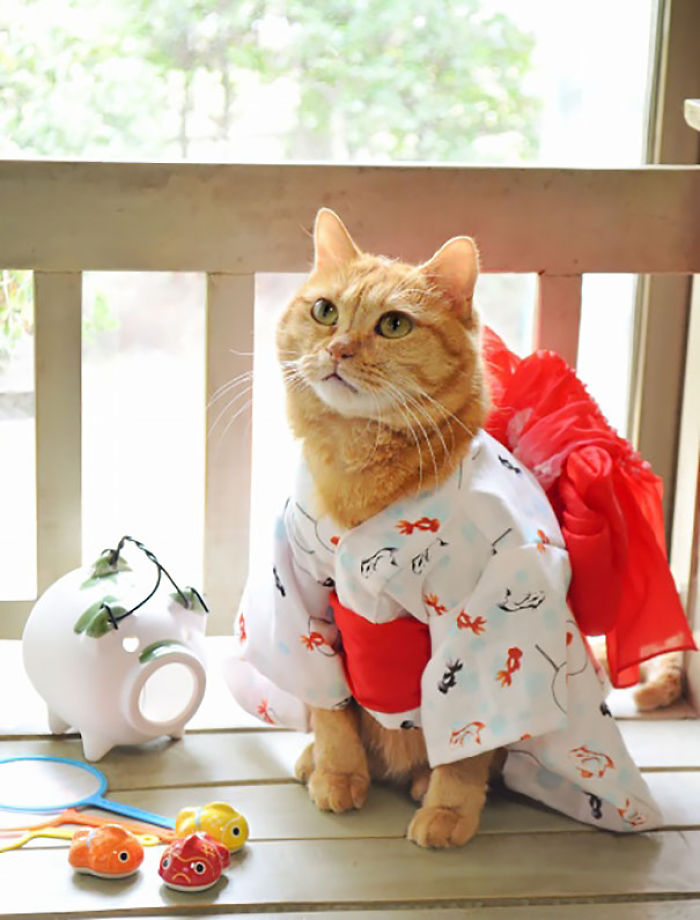
For an illustrated article about Japanese cats, cat islands, cat cafes and cat-themed goods, click here.


cats-in-kimonos-are-a-thing-in-japan1

Featured writing

Basho’s links with Kyoto

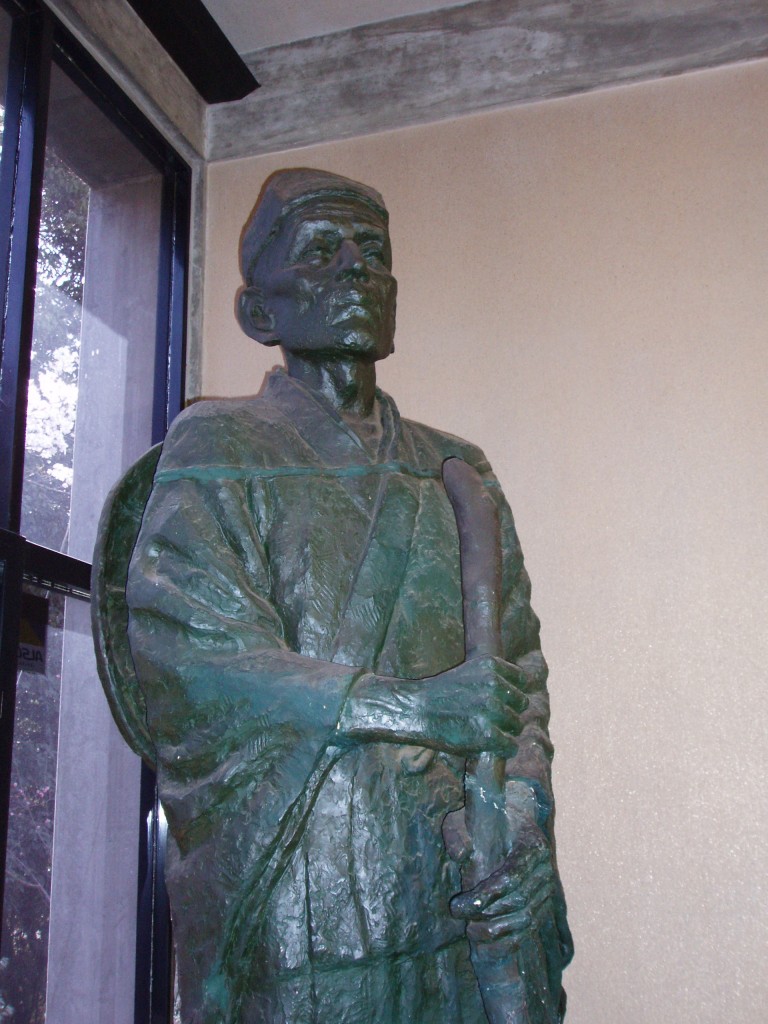
Matsuo Basho (1644-94) is hardly associated with Kyoto. With the Deep North, of course. And with Edo too, where he had his home. Indeed, he took his pen-name from the plantain-tree (basho) which stood outside his hut there. Yet the poet-wanderer had close connections with the ancient capital. He was born not far away, in Iga Province, and may even have studied in Kyoto for a while as a young man. He was fond of the city, often visited on his wanderings, and it was in nearby Otsu by Lake Biwa that he chose to have his grave.

OLYMPUS DIGITAL CAMERA

The poet had started out as a low-level samurai, but for reasons that are not clear he dropped out of a promising career and in 1672 moved to Edo. He studied Zen and came to see in haiku not an artistic diversion but a means to a meaningful life. This prompted his wanderings, for aware of the profound loneliness of existence, he sought solace in the ego-less world of nature.

Basho visited the Kyoto area on at least five occasions. He cherished the historical associations, especially with Saigyo, Sesshu and Rikyu to whom he felt bound by ‘the spirit of the artist who follows nature and befriends the four seasons’. He once wrote a haiku, soaked in nostalgia, of how the sound of a cuckoo drew him to the poetic past, perhaps reminded of Sei Shonagon’s fruitless expedition to the woods for a cuckoo-inspired poem.  (See here for a discussion of the poem.)

Even in Kyoto,

I long for Kyoto,

When the cuckoo sings.


In 1684 the poet stayed by Lake Biwa, where he was light-heartedly challenged to include all eight of the ‘Famous Views’ of the lake in a single haiku. He cleverly responded like this:

Seven Views obscured –

But then in the mist I heard

The bell of Mie.


In 1690 Basho stayed for the summer near Lake Biwa in the Unreal Hut (Genju-an). It was on the side of a small hill, from the top of which he could see the lake with Seta Bridge and Mt. Mikawa, whose shape resembles Mt. Fuji. Here he relaxed after his long wanderings. He wrote an essay about his life of seclusion, telling of the simple pleasures he enjoyed – the views, the wild life, and the nearby places of interest.

During the day an old guardman or villager from the foot of the nearby hill comes to talk with me about unusual happenings, such as a wild boar foraging in the rice fields or a hare lurking around the barn yards. When the sun sets behind the hill and light comes, I sit quietly and wait for the moon. By the light of the moon, I walk around and my shadow follows me. When it gets late, I return to the hut to meditate on good and bad, gazing at the shadow’s edge cast by the lamplight. (tr. Keene)


Another short haibun written in 1690, Cooling Off by the River at Shijo, tells of the custom of partying on the yuta platform along the Kamogawa and of the joys that even the overbearing Kyoto summer heat can afford:

There’s a river breeze –

Wearing a thin garment

This summer evening

The next year Basho went to stay with one of his most important followers named Kyorai (1651-1704), who lived at Saga in The Hut of the Fallen Persimmons (Rakushisha). It was his second visit; he had visited in 1689, and was to come again in 1694, a few months before his death. He described the fifteen days at the hut in his Saga Diary (1691). In contrast to his usual accounts, it is a real diary with exact dates. It tells of a relaxed stay: ‘I forget my poverty, and enjoy a serene, leisurely life here,’ he wrote. Amongst the haiku he composed is one that suggests he was in a good frame of mind:

When I clap my hands

The echo brings the dawn light –

The summer moon.


Basho’s visit brought him into contact with another of his followers, Nozawa Boncho (?-1714). Together with Kyorai, the three men compiled The Monkey’s Cloak (1691), an anthology which represented the outcome of Basho’s thoughts on sabi – the loneliness of human existence and the consolations to be found in nature.   The poets also wrote a renga, or ‘linked verse’ sequence, entitled ‘The Summer Moon’. The artform consists of one person writing a haiku, which is continued by another with a two-lined couplet of 7-7 syllables. This is further continued by a third with another haiku, and so on in turn. On this occasion Boncho provided the first verse;

Above a town

Filled with the odour of things,

The summer moon.

Basho responded with…

‘It’s hot,’ ‘It’s hot.’

Murmurs are heard in the front yards.

And Kyorai starting a new haiku added…

Though the second weeding

Is not yet over, rice plants

Shoot out their ears.


Three years later came Basho’s death, which occurred while he was near Osaka on another long journey. He had asked to be buried at Gichu-ji, a small temple at Otsu not far from the Unreal Hut. He loved the surroundings of Lake Biwa, and was attracted to the temple because it contained the grave of the Minamoto warrior, Kiso Yoshinaka, with whom he felt a special affinity. It would seem as a former samurai that he was attracted by the ‘heroic failure’ of Yoshinaka to rid Kyoto of the Heike (whom Basho disliked) and whose brave death soon afterwards on a battlefield near Otsu is memorably described in The Tale of the Heike. He had once visited the graveyard with the poet Yugen, whose haiku about the occasion has prompted much speculation.

Back to back

With Kiso Yoshinaka –

How cold it is.

The poet was apparently seated near Yoshinaka’s grave, facing away, and in the ‘cold’ of the last line lies the subtle nuance for which the haiku form is famed, for the multiplicity of meaning seems to embrace not only the wintry day, but a sense of loss, the gulf between humans, and the icy finger of death.

A hundred years after the time of Basho, a famous literary figure living in Kyoto came across a hut in the grounds of Kompoku-ji where the poet had once stayed. It was in dilapidated state, and in tribute to his predecessor he decided to restore it. His name was Yosa Buson (1716-84), poet and painter, recognised now as second only to Basho in terms of haiku. He was fond of the temple grounds, and he wrote evocatively of the sounds of the cuckoo in the bamboo grove. Such was Buson’s affinity with Basho that it was here Buson chose to be buried:

When I come to die

I shall be near his stone –

The withered pampas grass.


(Adapted with the author’s permission from John Dougill Kyoto: A Cultural History (Signal/OUP, 2006)

See Gabi Greve’s Basho page for other Kyoto haiku by Basho.


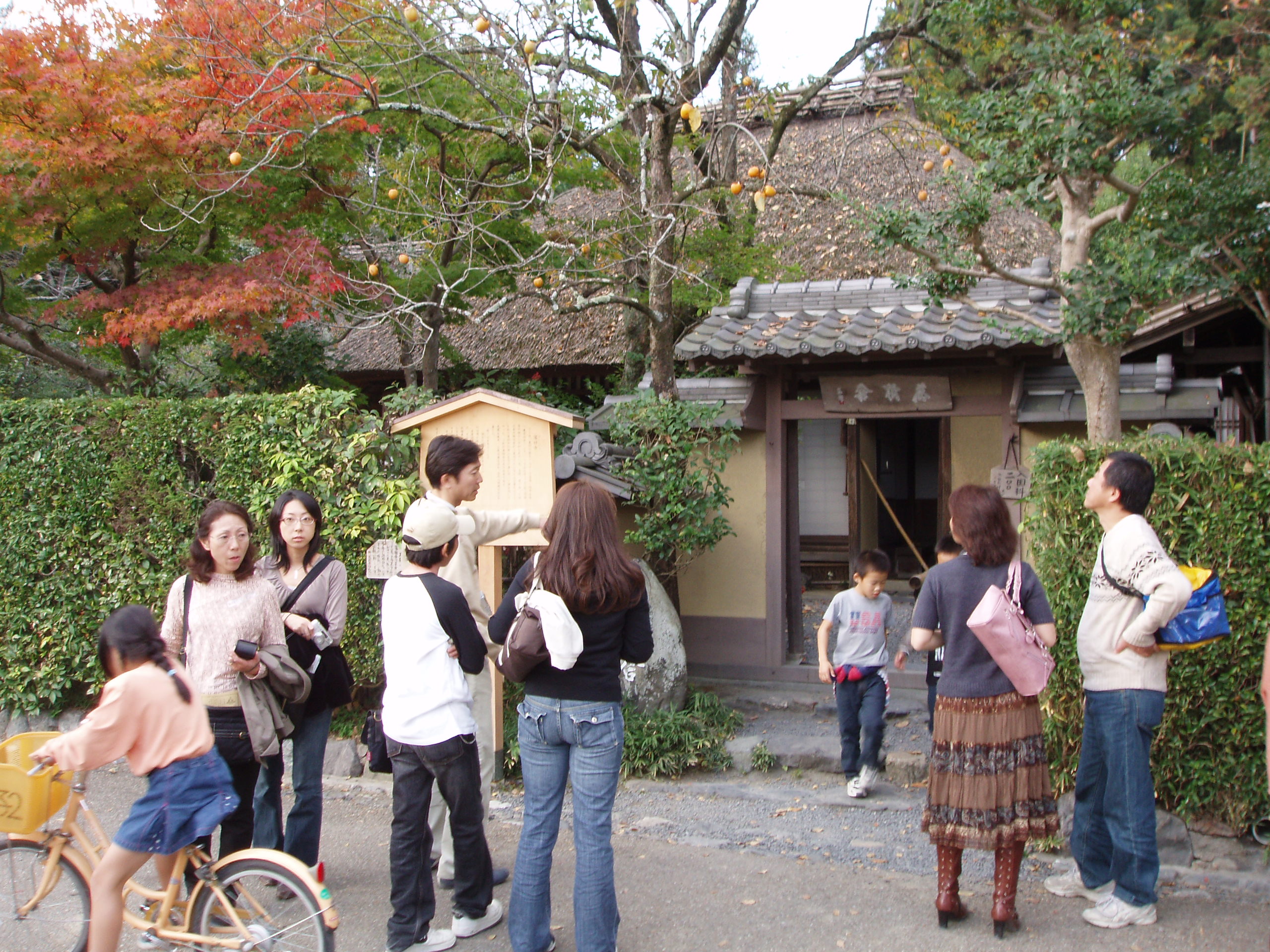
Rakushisha (Fallen Persimmons Hut) complete with persimmons – the hut where Basho stayed with his friend Kyorai in

Rakushisha (Fallen Persimmons Hut) complete with persimmons – the cottage in Saga where Basho stayed with his friend Kyorai in 1691

The Kyoto-based Hailstones haiku group present a dedication at Basho's grave at Gichu-ji

Representatives of the Kyoto-based Hailstones English-language haiku group present a dedication at Basho’s grave at Gichu-ji

David Joiner at the Gael (Oct 11)

David JoinerDavid Joiner was born and raised in Cincinnati, Ohio. He attended Earlham College and majored in Japanese Studies. During his junior year he made his first trip to Asia – a five-month study abroad program in Sapporo, Japan. Nine years and several trips to Asia later he earned his MFA from the University of Arizona where he studied fiction, nonfiction, and playwriting. He has been shuttling between the US, Vietnam, and Japan for all of his adult life.
David currently lives in Kanazawa, Japan, where he is working on a second novel set on the Mekong River in Vietnam and Cambodia. He is also exploring opportunities to set a third novel in Japan.

On October 11th at The Gael Irish Pub, David will present on his experiences doing a book tour that took him to Canada, the US, and Vietnam earlier this year. The video below is of an interview he did in Hanoi for both a Vietnamese and international broadcast. An essay he wrote about how Vietnam influenced his decision to pursuing writing was recently published in diaCritics.


For more about David and his writing, please visit his author website.


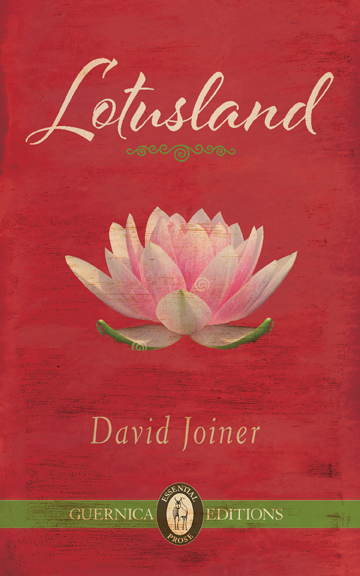
Lotusland_cover

David’s first novel, a love story set in Vietnam.  Unusually these days, his publisher sent him on a promotion tour of North America, about which he’ll be speaking at The Gael on Oct 11, 4.00 pm (see right-hand panel for details).


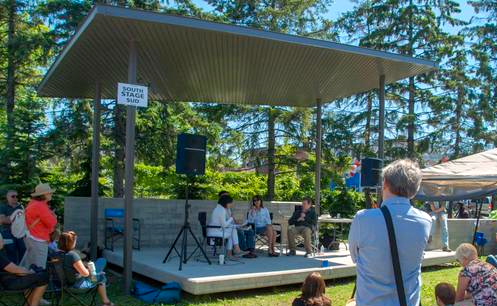
Prose in the Park 2

The inaugural Ottawa literary festival “Prose in the Park,” with David on the panel

Featured writing

Margaret Chula’s haiku

Margaret Chula’s Grinding My Ink (1993) is a collection of haiku mostly written while living in Kyoto in the 1980s and 1990s.  It won the Haiku Society of America Book Award.  ‘Nearly all my memories of Japan center around a ramshackle wooden house on the northern edge of Kyoto,’ she writes.  She lived in the house for twelve years, attempting the necessary upkeep and repairs with her husband.  It was in Matsugasaki, in a dirt lane of ten traditional houses mainly occupied by foreigners and known as ‘Gaijin Mura’.

Like other old traditional houses, Chula’s was home to a variety of animal life. ‘Every winter we heard the sounds of mice nesting in the closet,’ she writes, ‘and for a few weeks a weasel made his nightly visit to the garbage can in the back hallway…  On summer evenings, baby tanuki (racoon dogs) frolicked in the garden and fearlessly tried to leap up onto the tatami through the open shoji. During the rainy season, six-inch centipedes scuttled across the damp walls and moths did their frantic dance inside paper lanterns.’  The closeness to nature provided the perfect background in which to produce seasonally-attuned haiku, which range across the life cycle from the birth of a cat to the death of a neighbour.

(See here for more about Margaret Chula and the Katsura Press.)

grinding my ink –
a black cat
howls in childbirth


making it harder
to trim the tree
a perfect web


cicadas –
the tree root
pulses


shakuhachi
stillness of water
in a stone basin


sudden shower
in the empty park
a swing still swinging


after her funeral
a spring ikebana
in the tokonoma

Writers in focus

Ruth Fuller Sasaki

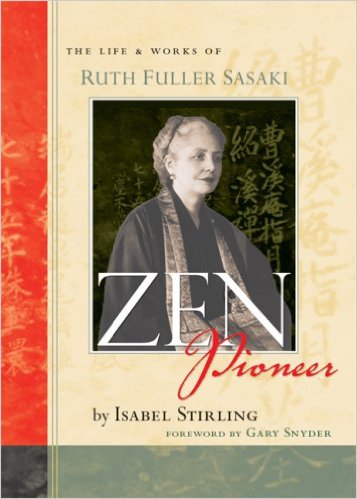
Ruth Fuller Sasaki, Zen Pioneer‘Mother of American Buddhism’; the first woman to be named abbot of a Zen subtemple; the first foreigner to become abbot of a subtemple; the compiler of important translations; mentor of Burton Watson, Philip Yampolsky and Gary Snyder; the mother-in-law of Alan Watts –– Ruth Fuller Sasaki (1892-1967) was by any measure a most remarkable person.  She belongs among the very front rank of the pantheon of foreigners who have left their mark on the pages of Kyoto history.
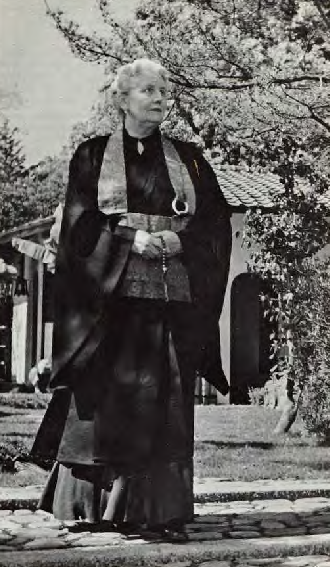

The story of her life is contained in the book, Zen Pioneer, written by Isabel Stirling with a Foreword by Gary Snyder.  Her first marriage, to Edward Everett with whom she had a daughter, made her rich and gave her a wealth of connections.  On their trip to Japan in 1930, she stayed at the Miyako Hotel and met D.T. Suzuki, who gave her a copy of Essays in Zen Buddhism (1927) together with advice about posture, breathing and mental techniques. When she returned the next year he introduced her to the head of Nanzen-ji.  She practised meditation in a subtemple there every day from 9.00 am to 5.00 or 6.00 pm.  Amazingly, as if that wasn’t enough, she did extra sessions in her house by the Kamo early in the morning and in the evenings.

On her third trip to Japan in 1933, she was ordained and ceremonially initiated into Buddhism.  The next year she took her daughter, Eleanor, to study piano in London, where they met the young Alan Watts.  (His marriage to Eleanor lasted 11 years from 1938-1949 and they had two children.)  For much of the next decade she devoted herself to the Buddhist Society of America, run by Sokei-an Sasaki. Her husband had died in 1940, and four years later she married the ailing Sasaki, though the motivation is unclear (Alan Watts thought they were in love, though others suspected it was a convenient means to pass his name to her as next head of the institute).  Before his death, in accord with his wishes, the institute was renamed The First Zen Institute of America.

In 1949, fearing that the Zen mission in the US might be lost, she went to Japan in search of a new teacher.  She worked with the head of Daitoku-ji, who provided the use of a house in the temple grounds.  Here she set up base and started sending back to the US authentic Zen sutra and furnishings.  She also published articles and her long letters to the institute concerning Zen ways were disseminated and preserved.

RuthFullerSasaki2

The house in which Ruth Fuller Sasaki lived stood on the grounds of a former subtemple called Ryosen-an.  In the years between 1955-60 she rebuilt the complex, putting up a store house for her Buddhist artifacts as well as a library-study and a zendo (meditation hall).  She signed a twenty-year lease and developed the complex as an extension of the First Zen Institute in America.  She had substantial back-up, including a couple of kitchen staff whom she trained in Western cooking.  Illustrious visitors such as Joseph Campbell and R.H. Blyth often dropped in, as did several high-ranking Zen figures who enjoyed the ‘exotic’ food on offer.

Part of Fuller Sasaki’s self-imposed mission was the translation of important Zen documents, and to this end she employed a team of researchers who included Japanese scholars as well as Burton Watson, Gary Snyder and Philip Yampolsky.  (There was an acrimonious end when she sacked Yampolsky for allegedly planning his own translation, following which the others resigned in protest.)  Then at the age of 66 she made history by being ordained a priest and installed as abbot of the restored Ryosen-an.  There were about 80 people in attendance, and the event was featured in a Time article.  Meanwhile she continued to write essays about Zen life, and four of her pamphlets were published in 1958-59.

She was apparently a woman of strong character and old-fashioned tastes, who disapproved for instance of Kerouac’s innovative work Dharma Bums (1958): ‘His Buddhism is the most garbled and mistaken I have read in many a day,’ she wrote.  Yet when Allen Ginsberg came to visit in 1963, they got on well and had an engaging conversation about Howl.  In 1967, aged 74, she died at the home she had created for herself at Ryosen-an, and in his Foreword for the book Zen Pioneer Gary Snyder provides a pen-portrait, drawing on his time working in her research team from 1956 to 1961…


Ruth Sasaki was in her sixties when I started working with her.  She spent her days in elegant casual wear – many cashmere sweaters.  Her hair and grooming were perfect, finished with pearl earrings.  She started the mornings with a walk and sometimes an interview with her roshi.  Then she might go to her study and review her literary Chinese-language readings, addressing translation problems from the text at hand.  Much of the time it was the Rinzai-roku, or The Record of Lin-chi.  She carried herself with imperious and matronly grace, and during her workday spoke with the cheerful and mannerly confidence that brooks little dissent.  On issues of meaning in medieval Chinese, she was particularly stubborn…

Ruth had guests for dinner several nights a week.  Dining was in a tatami room.  Ruth poured martinis.  She loved conversation, and after work hours enjoyed joining in a free-flowing debate.  She had read widely in philosophy and literature, and could hold her own with almost anyone.  Still, on some issues she was (I thought) extremely conservative and would not give way.  One time she commented that most of the modern world’s problems started with Woodrow Wilson’s idea of ‘the self-determination of nations.’

She labored as though her vision held the only possible path that could take genuine Zen to the West…  Her little booklets, in particular Zen: A Religion, were written in response to those who might hope to set aside ‘Buddhism’ and treat Zen as a secular psychological method of aesthetics, or self-help.  Her writings from the sixties were ahead of their time and remain accurate and relevant…  She thought of herself as a scholar-translator-facilitator and apparently never aspired to be a formal master.  Her task was to prepare the way for those non-Asians who would eventually do full-scale traditional Rinzai-style koan study.


The Ryosen-an sub-temple (Tel: 075 411 0543) continues to hold early morning zazen (Zen meditation) sittings from 7.00-8.00.

Featured writing

Ichigensan extract

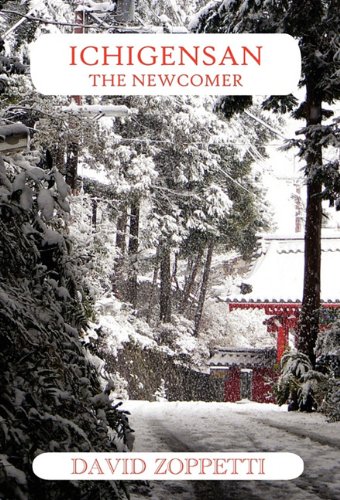
David Zoppetti’s novel Ichigensan was first published in Japanese and won the Subaru Prize for Literature in 1996.  Later it was made into a film starring Edward Atterton, and in 2011 the English translation by Takuma Sminkey was published.  Set in Kyoto, it concerns an affair between a foreign student of Japanese literature and a blind woman called Kyoko.

***************

612fDEUF-4L

Several days later, Kyoko and I were walking up the steep stone steps of the Kibune-jinja shrine, north of Kyoto, in a cold drizzle.  Red toro lanterns lined each side of the stairway.  As always, I described our surroundings and guided Kyoko’s hand to the wet moss, the massive tree trunks, the stones, and whatever else she wished to touch.

At a kind of viewing platform, we sat down on a bench.  Under the same umbrella, we ate the yakiniku lunch that Kyoko had prepared.  The arrangement of grilled meat and vegetables reminded me of an abstract modernist painting, but it tasted delicious.

On the train home, Kyoko fell asleep as we were heading towards Demachi-Yanagi, the terminal in Kyoto.  I gazed at her sleeping face.  I wasn’t thinking of anything particular, when suddenly, it dawned on me why I always felt so at peace with her.

If you thought about it, the explanation was very simple, but it was precisely because it was, that it hadn’t occurred to me for a long time.

She couldn’t see me.

People in Kyoto always stared at me.  Their behavior towards someone was always determined by outward appearances, which always made me feel uncomfortable.  This is more or less what people do in all countries, but in Kyoto things were somewhat different.  The process whereby they looked at someone and based solely on appearance instantly decided something about that person, totally ignoring his or her feelings – to a degree you couldn’t help but admire – was absolutely unique.

This wasn’t a simple matter that could be explained with common words such as ‘discrimination’ or ‘close-mindedness.’  There was a subtle distinction-making mechanism, which at first seemed palpable, but turned out to be invisible and rather creepy.  Even if you could feel the mechanism at work physically, it had no clear shape.  Whenever I had tried to confront the problem, I had found myself eluded by something I couldn’t define.  There was no sound, clash, or pain in the confrontation, but its sheer repetition beat me up both physically and mentally.

And obviously, the source of all this was outward appearances.  I guess I was exhausted from always being stared at.  I was sick of having to play the role of the gaijin buffoon.

When I was with Kyoko, however, this naturally never occurred.  Needless to say, for her outward appearances didn’t exist.  From the beginning, our relationship was based on voice, touch, and language – things that bound us beyond outward appearances.

Even if I made a mistake or used an inappropriate turn of phrase, Kyoko focused on the content of what I was trying to communicate.  She had transcended nationality and race, and always interacted with me as a fellow human being.  That’s how I felt.  If Kyoko could see me, our relationship would probably be completely different.

Knowing there was one person in this city that couldn’t see me and could behave in a natural way brought me great peace of mind – more than I could ever express in words.  I considered mentioning this to Kyoko, but I feared it might cause some misunderstanding, so I didn’t.

She continued sleeping soundly until the small train reached the final station.

« Older posts Newer posts »

© 2026 Writers In Kyoto

Based on a theme by Anders NorenUp ↑