Page 63 of 65

Writers in focus

Introducing Karen Lee Tawarayama

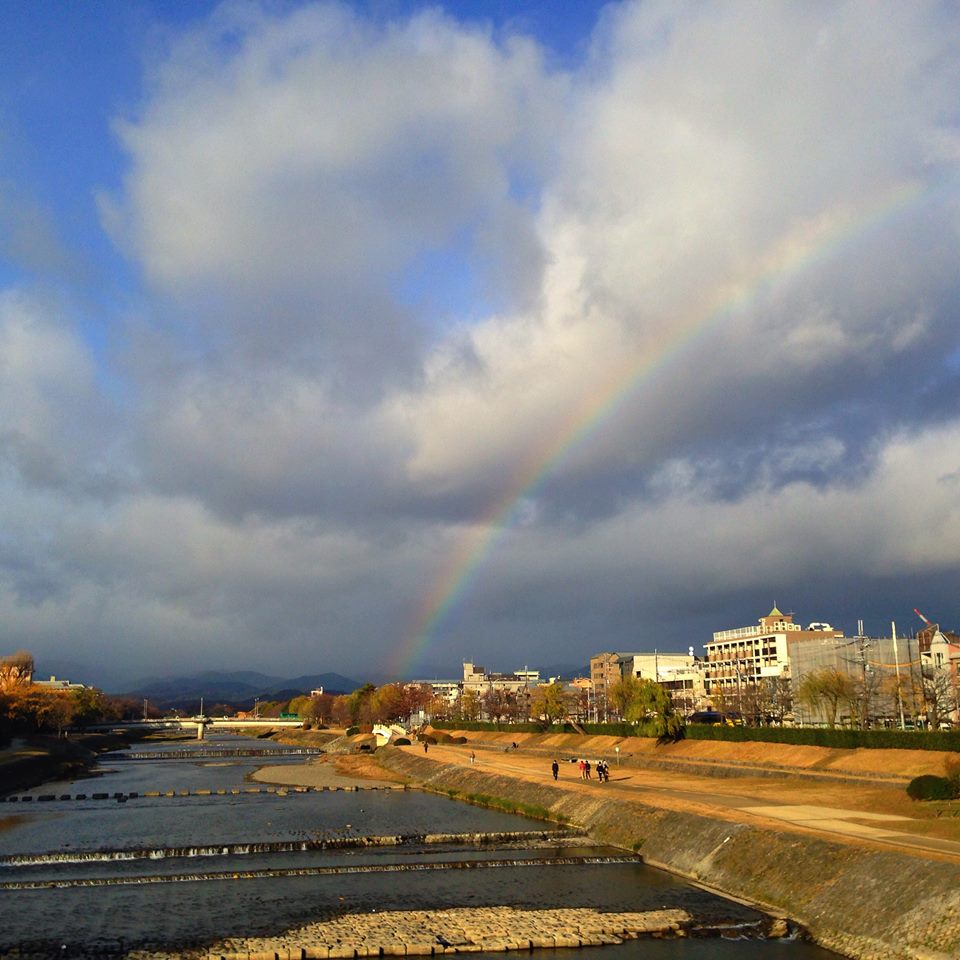
Kyoto rainbow

Greetings to the WiK community! Please allow me to introduce myself as yet another member of the group who has fallen head over heels in love with the beautiful city of Kyoto. I joined the Writers in Kyoto group because of my passion for writing, as well as my eagerness for networking with others who inspire me deeply, while feverishly trying to balance all of my interests as a full-time working mother.

★karenprofile300A U.S.-born resident of Japan since 1999, I had previously experienced an extended period as a global nomad in India, Kenya, and Israel. However, my journey to this inevitable destination began with a book that my mother picked up for twenty-five cents at a local consignment shop when I was about five years old. Within the covers of Children of Many Lands (authored by Dana Bruce and Elizabeth F. McCrady) were stories of the everyday lives of children in traditional settings around the globe, but I had a particular affinity for little Matsu, who eagerly awaited her “Honorable Father and Mother” to take her to the shop for a new doll for the Girls’ Festival, and also described the “Festival of Flags” for her younger brother, Taro. Little did I know that at this point in my life, I would be going to the shop to buy koi-nobori (carp banners) for my own Japanese son. Now, more than ever, I have a strong belief that life flows on in its own rhythm, carving a distinct path for each of us. I feel a sure sense of destiny, especially when walking in Kyoto’s open spaces such as Kamogawa Park, being surrounded by mountains and hearing the rushing of the waterfalls along the way, and watching the long grasses on the banks of the river waving in the breeze on a sunny day.

Perhaps, thanks to Children of Many Lands, I am a cultural anthropologist at heart. My subsequent experiences as a childhood actress developed my love for stepping into the shoes of another and examining the world and “ways of being” from other perspectives through the required embodiment of various characters. It is in this spirit that my love continues for speaking with others and learning what makes them tick. To find commonalities as well as differences, and in my current setting to learn more about what constitutes the Japanese mind and lifestyle. I’m naturally drawn to talking to people, sharing stories, and either finding common points that bind us together, or variations that create a deeper, more sympathetic understanding of the diversity of human nature.
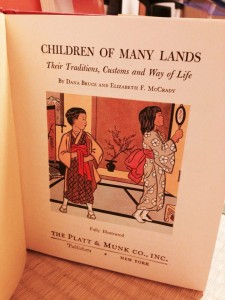
Book cover, Children of Many Lands

My current memoir in progress is a book not only meant to synthesize my profound experiences in various countries and explore the path from small-town Pennsylvania to Kyoto, but as an Intercultural Educator by profession, I’m also fascinated by the critical moments one encounters over time which develop intercultural competencies.

I’m also in the process of launching a new website, Kyoto Faces (http://kyotofaces.com) which aims to bring those who live abroad closer to the people of the city. In my spare time, I enjoy speaking with international visitors (and introducing them to my son!). Many of them comment excitedly about the beautiful historic sites, the famous Japanese punctuality, the cleanliness, the uniquely “Kyoto” cuisine, and the kindness and politeness of the Japanese residents they come into contact with. However, many of those residents are working specifically in professions that deal with visitors (i.e. hotel staff, tour guides, etc.) While many Kyoto residents are able to use English, their shyness makes them a little less accessible. And those that speak only Japanese are not likely to have any deep conversations or true heart-to-heart communication with short-term visitors who do not yet have skills in the local language.

Kyoto Faces aims to share the stories, the whims, the dreams, the everyday lives, and the recommendations of the city’s residents to those abroad, in English, for the purpose of creating a greater understanding of “people in the neighborhood”. I encourage you to follow the website as it develops and hopefully grows to serve as a bridge between Kyoto and the world. At this point, only an introduction to the site, my profile, and a blog post has been added, but there is more to come soon! (The other day I spoke with a wonderful 80-year-old man while enjoying my morning coffee.) I would be delighted to receive your comments and feedback as time goes on.

よろしくお願いします。
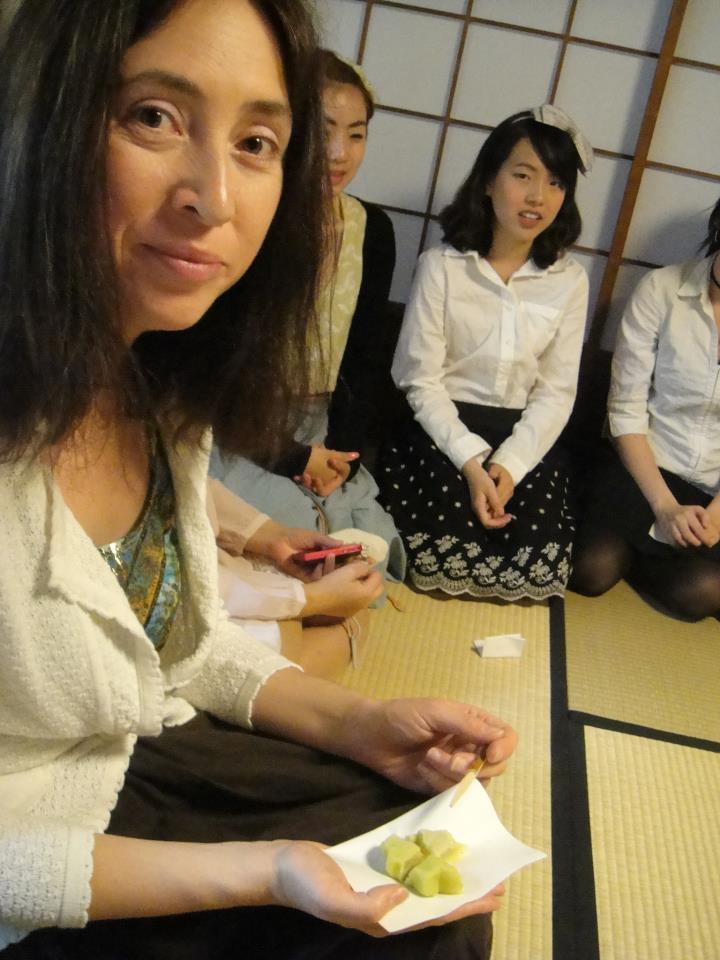
Karen Tawarayana with students

Writers in focus

Harold Stewart’s beloved old walls

The Australian Hal Stewart (1916-1995) left an indelible mark on Kyoto literature with his By the Old Walls of Kyoto (1981), a year’s cycle of landscape poems with prose commentaries.  The poems were inspired by the Jodo Shinshu faith, and many of the prose pieces are insightful investigations of Kyoto history.  In one such piece he gives a series of stunning interpretations of Ryoan-ji as seen through different lenses (Daoist, numerological, aesthetic, symbolic etc).
Before coming to Kyoto, Stewart had achieved notoriety for his invention in 1943 with fellow-poet James McAuley of an imaginary poet named Ern Malley.  Malley had supposedly just died, and his fictional sister wrote to Max Harris, an ambitious editor, enclosing poems by her dead brother.  Harris was completely fooled by Stewart and McAuley’s tongue-in-cheek poems and declared he had found Australia’s modern poetic genius.  The hoax took in many other leading literary figures too.

Stewart visited Japan in the early 1960s and converted to Shin Buddhism.  He moved permanently to Kyoto and became an expert in the city’s culture and history.  He also collaborated on translations of Buddhist classics.

The following comes from an article by Barry Leckenby, a former Ph.D. student at Monash University in Melbourne, Australia, who wrote a dissertation on the metaphysical journey of Harold Stewart.


Keeping the Faith: The Narrative Metaphysical Poems of Harold Stewart by Barry Leckenby

Australian born poet and Buddhist scholar Harold Stewart loved Kyoto; it was his spiritual home. He lived in Japan’s ancient capital for the last twenty-nine years of his life. During this time he collected Buddhist art, including the mandalas representing the Larger, the Smaller and the Contemplation Sutras….  Harold was writing poetry influenced by Taoism and Zen some twenty years before Zen had beach headed on to the North American continent. Mahayana Buddhism influenced his poetry from the beginning of his poetic career in the 1930’s and lasted a lifetime. His ‘independent uptake’ of Pure Land Buddhism began in earnest during the 1960s after he was drawn to Kyoto. The depth of his Buddhist knowledge gave him acute metaphysical insight, making him one of the most outstanding Eastern-influenced spiritual writers of the twentieth century.

His spiritual journey is poignantly recorded in By the Old Walls of Kyoto (hereafter referred to as Old Walls). He wrote Old Walls in celebration of Kyoto and Amida. It is the poetic soul’s ‘lonely planet’ guide to Kyoto, providing a testament to how he overcomes his spiritual doubt. The thirteen narrative poems, each accompanied by an expositional essay, capture the essence of the Pure Land teachings, following the poet amongst the temples, through the quiet lanes at sunrise, up the mountains and across the fields of Kyoto in search of Amida’s Pure Land – the land of ultimate happiness beyond this cycle of birth and death. In a fleeting moment of transcendence he briefly envisions such a paradise in the fields of Ohara: a farming district north of Kyoto, noted for its traditional Japanese thatched roofs and waterwheels. When witnessing the glory of the Pure Land here on earth he asks somewhat incredulously:

My dusty journey ends in joy today:
I see a hundred butterflies at play
About the vagrant flowers by fields of rice.
Can I have drunk the elixir by mistake,
And stumbled unawares on paradise?

As only two thousand copies of the book were ever published, it is not surprising that just a small number of people are familiar with the literary riches of Old Walls. It is difficult, but not impossible, to find a copy (try the Internet), and worthwhile tracking one down as it is an immaculate source of Buddhist wisdom filled with the sort of compassionate observation that goes straight to the heart of spiritual reckoning.

Harold, like Old Walls, is not well known outside a small circle of friends. This lack of recognition is indicative of his private nature and not an adverse judgement of his work. He never overtly sought public attention but worked to cultivate the inner light and life of Amida as he maintained a global network of friends. The words of Confucius rightfully apply to him: ‘I will not be afflicted at men’s not knowing me; I will be afflicted that I do not know men.’

Harold is now ‘safely dead,’ passing during Obon in 1995 – the celebratory time in Japan when the spirits of the dead return to their living descendants. During his ‘evening years of gold’ in Kyoto he dedicated his life and poetry to the Name as he practiced the Dharma. Though as he alludes to with his declaration: ‘This irreligious world renounces me,’ the possibility of following a religious faith without ever transgressing its principles becomes increasingly difficult in a world that neglects spiritual possibilities for the more tangible and instant rewards of material pursuits.

In Poem Four Harold outlines how the workings of the spirit can subtly pervade our thoughts and clarify our spiritual equivocation. After suffering a long hot sleepless night in the stifling humidity of Kyoto’s summer, tortured by his own existential doubts and trapped in the reductive dead-ends of subjectivity, he hears the solemn boom of the bell at the Honen-in:

Hours later: in the huge and sultry gloom
A temple bell has tolled with solemn boom:
Its lingering overtones profoundly steep
The distant stillness, where it still resounds.
Again the heavy pole is swung, and pounds
Its tongueless dome, whose bronze vibrations vie
In their sonorous hive, and humming deep
Pervade the hush that holds the earth and sky.
The damp air breathes, lifting the slightest sigh:
A little windbell, hung beneath my eaves,
Instantly rings its lightly trilled reply.

I wake at once out of a lifelong sleep:
My being’s inmost solitude receives
A summons that dissolves its sombre spell,
The Heart’s reverberations rise and swell
Till lips and tongue spontaneously exclaim:
‘Amida Butsu!’ – Buddha’s sacred Name.

The lingering overtones of the temple bell ‘steep the distant stillness’ and their humming pervades ‘the hush that holds the earth and sky.’ At this profound meeting point the still damp air breathes: nature itself is resuscitated after a choking night of ignorance. A sudden breath of air rattles the poet’s windbell, replying to the sonorous boom emanating from the Honen-in. This meeting of sounds at once delivers the blessing of Enlightenment. He awakens from ‘a lifelong sleep’ of doubting. His Heart rises as the sombre spell experienced by his ‘inmost solitude’ dissolves into joy and the Name is exclaimed. The poet’s night of meditation is brought to perfect pitch by the beautiful chorus of bells. He gives thanks for Amida’s blessing as he is filled with spontaneous joy.

*********************


Writers in focus

Two Poets Event

DSCN5161

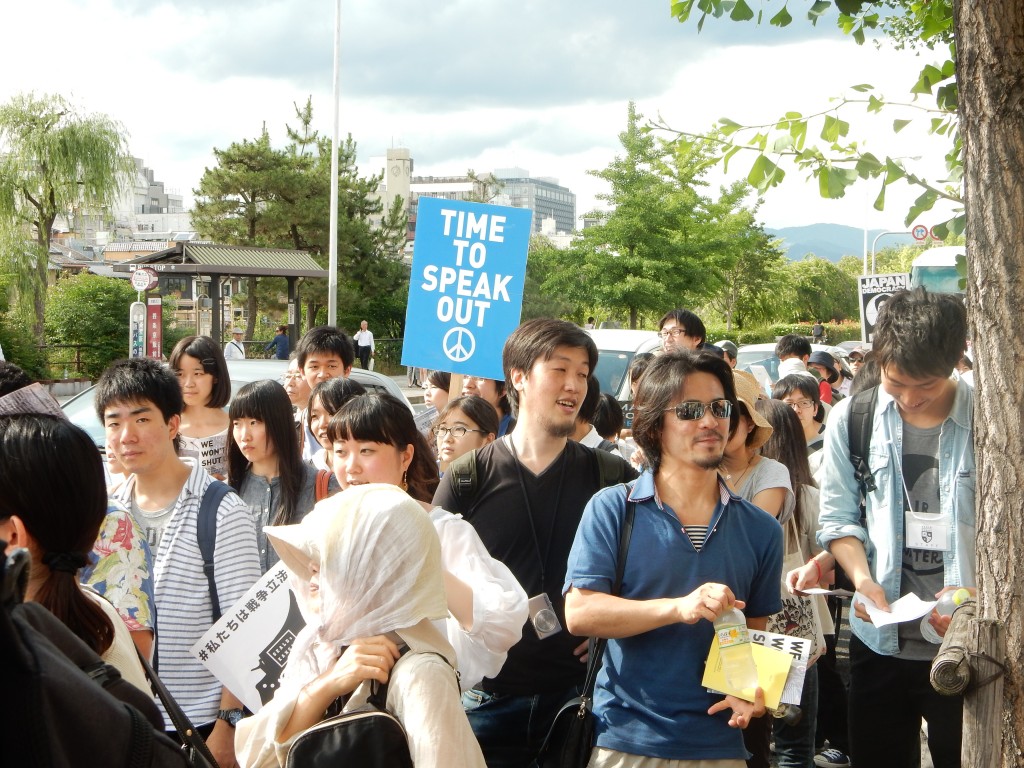
A large demonstration which coincided with the opening of the event called for freedom of speech and pointed to the importance of words, not war.

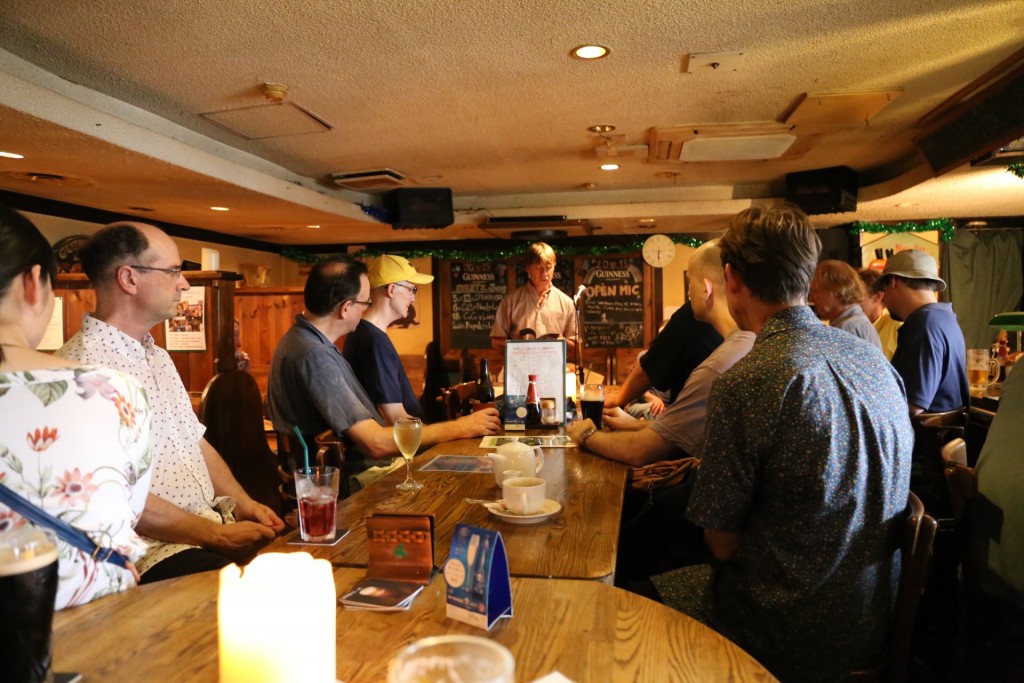
WiK’s summer solstice poetry reading, in keeping with the year’s longest day, was an engaging event which brought high quality English-language poetry to one of Kyoto’s most traditional areas, the Gion geisha district.  The occasion was given an auspicious start by a large and energetic anti-government demonstration which passed along Kawabata Street in front of The Gael Irish Pub.  Inside were over twenty people, from as far afield as Kobe and Nara.  One had even come from Australia, on a reporting mission to cover Japan’s publishing industry which will include reference to WiK.

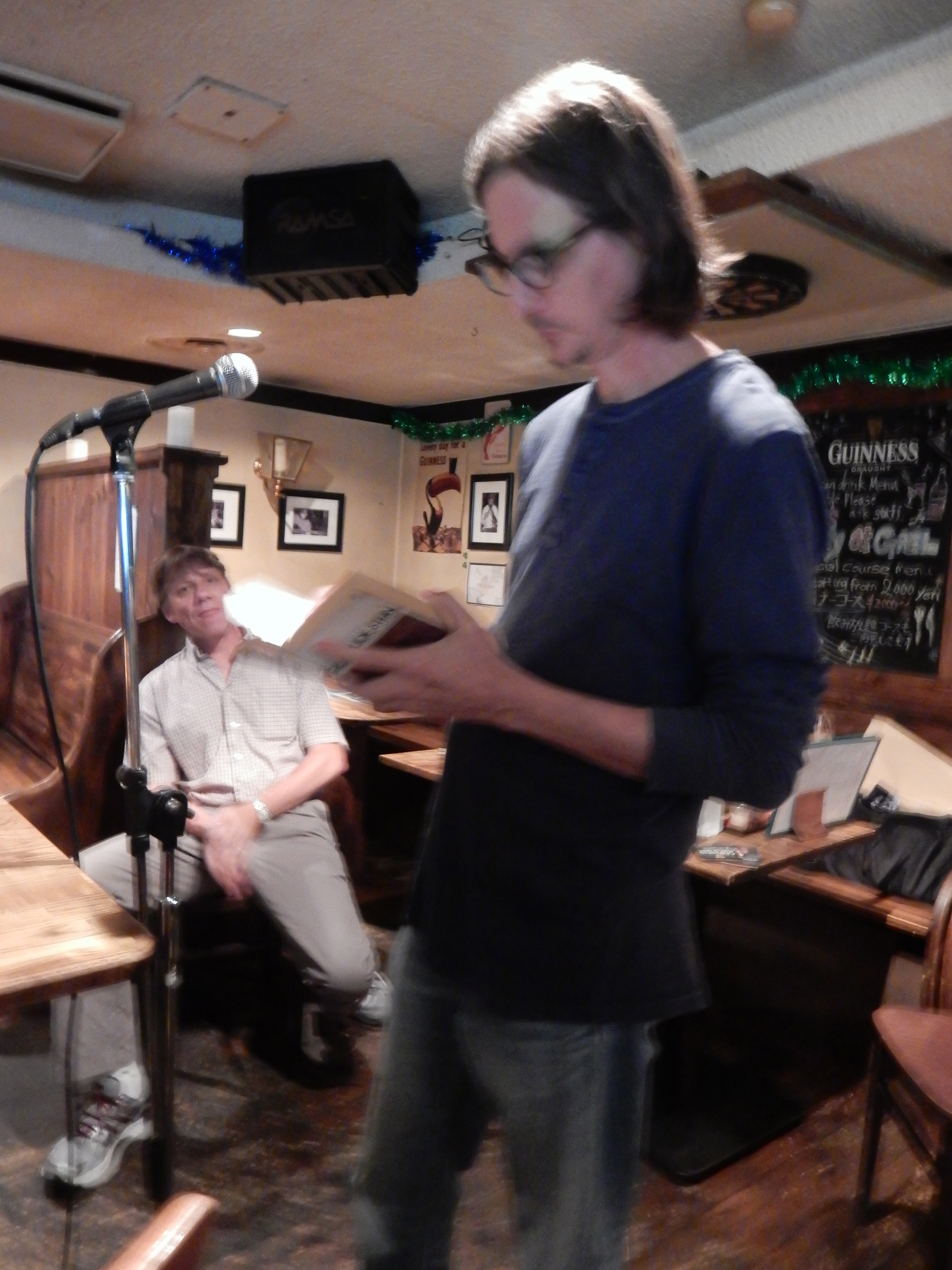
Mark Richardson reads as Mark Scott looks on

Mark Richardson reads as Mark Scott looks on

A pleasing feature was the mix of people, with WiK members augmented by friends of the two poets.  This allowed for some fruitful interaction and new contacts to be made.  Afterwards a Japanese violinist and concertina player struck up solstice style Irish folk, with an improvising keyboard player joining in.  The sound of poetry gave way to the sound of music.

The concept behind the event was the friendship of two WiK members, both of whom teach at universities in the area: Mark Richardson at Doshisha and Mark Scott at Nara Joshi Dai.  It has resulted in a joint work entitled “Poems of Two Friends”, in reference to a book jointly authored in 1860 by (American poets/novelists) John Piatt and William Dean Howells. The disarmingly short preface, as Mark (Richardson) notes, is quite charming.

The two friends in question here are both men of distinction; one a distinguished scholar of Robert Frost, the other twice nominated for the Pushcart Prize.  Their poetry was highbrow but peppered with humour and references to popular culture and contemporary events.  The walls of The Gael must have been astounded, for the poetical rendering was far from the usual banter of the pub.  Indeed, poetry had been banned altogether for some seven or eight years after the last such event ended in a fist-fight.  Happily, yesterday’s event only ended in smiles all round.

(Those interested in copies of the poems presented at the event, which will shortly be published, should contact one of the Marks through the WiK address. Meanwhile, the two poets have kindly agreed to supply the poems below for the enjoyment of readers.)

The two Marks poetry session


Jesus’s Wife (Scott)

The disciples said to Jesus,
Your wife, your mother, your disciple—as you wish.
Mary’s worthy, Jesus said.
We get it.
And she lives with you, if anybody asks.
And she lives with us. We’re good with that too.
But she’s my disciple.
Whatever you say.


Five Years After Dodd-Frank (Richardson)

“Je suis Charlie.” ––George Clooney, at the Golden Globes

Here we are, half a decade later,
And carnage ensues. Makeshift
Memorials are so core to what we do.
I’m sorry, Chris, but you bleeped out.
There hasn’t been much torture polling;
Our madcap gondola’s still in the shallows.
Sociopaths get as real and un-foundational
As Cary Grant. But there’s no big data
To say we can’t evolve on this;
Evolving is also core to what we do.
Send a makeshift memo up the daisy chain
Until it moans in the Office of Legal Counsel.
Make no mistake; cut on the door-slams;
That’s editing 101. And as for how
You can be more impactful, well,
Excuse me while I throw up
Steve Kornacki’s hands. The system
Doesn’t not work; the system isn’t not
Broken in. A lawless branch exfoliates
In the skylounge––pro-growth forests
Of exotic spreads, risky giveaways,
Pissing-contests, and bail. Christ, I’m late
For donor class. I’m the boss here; you can get
Your Kalashnikovs out. Wretches hang
That grand jurymen may dine. I am Charlie,
Still squatting in the bush; I am Charlie
Company, humping it in the desert
And jay-hawking loosies,
Five years after Dodd-Frank.


Duration (Scott)

Duration comes up constantly.
It isn’t discussed.
It’s raw.

The heart doesn’t seem to be in it.
Zipless fuck, lesbian bed death, marriage, jackrabbits:
Sex can too be boring.

I don’t think there have been any good studies.
But it’s a great empirical question.
And I can swallow that pill.

A stable relationship.
I don’t think there have been any.
None of the practitioners have come across one.

I don’t know about other desire drug trials,
But when I say “Show me a stability,”
You pick up a rock from Ecuador

And say it holds lots of energy.
This is not how I see myself.
Everyone raises a mix of tears.

In the long term all partners fail.
The debate goes on.
I want to settle the question.

Logic teaches me to feel.
We are also taught by rule.
To prove it, you get the genital blood to flow at a baseline state.

Strangers make it jump. I infer.
Inference is getting strange.
Here, smell my tee-shirt. Take that home with you.


Blurb (Richardson)

This deeply
Bold, masterfully
Nuanced, compellingly
Immense, meticulously
Unnerving account of
Charles Portis has an excellent nose
With gooseberry aftershocks.
A must smell. Riveting, un-
Flinching, epoch-making
Prose. Nothing more
Need ever be done
By anyone.


The Tragic Era (Richardson)

Untorn by ambition, taking pleasure
Alike in rod, gun, and horse,
Mine was a happy life before the war.
This bad feeling behind my eyes, where did it come from?
There, in the middle of the stairs,
Going up to the third floor from the second,
Look: a room in an apartment, burning.

Blood drains from the body,
And when you return, all is nothing;
All is already was, and panic.
I slept out with the pigeons that night,
Riding the edge of the wheel-glass.

And when I woke, amazed, I moved
As in some guise of snow-country––
As in some memory of watching Twin Peaks––
Cooking sweet purple rice and mung beans.

Trees grew into a paper map of the village,
A strangely benevolent oligarchy
Where the slaves are prim and content,
And white-gloved trains hit all their marks.

Strawberry-patterned guardian angel of the year,
Do you not shop? Please, by all means,
Let’s go to the show. By season’s end
It’ll all be a heap of leaves anyhow,
Reminiscent campfires of men in faded grey.

I laugh at this lonely New Year’s Eve,
Tilting cups of sake, swollen thick
As a 500-yen coin. I look outside:
The temple of rain is beautiful, a piece of memory,
An excuse not to work, mung beans lovely as jade.
The temple of rain is beautiful,
Its umbrella-stand full of boots.


Featured writing

Quotations about writing

Timeless advice on writing from famous authors
Created by Maria Popova (www.brainpickings.org) on Jun 18 2012.

  1. Marilynne Robinson: “Beauty,” Writing, What Storytelling Can Learn from Science, and the Splendors of Uncertainty
    “We are part of a mystery, a splendid mystery within which we must attempt to orient ourselves if we are to have a sense of our own nature.”
  2. Stephen King: Writing and the Art of “Creative Sleep”:
    “In both writing and sleeping, we learn to be physically still at the same time we are encouraging our minds to unlock from the humdrum rational thinking of our daytime lives.”
  3. Elmore Leonard’s 10 Rules of Writing
    “If it sounds like writing … rewrite it.
  4. Michael Lewis: Writing, Money, and the Necessary Self-Delusion of Creativity
    “When you’re trying to create a career as a writer, a little delusional thinking goes a long way.”
  5. Annie Dillard on Writing
    “At its best, the sensation of writing is that of any unmerited grace. It is handed to you, but only if you look for it. You search, you break your heart, your back, your brain, and then — and only then — it is handed to you.”
  6. Susan Sontag on Writing
    “There is a great deal that either has to be given up or be taken away from you if you are going to succeed in writing a body of work.”
  7. Ray Bradbury: How List-Making Can Boost Your Creativity
    How to feel your way toward something honest, hidden under the trapdoor on the top of your skull.
  8. Anne Lamott: Writing and Why Perfectionism Kills Creativity
    “Perfectionism is the voice of the oppressor, the enemy of the people. It will keep you cramped and insane your whole life.”
  9. Italo Calvino on Writing: Insights from 40+ Years of His Letters
    

“To write well about the elegant world you have to know it and experience it to the depths of your being… what matters is not whether you love it or hate it, but only to be quite clear about your position regarding it.”
  10. Ernest Hemingway: Writing, Knowledge, and the Danger of Ego
    “All bad writers are in love with the epic.”
  11. David Foster Wallace: Writing, Death, and Redemption
    “You don’t have to think very hard to realize that our dread of both relationships and loneliness … has to do with angst about death, the recognition that I’m going to die, and die very much alone, and the rest of the world is going to go merrily on without me.”
  12. Isabel Allende: Writing Brings Order to the Chaos of Life
    “Show up, show up, show up, and after a while the muse shows up, too.”
  13. Stephen King: The Adverb Is Not Your Friend
    “I believe the road to hell is paved with adverbs, and I will shout it from the rooftops.”
  14. Malcolm Cowley: The Four Stages of Writing
    “The germ of a story is a new and simple element introduced into an existing situation or mood.”
  15. Henry Miller‘s 11 Commandments of Writing
    “Work on one thing at a time until finished.”
  16. Advice on Writing: Collected Wisdom from Modernity’s Greatest Writers
    “Finish each day before you begin the next, and interpose a solid wall of sleep between the two. This you cannot do without temperance.”
  17. Kurt Vonnegut: 8 Rules for a Great Story
    “Write to please just one person. If you open a window and make love to the world, so to speak, your story will get pneumonia.”
  18. Susan Orlean on Writing
    “You have to simply love writing, and you have to remind yourself often that you love it.”
  19. Zadie Smith: 10 Rules of Writing
    “Tell the truth through whichever veil comes to hand — but tell it. Resign yourself to the lifelong sadness that comes from never ­being satisfied.”
  20. John Steinbeck: 6 Tips on Writing, and a Disclaimer
    “Abandon the idea that you are ever going to finish.”
  21. F. Scott Fitzgerald: The Secret of Great Writing (1938)
    “Nothing any good isn’t hard.”
  22. E. B. White: Egoism and the Art of the Essay
    “Only a person who is congenially self-centered has the effrontery and the stamina to write essays”
  23. E. B. White: Why Brevity Is Not the Gold Standard for Style
    “Writing is not an exercise in excision, it’s a journey into sound.”
  24. Ray Bradbury: Creative Purpose in the Face of Rejection
    “The blizzard doesn’t last forever; it just seems so.”
  25. Mary Karr: The Magnetism and Madness of the Written Word
    “Be willing to be a child and be the Lilliputian in the world of Gulliver.”
  26. Kurt Vonnegut: How to Write With Style and the 8 Keys to the Power of the Written Word (1985)
    “The most damning revelation you can make about yourself is that you do not know what is interesting and what is not.”
  27. Ann Patchett: What Now?
    “Coming back is the thing that enables you to see how all the dots in your life are connected.”
  28. H. P. Lovecraft: Advice to Aspiring Writers (1920)
    “A page of Addison or of Irving will teach more of style than a whole manual of rules, whilst a story of Poe’s will impress upon the mind a more vivid notion of powerful and correct description and narration than will ten dry chapters of a bulky textbook.”
  29. Henry Miller: Reflections on Writing
    “Understanding is not a piercing of the mystery, but an acceptance of it, a living blissfully with it, in it, through and by it.”
  30. Margaret Atwood: 10 Rules of Writing
    “­Do back exercises. Pain is distracting.”
  31. David Foster Wallace: The Nature of the Fun and Why Writers Write
    “Fiction becomes a weird way to countenance yourself and to tell the truth instead of being a way to escape yourself or present yourself in a way you figure you will be maximally likable.”
  32. Joy Williams: Why Writers Write
    “A writer loves the dark, loves it, but is always fumbling around in the light.”
  33. Joan Didion: Ego, Grammar, and the Impetus to Write
    “Had I been blessed with even limited access to my own mind there would have been no reason to write.”
  34. David Ogilvy: 10 No-Bullshit Tips on Writing
    “Never write more than two pages on any subject.”
  35. George Orwell: The Four Motives for Writing (1946)
    “Sheer egoism… Writers share this characteristic with scientists, artists, politicians, lawyers, soldiers, successful businessmen — in short, with the whole top crust of humanity.”
  36. Ezra Pound: A Few Don’ts for Those Beginning to Write Verse (1913)
    “Consider the way of the scientists rather than the way of an advertising agent for a new soap.

  37. Ray Bradbury: Storytelling and Human Nature (1963)
    “Man has always been half-monster, half-dreamer.”
  38. Joseph Conrad: Writing and the Role of the Artist (1897)
    “Art is long and life is short, and success is very far off.”
  39. Helen Dunmore: 9 Rules of Writing
    “A problem with a piece of writing often clarifies itself if you go for a long walk.”
  40. E. B. White: The Role and Responsibility of the Writer (1969)
    “Writers do not merely reflect and interpret life, they inform and shape life.”
  41. Jack Kerouac: 30 Beliefs and Techniques for Prose and Life
    “No fear or shame in the dignity of yr experience, language & knowledge.”
  42. Raymond Chandler on Writing
    “The test of a writer is whether you want to read him again years after he should by the rules be dated.”
  43. Walter Benjamin: The Writer’s Technique in Thirteen Theses
    “The more circumspectly you delay writing down an idea, the more maturely developed it will be on surrendering itself.”
  44. 28-Year-Old Susan Sontag on the Four People a Great Writer Must Be
    “A great writer has all 4 — but you can still be a good writer with only 1 and 2.
”
  45. 10 Tips on Writing from Joyce Carol Oates
    “Don’t try to anticipate an ideal reader — or any reader. He/she might exist — but is reading someone else.”
  46. Neil Gaiman: 8 Rules of Writing
    “Perfection is like chasing the horizon. Keep moving.”
  47. Anaïs Nin: Why Emotional Excess is Essential to Writing and Creativity
    “Something is always born of excess: great art was born of great terrors, great loneliness, great inhibitions, instabilities, and it always balances them.”
  48. Neil Gaiman’s Advice to Aspiring Writers
    “You have to finish things — that’s what you learn from, you learn by finishing things.”
  49. Jorge Luis Borges on Writing: Wisdom from His Most Candid
    “A writer’s work is the product of laziness.”
  50. Herbert Spencer: The Philosophy of Style, the Economy of Attention, and the Ideal Writer (1852)
    “To have a specific style is to be poor in speech.
”
  51. Charles Bukowski on Writing and His Insane Daily Routine
    “Writing is like going to bed with a beautiful woman and afterwards she gets up, goes to her purse and gives me a handful of money.”
  52. Samuel Johnson on Writing and Creative Doggedness
    “Composition is for the most part an effort of slow diligence and steady perseverance, to which the mind is dragged by necessity or resolution, and from which the attention is every moment starting to more delightful amusements.”
  53. Edgar Allan Poe: The Joy of Marginalia and What Handwriting Reveals about Character
    “In the marginalia … we talk only to ourselves; we therefore talk freshly — boldly — originally — with abandonment — without conceit.”
  54. Kurt Vonnegut: The Writer’s Responsibility, the Limitations of the Brain, and Why the Universe Exists: A Rare 1974 WNYC Interview
    “We have such a young culture that there is an opportunity to contribute wonderful new myths to it, which will be accepted.”
  55. Ernest Hemingway on Not Writing for Free and How to Run a First-Rate Publication
    “Find the best writers, pay them to write, and avoid typos at all costs.
”
  56. How to Be a Writer: Ernest Hemingway’s Advice to Aspiring Authors
    “As a writer you should not judge. You should understand.”
  57. Eudora Welty: The Poetics of Place and Writing as an Explorer’s Map of the Unknown
    “No art ever came out of not risking your neck.”
  58. Alice Munro’s Nobel Prize Interview: Writing, Women, and the Rewards of Storytelling
    “I want my stories to move people … to feel some kind of reward from the writing.”
  59. Samuel Delany: Good Writing vs. Talented Writing
    “Talented writing makes things happen in the reader’s mind — vividly, forcefully — that good writing, which stops with clarity and logic, doesn’t.”
  60. William Faulkner: Writing, the Purpose of Art, Working in a Brothel, and the Meaning of Life
    “The only environment the artist needs is whatever peace, whatever solitude, and whatever pleasure he can get at not too high a cost.”
  61. Anaïs Nin: Writing, the Future of the Novel, and How Keeping a Diary Enhances Creativity: Wisdom from a Rare 1947 Chapbook
    “It is in the movements of emotional crisis that human beings reveal themselves most accurately.”
  62. John Updike: Writing and Death
    “Each day, we wake slightly altered, and the person we were yesterday is dead. So why, one could say, be afraid of death, when death comes all the time?”
  63. Charles Bukowski Debunks the “Tortured Genius” Myth of Creativity
    “Unless it comes unasked out of your heart and your mind and your mouth and your gut, don’t do it.”
  64. Mary Gaitskill: Why Writers Write and The Six Motives of Creativity
    “

The art of integrating the ego and the impulse for empathy in a dynamic call and response.
”
  65. Vladimir Nabokov: Writing, Reading, and the Three Qualities a Great Storyteller Must Have
    “Between the wolf in the tall grass and the wolf in the tall story there is a shimmering go-between. That go-between, that prism, is the art of literature.”
  66. Joan Didion: Telling Stories, the Economy of Words, Starting Out as a Writer, and Facing Rejection
    “Short stories demand a certain awareness of one’s own intentions, a certain narrowing of the focus.”
  67. Herman Melville’s Daily Routine and Thoughts on the Writing Life
    “A book in a man’s brain is better off than a book bound in calf — at any rate it is safer from criticism.”
  68. William Faulkner’s Nobel Prize Acceptance Speech: The Writer as a Booster of the Human Heart
    “The poet’s, the writer’s, duty is … to help man endure by lifting his heart.”
  69. John Updike: Making Money, How to Have a Productive Daily Routine, and the Most Important Things for Aspiring Writers to Know
    “In a country this large and a language even larger … there ought to be a living for somebody who cares and wants to entertain and instruct a reader.”
  70. Susan Sontag: Writing, Routines, Education, and Elitism in a 1992 Recording from the 92Y Archives
    “To make your life being a writer, it’s an auto-slavery … you are both the slave and the task-master.”
  71. Chinua Achebe: The Meaning of Life and the Writer’s Responsibility in Society
    “The difference between blind optimism and the urge to improve the world’s imperfection.
”
  72. Leonard Cohen: Creativity, Hard Work, and Why You Should Never Quit Before You Know What It Is You’re Quitting
    “The cutting of the gem has to be finished before you can see whether it shines.”
  73. Ray Bradbury: What Failure Really Means, Why We Hate Work, and the Importance of Love in Creative Endeavors
    “How working for the wrong motives poisons our creativity and warps our ideas of success and failure.
”
  74. Joyce Carol Oates: What Hemingway’s Early Stories Can Teach Us About Writing and the Defining Quality of Great Art
    “On the elusive gift of blending austerity of craft with elasticity of allure.”
  75. Willa Cather: Writing Through Troubled Times
    “The test of one’s decency is how much of a fight one can put up after one has stopped caring, and after one has found out that one can never please the people they wanted to please.”
  76. Anthony Trollope: Witty and Wise Advice on How to Be a Successful Writer
    “My belief of book writing is much the same as my belief as to shoemaking. The man who will work the hardest at it, and will work with the most honest purpose, will work the best.”
  77. William Styron: Why Formal Education Is a Waste of Time for Writers
    “For a person whose sole burning ambition is to write — like myself — college is useless beyond the Sophomore year.”
  78. Madeleine L’Engle: Creativity, Censorship, Writing, and the Duty of Children’s Books
    “We find what we are looking for. If we are looking for life and love and openness and growth, we are likely to find them. If we are looking for witchcraft and evil, we’ll likely find them, and we may get taken over by them.”
  79. Saul Bellow: How Writers and Artists Save Us from the “Moronic Inferno” of Our Time
    “The writer cannot make the seas of distraction stand still, but he [or she] can at times come between the madly distracted and the distractions.”
  80. Mary Oliver: The Mystery of the Human Psyche, the Secret of Great Poetry, and How Rhythm Makes Us Come Alive
    “Rhythm is one of the most powerful of pleasures, and when we feel a pleasurable rhythm we hope it will continue. When it does, it grows sweeter.”
  81. Chopenhauer on Style
    “Truth that is naked is the most beautiful, and the simpler its expression the deeper is the impression it makes.”
  82. Flannery O’Connor: Why the Grotesque Appeals to Us, Plus a Rare Recording of Her Reading
    “There is something in us, as storytellers and as listeners to stories, that demands the redemptive act, that demands that what falls at least be offered the chance to be restored.”
  83. Annie Dillard: The Art of the Essay and Narrative Nonfiction vs. Poetry and Short Stories
    “Writers serve as the memory of a people. They chew over our public past.”
  84. C.S. Lewis: The 3 Ways of Writing for Children and the Key to Authenticity in All Writing
    “The only moral that is of any value is that which arises inevitably from the whole cast of the author’s mind.”
  85. Nietzsche: 10 Rules for Writers
    “Style ought to prove that one believes in an idea; not only that one thinks it but also feels it.”
  86. William Faulkner: Writing, the Human Dilemma, and Why We Create
    “It’s the most satisfying occupation man has discovered yet, because you never can quite do it as well as you want to, so there’s always something to wake up tomorrow morning to do.”
  87. David Foster Wallace: The Redemptive Power of Reading and the Future of Writing in the Age of Information
    The fun of reading as “an exchange between consciousnesses, a way for human beings to talk to each other about stuff we can’t normally talk about.”
  88. Zadie Smith: The Psychology of the Two Types of Writers
    “It’s a feeling of happiness that knocks me clean out of adjectives. I think sometimes that the best reason for writing novels is to experience those four and a half hours after you write the final word.”
  89. George Orwell: Writing, How to Counter the Mindless Momentum of Language, and the Four Questions a Great Writer Must Ask Herself
    “By using stale metaphors, similes and idioms, you save much mental effort, at the cost of leaving your meaning vague, not only for your reader but for yourself.”
  90. Italo Calvino: The Art of Quickness, Digression as a Hedge Against Death, and the Key to Great Writing
    “Success consists in felicity of verbal expression, which every so often may result from a quick flash of inspiration but as a rule involves a patient search… for the sentence in which every word is unalterable.”
  91. Ursula K. Le Guin: Where Ideas Come From, the “Secret” of Great Writing, and the Trap of Marketing Your Work
    “All makers must leave room for the acts of the spirit. But they have to work hard and carefully, and wait patiently, to deserve them.”
  92. Gabriel García Márquez on His Unlikely Beginnings as a Writer
    “If you’re going to be a writer you have to be one of the great ones… After all, there are better ways to starve to death.”
  93. Roald Dahl: How Illness Emboldens Creativity: A Moving Letter to His Bedridden Mentor
    “I doubt I would have written a line … unless some minor tragedy had sort of twisted my mind out of the normal rut.”
  94. Robert Frost: How to Read Intelligently and Write a Great Essay
    “The sidelong glance is what you depend on.”
  95. Lewis Carroll: How to Work Through Difficulty and His Three Tips for Overcoming Creative Block
    “When you have made a thorough and reasonably long effort, to understand a thing, and still feel puzzled by it, stop, you will only hurt yourself by going on.”
  96. Mark Strand: The Heartbeat of Creative Work and the Artist’s Task to Bear Witness to the Universe
    “It’s such a lucky accident, having been born, that we’re almost obliged to pay attention.”
  97. John Steinbeck: The Diary as a Tool of Discipline, a Hedge Against Self-Doubt, and a Pacemaker for the Heartbeat of Creative Work
    “Just set one day’s work in front of the last day’s work. That’s the way it comes out. And that’s the only way it does.”
  98. E.B. White: How to Write for Children and the Writer’s Responsibility to All Audiences
    “Anyone who writes down to children is simply wasting his time. You have to write up, not down.”
  99. Virginia Woolf: Writing and Self-Doubt
    Consolation for those moments when you can’t tell whether you’re “the divinest genius or the greatest fool in the world.”

Writers in focus

Edith Shiffert, Kyoto poet

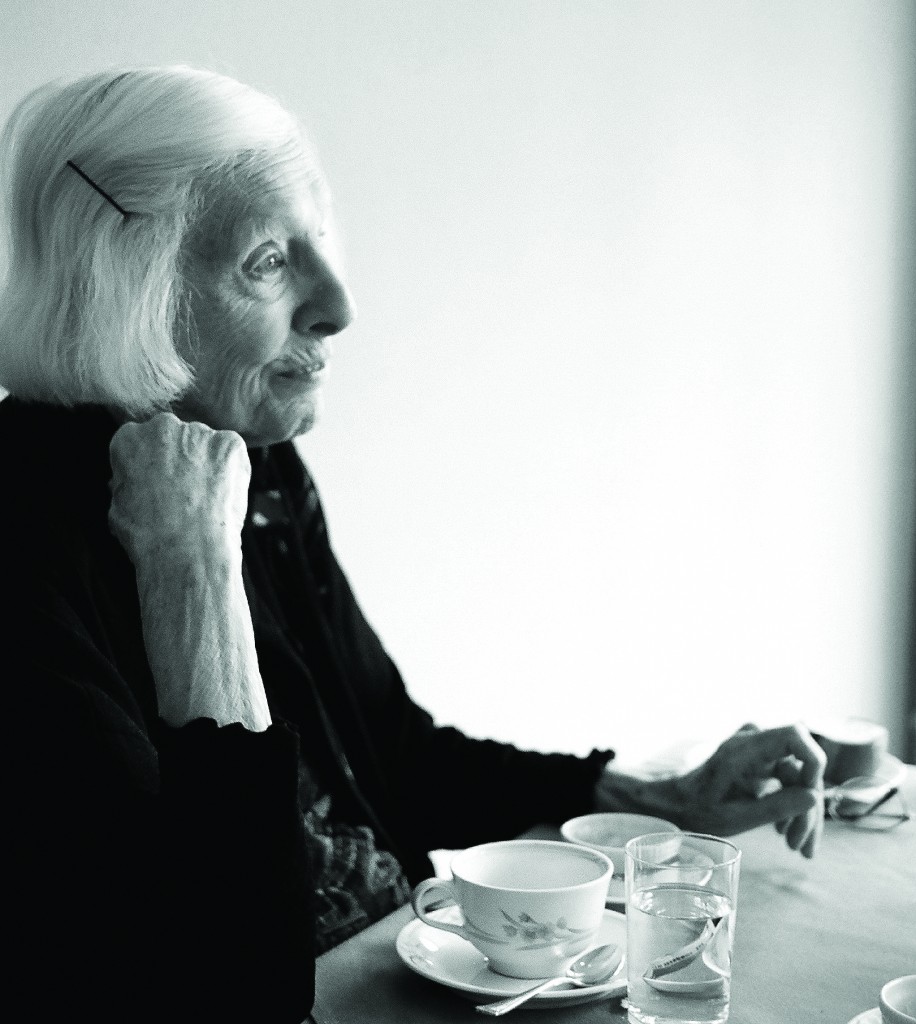
Edith Shiffert

Photo by Micah Gampel

Edith Shiffert has lived in Kyoto since 1963 and published some twenty books of poetry.  She is currently 99 years old and resident in a rest home.

Below is Dennis Maloney’s introduction in John Einarsen’s beautifully illustrated tribute to Edith, Kyoto: The Forest Within the Gate.


I first met Edith Shiffert in Kyoto in the spring of 1973 when I was a student and beginning poet. At that time, there was a group of Japanese poets who wrote in English and published the journal Poetry Nippon. When I read in the journal that they met at Edith’s house, I telephoned her and asked if I could join them for their next meeting. We spoke afterwards and subsequently met many times that spring. Edith had lived in Kyoto for a decade by then, earning her living as a teacher, first at Doshisha College and later at Kyoto Seika University. I was inspired during my stay in Kyoto to establish the literary publishing house White Pine Press, now entering its fortieth year, to publish poetry and literature in translation. Edith was one of the first poets we published, and we are still publishing her work today.

While she would probably never refer to herself as a feminist, she was certainly a woman who chose her own path at a time when very few dared to do so. Born Edith Marcombe in Toronto, Canada, in 1916, she spent most of her youth in upstate New York before moving to Redondo Beach, California, in the mid 1930s. In 1938, at the age of twenty-two, she traveled alone to Hawaii, first to Honolulu and then to the Big Island. There she met and married her first husband, Steven Shiffert, with whom she homesteaded on the Big Island during the war years. After the war, she and her husband moved first to Washington, where they constructed a log cabin near North Bend, and then moved on Alaska for several years. After she and her husband separated, Edith, at age forty, enrolled in the University of Washington to study poetry with Theodore Roethke. She remained there from 1956 to 1962. Her first two books of poetry, In Open Woods and For a Return to Kona, were published in 1961 and 1963. She has subsequently published a number of volumes of her own poetry, along with several volumes of translations. In 1981, she married Minoru Sawano, a retired teacher, and they shared an active life together, traveling in Japan and abroad until his passing in 2004.


The poems below are taken from Kyoto Journal 70 (with thanks to John Einarsen)

Sunset
At Honen-in
the day-end bell is struck
and the low rays of the sun
flow blindingly between the autumn’s scarlet leaves
while the hiyo birds screech with joy and excitement
as the bell sounds again, again.

Honen-in afire
with November leaves, its bell
at sunset loud, loud! Clear, clear!
deep, deep!


Walking
Walking very straight
in his best suit
the old man
enters the park across the road
but in a moment
changes his mind and goes down
the business street instead
hesitating a little
but continuing on.
Later he comes back
but before he reaches his own door
turns and goes off again
while relatives, neighbors,
and men whose profession it is
prepare the house
for his wife’s funeral.
A few wet snowflakes are falling
and he doesn’t have his overcoat on.


Praying for the Flowers
To ease the spirit of the flowers
young children with golden ornaments on their heads,
in pink and green gauzes over red and violet,
with tulips, carnations and irises in their arms,
circle in the great hall
far under the ceiling’s painted dragon,
past the high Buddhist altar
where the lacquer trays hold rice cakes and oranges.
They follow after the abbot’s russet brocades
and between priests in light and dark purples
circling as they chant a sutra for the spirit of the flowers
for the brevity of their springtime,
fallen petals like the silk
banners hung from the high log beams of the open walls
over the children so soon gone
and their glad parents watching,
and the hums of the chanters and the sound of gongs
lost just a short distance
beyond the enclosing square of the polished veranda,
to be gone like the fragrant incense smoke
between the open branches of pine trees.


Name: Les Sackett
Email: Lcsckt@embarqmail.com
Comment: Thanks so much for the latest news about Edith Shiffert. I had the pleasure of knowing her while I was teaching part time at Seika Daigaku and until I left Japan in 1993.
I feel sad that she is not with us in some ways. But, that profile photo of her is beautiful.
Les Sackett (Taught at Kyoto Sangyo Daigaku 1973 – 1993.  Now living in Florida, USA)

Featured writing

Kamata on ‘Ichigensan’

Border crossings at Kyoto's Gion Festival.  David Zoppetti's novel 'Ichigensan' examines the issues raised in a romance between a fluent foreigner and a blind Japanese woman.

Border crossings at Kyoto’s Gion Festival. David Zoppetti’s novel ‘Ichigensan’ examines the issues raised in a romance between a fluent foreigner and a blind Japanese woman.

Suzanne Kamata has written a paper ‘Sister Cities: Border Crossings and Barriers’, comparing David Zoppetti’s Kyoto-based Ichigensan with John Warley’s A Southern Girl set in Charleston, South Carolina.  In the extracts below, which appear with her permission, she outlines Kyoto’s literary tradition before considering the border-crossing implications in the romance between a Japanese-speaking foreigner and a blind Japanese woman in Zoppetti’s novel.

********************************

Japan’s literary tradition harkens back to the courts of Old Japan, where Lady Murasaki penned Tale of Hikaru Genji, widely considered to be the world’s first novel. Courtiers such as Ono no Komachi communicated via poetry or kept diaries, such as The Pillow Book of Sei Shonagan, while beyond the castle walls, illiterate peasants laboured in the fields. The city has also inspired many modern poets and writers such as Nobel laureate Yasunari Kawabata, who chose Kyoto as the backdrop for his novel The Old Capital and other works.

Many foreign writers have also employed Kyoto as a setting in their novels, including Arthur Golden, whose best-selling novel, Memoirs of a Geisha, was written after the author interviewed a veteran of the rarefied world of Kyoto teahouses. Liza Dalby also managed to penetrate Kyoto’s inner sanctum by conducting anthropological studies as a geisha-in-training. She utilised this experience in the writing of the nonfiction tomes Geisha, Kimono: Fashioning Culture, and her novel The Tale of Murasaki, in which she re-imagines the life of the twelfth-century scribe, which are all composed in English and directed at a Western audience. David Zoppetti’s novel, Ichigensan, discussed later in this essay, is unique in that it is a novel of Kyoto written in Japanese by an ‘outsider’ for a Japanese audience.

**********************************

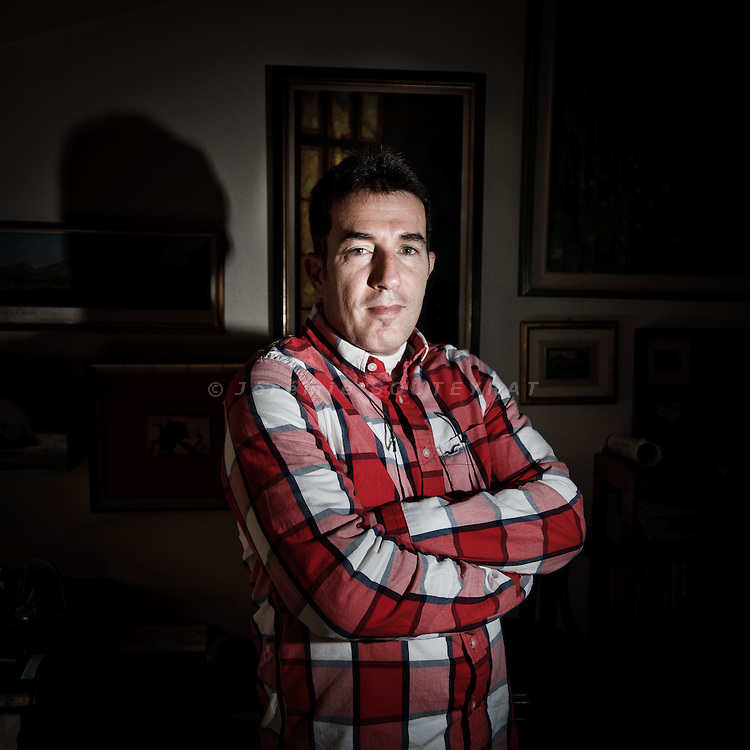
Swiss writer David Zoppetti by J. Souteyrat

Swiss writer David Zoppetti by photographer J. Souteyrat

Ichigensan’s Kyoto

Geneva-born David Zoppetti won the Subaru Prize for Literature in 1997 for Ichigensan, his first novel, written in Japanese. The novel was also nominated for the Akutagawa Prize, Japan’s most  prestigious literary award, and was praised by the Japan Times as ‘a beautiful love story’ and by Kyoto Shinbun for being ‘refined and sensual.’ According to his biographical notes, Zoppetti studied at Doshisha University in the 1980s, then went on to work in broadcasting as the first full-time foreign employee of a Japanese television network. He also became the first employee of the company to claim paternity leave. He later decided to devote himself to writing, and thus produced Ichigensan (The Newcomer), his first of four books so far. The title refers to the policy of refusing first time customers who attempt to enter an establishment without a proper introduction, which is still intact at some of some Kyoto’s more exclusive geisha teahouses and restaurants.

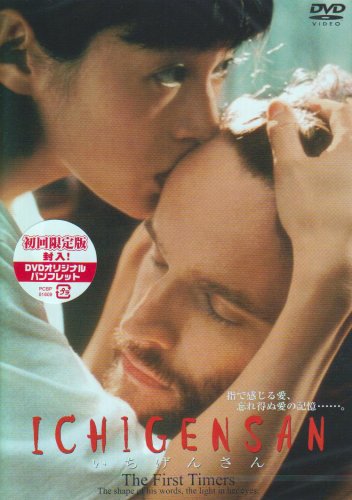
Ichigensan was made into a film, and translated into English by Takuma Sminkey, who has also lived as a foreigner in Japan. As Sminkey writes in his afterword to the book, Ichigensan ‘has sometimes been categorized as ekkyo bungaku (border-crossing literature), a genre that includes other non-Japanese writers of Japanese literature, such as Hideo Levy, Arthur Binard, Kaneshiro Kazuki, and more recently Yang Yi and Shirin Nezammafi.’

51CQw8mRboL-1

These writers have been singled out for their seemingly extraordinary ability to write in Japanese, a notoriously difficult language for speakers of English, and for their insights into a country often deemed impenetrable and unknowable to outsiders. According to Sminkey, ‘Ichigensan questions the validity of the kokusaika (internationalisation) paradigm, in which international exchange is always seen in terms of national identity, and the difference between insiders and outsiders is assumed to be obvious.’

In writing about the novels of Zoppetti and other recent foreign-born writers of Japanese, Chinese scholar Li Jiang points out that ‘border-crossing’ suggests an illegal act: There is probably no denying that the word ekkyo [border-crossing] has a negative overtone. The word implies that the action is illegitimate. No one speaks of the foreigners who are staying in Japan legally as border-crossing aliens. The word only refers to people who cross borders without the documents required by law. The term indicates a sense of  possession: a certain language belongs to a certain group of people, and if a member of another community uses the language, he/she is perceived as committing an illegitimate act. And the same holds true, it seems, for cultural borders.

It is especially significant, then, that Zoppetti’s novel begins in ‘Dejima’, a lounge for foreign students at a university, nicknamed for the artificial island constructed for foreign traders off the coast of Nagasaki in the seventeenth century. For many years this was the only site where cultural exchange was legally permitted in Japan.

The narrator is idling in this oasis for foreigners when a Japanese woman wearing a kimono, and her blind daughter, appear. They are entering this foreign space in search of someone to read literature to the daughter…

**************************

A Japan Times article on the remarkable David Zoppetti.

Ichigensan – The Newcomer by David Zoppetti, English translation by Takuma Sminkey (Birchington, UK: Ozaru Books, 2011).

Writers in focus

Allen S. Weiss: Manifesto for the Future of Landscape

Manifesto for the Future of Landscape (photos by Allen S. Weiss)

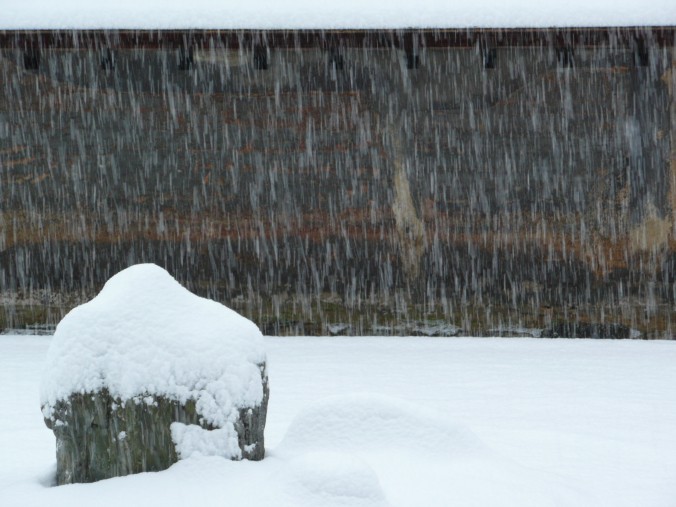
Ryoanji2 The dry garden of Ryōan-ji is one of the most analysed and photographed works of art in the world. Thus, well before my first visit in November 2006, I felt I knew the garden intimately, and was thoroughly prepared to elaborate on the knowledge I had attained from dozens of books and hundreds if not thousands of images. As soon as I stepped onto the veranda of the temple overlooking the garden, I was stupefied, first by its sublime beauty and soon afterwards by the fact that it hardly corresponded to any description I had read of it. How could this be? Could all previous commentators have been so wrong? Could I have been so blinded by my own prejudices and paradigms? Could I have fallen into the textual trap of confusing image and description for the garden itself? Certainly my attraction to Japanese dry gardens (karesansui) stems from the fact that they corroborate my aesthetic principles, wishes and utopias. But might this passion, hitherto untested against its objects, have falsified my vision? I immediately suspected that my disorientation went far beyond mere culture shock. With each discovery about Japanese culture, my bewilderment seemed to multiply even as my knowledge expanded, and I felt myself further from aesthetic enlightenment than ever, as Ryōan-ji led me to consider other art forms and other viewpoints: the stones had their antecedents in Chinese and Japanese painting; the surrounding walls evoked unglazed pottery surfaces; the stone borders hinted at the complicated issues of inside and outside in Japanese architecture; the sparse moss suggested the need for water in an otherwise dry garden, thus pointing to the essential role of atmospheric effects in Japanese art; the raked gravel stressed the role of stylization and stereotype in image and word; and the overhanging cherry tree evoked the crucial Ryoanji3interpenetration of art and world. I was to discover that these correspondences were not mere free associations, but are deeply ingrained in Japanese aesthetics. After nearly two decades of meditation on Western gardens and landscape from the Baroque through the modern and postmodern eras, I realized that I had to reorient my ways of seeing completely in order to be able to elucidate my initial astonishment before Ryōan-ji. As a result I offer here a certain number of principles, composed in the form of a manifesto, to give a sense of my attitudes and hopes – often against the grain of contemporary theory and practice – regarding landscape creation, appreciation and conservation.

  1. The garden is a symbolic form, which suggests that symbols are as important as images to guide appreciation as well as restoration. The garden is earthly, but it also reaches to the heavens, and occasionally to the underworld.
  1. The garden is never merely a picture, and the ground plan is usually misleading. The spatiality of gardens is plastic and dynamic, such that movement is of the essence. The garden is thus a synaesthetic matrix.
  1. The garden is a Gesamtkunstwerk (a total work of art), a web of correspondences, a site that should encompass all the arts. Consequently, every garden must be continuously reinvented as a scene for contemporary activities.
  1. The garden is simultaneously a hermetic space and an object in the world. Thus the ‘formal’ garden must remain open to the ‘informality’ of nature. Garden closure is a sociological and psychological phenomenon, not an ontological one.
  1. The garden is a paradox, necessitating that complexity and contradiction should not be avoided, since the finest metaphors are often unstable and equivocal.
  1. The garden is a narrative, a transformer of narratives, and a generator of narratives, such that a garden is all that it evokes. Consequently, tales and symbols are an integral part of gardens.
  1. The unpeopled garden is either an abstraction or a ruin, suggesting that all aesthetic value has a use value that must be respected. The most complex landscape is the one most closely observed.
  1. The garden is a memory theatre, which must bear vestiges of its sedimented history, including traces of the catastrophes that it has suffered. In the history of   landscape, accidents are not contingent, but essential.
  1. The garden is a hyperbolically ephemeral structure. Anachronism is of the essence, since a garden is all that it was and all that it shall become.

This compilation is offered not so much as a corrective to my initial perplexity, but as a spur to new intuitions and as a conceptual guide to the seemingly disparate, but in fact crucial, relations between gardens and the other arts. Ultimately, every artwork bears its own phantasmic ontology, which must be distinguished from the cultural forms and symbols that ground the work. Throughout history and across cultures, the forms of and relations between representation and vision are constantly changing. Our ways of seeing must be no less adaptable, subtle and inventive.

[This text is excerpted from Allen S. Weiss, Zen Landscapes: Perspectives on Japanese Gardens and Ceramics (London, Reaktion Books, 2013) and appears, in a slightly altered version, by permission of the publisher.]

*****************************

Weiss

Photo by Chantal Thomas

Allen S. Weiss is a writer, editor, trans­lator, curator, playwright and photographer, and is the author and editor of over forty volumes in the fields of art history, performance theory, landscape architecture, gastronomy, sound art and experimental theater. He lives in New York, Paris, Nice, and spends a month or more every Autumn in Kyoto. His work on Kyoto includes the literary anthology Le goȗt de Kyoto (Mercure de France) and Zen Landscapes: Perspectives on Japanese Gardens and Ceramics (Reaktion), as well as Radio Gidayū, a soundscape of Kyoto (Deutschlandradio Kultur). Among his theoretical works are The Aesthetics of Excess (SUNY); Phantasmic Radio (Duke); Breathless: Sound Recording, Disembodiment, and the Transformation of Lyrical Nostalgia (Wesleyan); Feast and Folly: Cuisine, Intoxication, and the Poetics of the Sublime (SUNY); Varieties of Audio Mimesis: Musical Evocations of Landscape (Errant Bodies), as well as two culinary autobiographies: Métaphysique de la miette (Argol) and Autobiographie dans un chou farci (Mercure de France). He is committed to interdisciplinary research and experimental performance across the media, and his creative work includes Theater of the Ears (a play for electronic marionette and taped voice based on the writings of Valère Novarina), which premiered at CalArts ended its tour at the Avignon Off Festival; Danse Macabre (a marionette theater for the dolls of Michel Nedjar), which premiered as part of the Poupées (Dolls) exhibition that ASW curated at the Halle Saint Pierre in Paris, and was subsequently shown at the In Transit festival at the Haus der Kulturen der Welt in Berlin; and a novel, Le livre bouffon (Seuil). His radio productions include L’Indomptable (with Gregory Whitehead) for France Culture; the Hörspiel Glissando for the Klangkunst program of Deutschlandradio Kultur, and Carmignano, an essay on wine for Radio Papesse in Florence. His most recent project is Poupées des ténèbres / Dolls of Darkness, a documentary film about the dolls of Michel Nedjar and the Holocaust. He has been the recipient of Fulbright, Étant Donnés and Japan Foundation grants, and teaches in the departments of Performance Studies and Cinema Studies at New York University.

Amazon page for Allen S. Weiss.  Contact: allen.weiss[at mark]nyu.edu


Writers in focus

Steiner on woodblocks and writer’s block

DSCN4583For the inauguration meeting of Writers in Kyoto, held in late March, we invited Any Chavez to enlighten us on her experience as a journalist in Japan. She is well-known amongst foreign writers here, though not many of us have ever met her as she lives on a tiny island in the Inland Sea. With e-mail now so prevalent, we can reside anywhere and conduct a near normal life.
She spoke at length about her early days trying to be a writer, especially one working for newspapers and magazines. It was not easy. Her suffering was great. Though spared beatings and gunshots in the night, she was shot down countless times by pink rejection slips from the press gang. She persevered. And eventually won a position on The Japan Times.

All good and rewarding, and interesting to us. But for me, there was something missing. As writers, we all pretty much know about rejection, and perseverance, and rewards. However, how about writer’s block? We all know about handling rocks tossed our way, wiping spit off our shoulders, dousing flaming faggots dropped at our doors. But I am sure each of us have a different technique for getting over writer’s block, which is a large part of our lives.

So, I want to relate my experience, and one of the surest ways to get over it. I attended a very progressive, four-year high school. They offered a post-graduate program even, and I oped for it, feeling I was not yet ready for university. Of the courses offered, I chose Theater, Radio/TV Workshop, and Creative Writing. Each subject has served as one of the pillars my life has been built upon.

The Creative Writing class especially gave me some nice tools. But the one I recall vividly, and to this day use in my printmaking studio and teach to my students, is how to move over the dreaded block. The teacher (I do not remember his name at all) told us we should just sit down before our typewriter (if you do not know this word or machine, I pity you) and type any word, without thinking. Hit the space bar and type another word, again without any thought. Continue this for usually only 5 or 6 words. Suddenly, the door which was closed in your head, will open and the ideas in that room will spill out. What you find may not be related to the words you typed. No matter. They only served as keys to that door. The idea or theme or story will now be at the front of your mind, and away you go, typing like a pro up to the end of the piece.

I use this same technique in the woodblock studio. The student, or me, has no idea for the next print. So, just sit down with a blank sheet of white paper, a B-pencil and eraser on the table. Move the pencil around the sheet without thinking, just drawing lines, or curls, scribbles, or anything without a thought. Inevitably, only after a few seconds, the scene, the view, the person or animal or mountain or building will appear in your mind, and off you go filling in the blanks as it were. It never fails.

What we want to write or draw is already in our consciousness; it’s in that dark, closed room we all own. We need the key to open the door. Turning off our “attention” to let the hand connect directly with the brain will open the door. In seconds, too.

It never fails.

Writers in focus

Marc Keane on Kyoto

Garden designer Marc Keane is known for his lucid writing about Japanese nature and culture.  He lived for 18 years in Kyoto, working first as a research fellow at Kyoto University and later as a landscape architect with his own design office in downtown Kyoto.  He taught at the Kyoto University of Arts and Design, and is presently a fellow at Cornell University’s East Asia Program, Columbia University’s Institute for Medieval Japanese Studies, and the Research Center for Japanese Garden Art, Kyoto.  He has written a total of seven books, the latest being Moss: Stories from the Edge of Nature.  (See Marc Keane’s website)

The following extracts are taken with permission from a longer piece called Kyoto Waters in the Kyoto Journal No. 47.

Imagine this. You’re standing barefoot on moss in a warm summer rain that falls so gently it can hardly be felt. You cup your hands together in front of your chest, letting small drops gather lightly within them. The water beads and runs down the crevices between your fingers, through the creases in your palms, flows out at the hollow between your wrists, into the air and gone. That… is Kyoto.

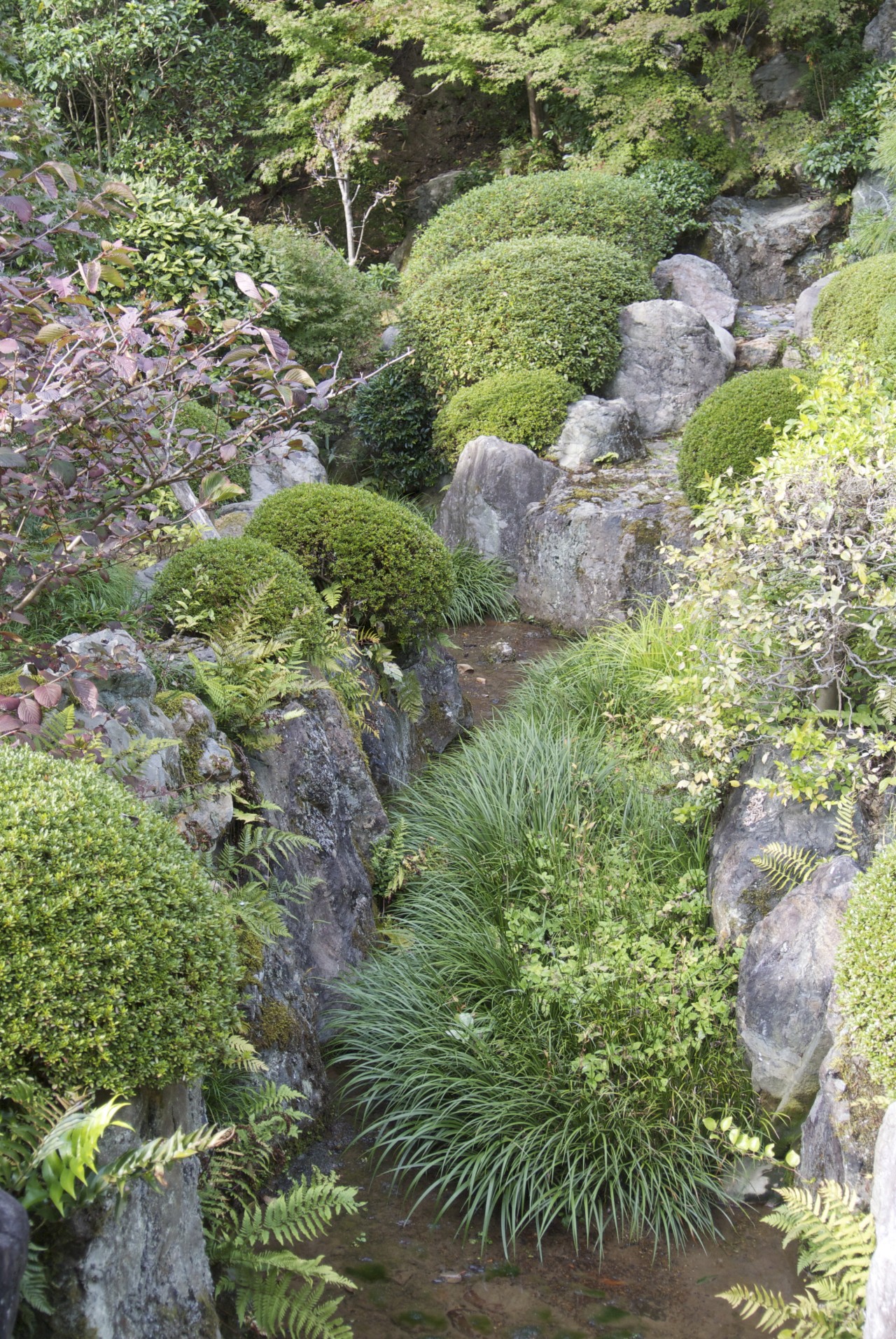
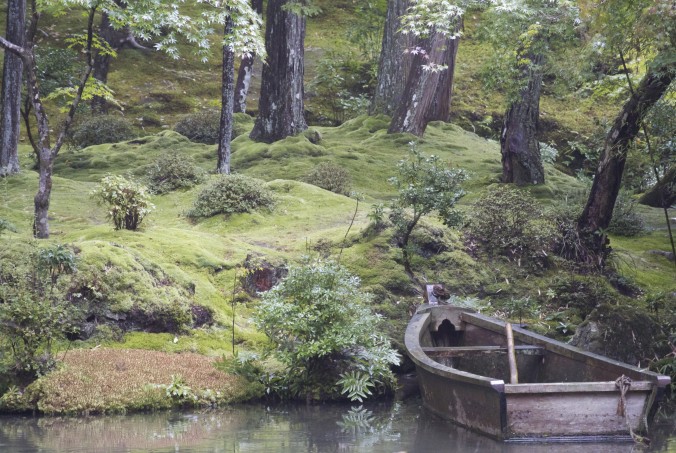
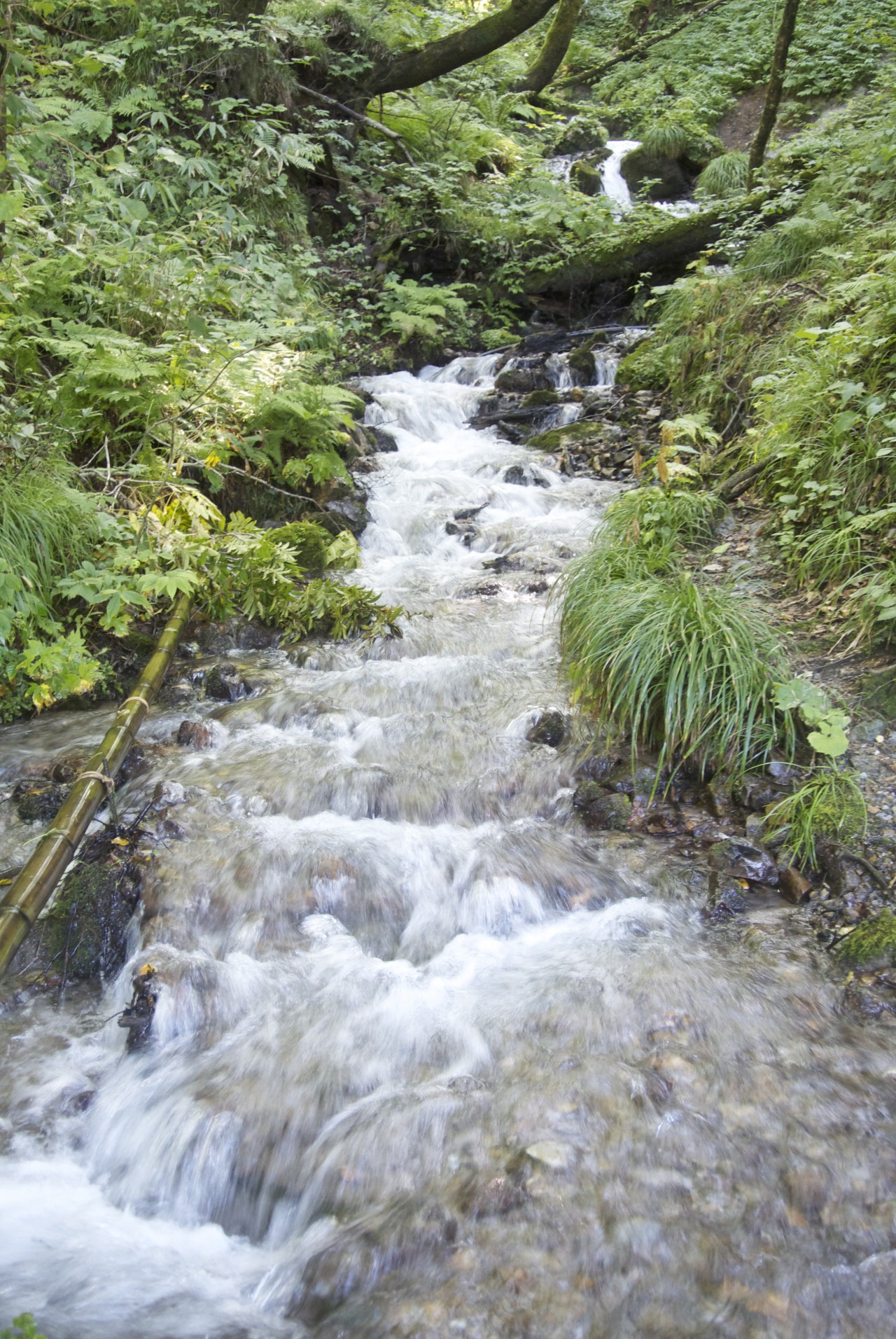
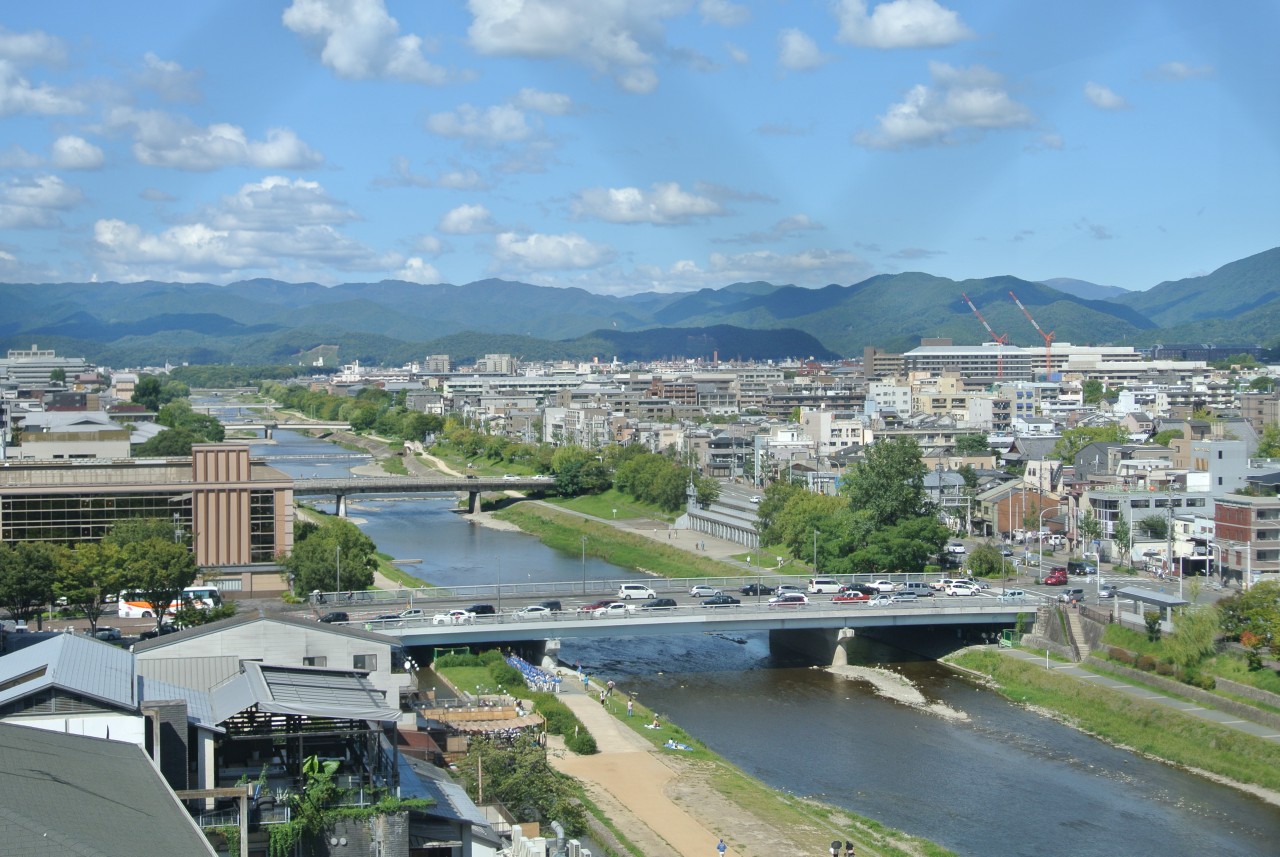
DSC_2363The city of Kyoto lies between low mountains which rise on three sides like cupped palms forming a broad, flat plain open only to the south. When it rains (and rain is a frequent and welcome visitor here) the hills receive what they can and send the rest burbling down to the flatland in countless narrow brooks that flow through dapple-lit forests and acres of grass bamboo, tracing the mossy inner folds of granite mountains, falling in quick, light cascades until they reach level ground. Once on the plain, the waters gather in broad rivers — the Katsura and Kamo — which join at the south of the city and from there, doubled in strength, flow on to Osaka and out to sea. Today, urban Kyoto fills that wide plain, but long before the city was built, before even the earliest settlers hacked clearings in the brush along rivers far wilder than they are today, the rain was here, bathing and feeding the land; gentling it in spring, thrashing it relentlessly through summer, shrouding it in chill mists as autumn hills flame then mute to winter, awakening it again in spring, washing away winter’s white mantle, clearing from the land the remains of a year.

Millennia pass; a party of horse-borne men comes riding into the valley from the southwest. Although hunting, they aren’t hunters; they’re nobles and, as such, are trained in the Chinese arts: music, calligraphy, poetry, and, most importantly for that fateful day, the geomantic sciences. They have ridden out of the capital on the western edge of the plain, a vast construction project that has enabled the emperor to escape the clutches of the great Buddhist temples of Heijo-kyo, the previous capital. The new city is only a few years old, yet all is not well there and ill omens shadow the imperial family. The recommended remedy is to build yet another city and by chance, these nobles out hunting happen on the perfect spot; a broad plain clearly governed by Four Guardian Gods. Not the local spirits that the tattooed clan prayed to in the forest by the ancient cedar but, instead, iconic symbols of Chinese origin, geomantic presences perceived in the landscape: a river in the east defining the Blue Dragon; a pond in the south marking the Scarlet Bird, and so on for the four cardinal directions. These fortuitous attributes prompt the removal of the capital to the center of the plain, and so is founded Heian-kyo, the Capital of Peace and Tranquility.

DSC_1525The plan of the new city is based on Chang’an, the capital of the Chinese T’ang dynasty; a perfect rectangle subdivided into a grid of streets of various widths, from broad avenues to narrow alleys. To impose that idealized form on the natural lay of the land means reworking the landscape itself (building a city of 6,000 acres in a year is no small accomplishment) and what cannot be carried over from the old capital is taken anew from the surrounding land. By the time they are done, very little of the natural environment in the entire region is left untouched. Meadows are cleared, copses felled and burned, rivers straightened and guided into stone-lined channels, the whole surveyed and leveled until, in the end, geometric order has been embossed onto the wild, as strange and wonderful as a microchip glinting on a bed of moss.

One day during the construction, a team of men, a handful among a hundred thousand, heads into the remaining forest in search of a tree to use as a column in the Hall of State. A short climb into the hills, by a small waterfall that slips quietly from the shadows, they find a tree of the required girth and settle into their work. The dull impacts of metal on wood reverberate through the dwindling grove. The tree shudders and creaks; encouraged, the men lean deeper into their axes. A bead of sweat is flung from a sun-blackened arm, arcs high and lands on bare earth in the trampled forest, acrid with the scent of crushed ferns. And it, too, remains.

Watered by many sources, Kyoto grew in this way; a drop here, a drop there. Softened and greened by warm rains from the south; sanctified by a devotion to mysterial spirits abiding in all aspects of nature, in grasses, trees, stones, and waterfalls; modified by the sweat and toil of those who reshaped the land, embossed it with grids, terraced, drained and watered it simultaneously; cultivated by religions and cultures that found new homes far from their origins, honoring the teachings of Buddha, Confucius, and the Taoists.

DSC_5607Twelve thousand years have passed since the end of the last Ice Age and in that time this land has been shaped by nature and human society as radically as by the glaciers that came before. Each modulation affected the next, adding layers to the whole, like a stack of woodblock prints laid one upon another, freshly pressed and wet, their images dissolving into one another, retaining a semblance of themselves while also taking on the color of what comes before and after. You can ramble Kyoto, pry into her soul, cut cross-sections by foot across the plain and try to vivisect the past, to peel apart the layers — but the task of extraction is hopeless. Having lain so long together, the layers are now inseparable, and marked indelibly upon each other — a Shinto mystery lays enshrined within a geomantic symbol; aristocratic fashion styles feudal architecture; gardens abstract nature into singular thoughts.

Now, in the 21st century, there is almost nothing left here that could be called wild… There is little wild, yet nature abounds, especially on the fringes. It is not wild nature, however, free of human intervention, but rather nature modulated; a tempered thing like a bird’s nest or a coral reef, things we think of as being natural despite their having been built. There is little left that is wild but the beauty of Kyoto is not the beauty of wilderness; of bright Himalayan majesty or the mystery of dark Amazonian forests. Neither, though, is Kyoto’s beauty entirely that of human creation. The beauty of Kyoto does not originate exclusively from strict control or from wilderness but rather exists in those places where the two meld gracefully; where works of the human hand overlay and interpenetrate the natural world but do not replace it. The heart of modern Kyoto, unlike its fringes, has largely lost its beauty because this has been forgotten and it now stands divorced from nature; an unbroken expanse of concrete boxes and tangled powerlines.

IMG_1024But on the edges, nature washes into Kyoto like a spring tide filling gaps between boulders on a shore; forested hills flow like those waters around temple halls; into shrine precincts where they pool and thrive. And at times (though less and less common these days) fragments of nature even find their way into the city center in the form of tiny courtyard gardens within urban townhouses, existing there not whole, but suggestively, like an anecdote from an epic tale.


« Older posts Newer posts »

© 2026 Writers In Kyoto

Based on a theme by Anders NorenUp ↑